

Council plans tougher fines for landlords housing vulnerable tenants
8 months ago | 6 comments



The government has hinted that social housing landlords could be required to take council-referred homeless households.
In response to a written question, homelessness minister Alison McGovern said the government could introduce legislation to tighten rules around how social housing is allocated.
The news comes as councils expand schemes with private landlords to tackle homelessness.
In a written question, Liberal Democrat MP Lee Dillion asked: “What steps is the government taking to ensure that people experiencing homelessness are able to access social housing”.
In response, Ms McGovern said: “The government will deliver the biggest increase in social and affordable housing in a generation, including through the new 10-year £39 billion Social and Affordable Homes Programme.
“As set out in our National Plan to End Homelessness, we will work with partners to update statutory guidance on social housing allocations to ensure that allocations reflect local need and effectively support vulnerable households.
“Where joint working is not operating effectively, we will consider levers to require social housing landlords to rehouse statutory homeless households referred by the council, including legislating if necessary.”
As previously reported on Property118, councils across the country are spending more than £2.8 million a year on temporary accommodation.
In practice, councils often advise private tenants facing eviction to remain in their rented home while homelessness prevention work is carried out, in order to avoid households becoming homeless and needing temporary accommodation.
However, the government’s Homelessness Code of Guidance says: “Housing authorities should not consider it reasonable for an applicant to remain in occupation until eviction by a bailiff”.
13 comments on this article
A different perspective could help you spot an issue, avoid a mistake or find a better way forward. Read the comments and add your own views if you wish.
Previous Article
Buy to let lending rises as remortgaging drives growth
8 months ago | 6 comments
6 months ago | 16 comments

6 months ago | 1 comments
Member Since June 2015 - Comments: 366
10:51 AM, 16th April 2026, About 6 months ago
“Homeless” is a very broad term.
Do they mean rough sleeping homeless, sofa surfing, over crowded, temporary accomodation or facing eviction? Not all “homeless” people actually want the responsibility of a home. Not all are willing to co exist with neighbours.
Some will be genuinely blameless, others will have contributed to their own problems. Addiction, questionable spending priorities, ASB, etc.
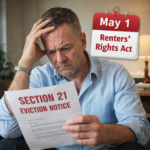
Section 21 meant the Local Authorities had a duty to ensure evicted tenants had a roof over their heads. The RRA doesn’t seem to have the same safeguards. Anyone facing homelessness should thank Shelter, Generation Rent, etc for the predicament they will be in.
Historically the PRS has done a huge amount to work with tenants facing difficulties and we have managed to retain a great many very shaky tenancies when tenants face problems.
Without Section 21 a great many landlords will be incredibly cautious about taking on new tenants or will simply sell up at the earliest opportunity. Most of us will have had numerous applicants facing homelessness over the last two or three years and we’re pretty much conditioned to it now. Initially I would prioritise those who seemed most in need of a home, now it’s whoever best meets the referencing criteria. The removal of Section 21 has removed the luxury of giving people a chance.
Member Since May 2018 - Comments: 2579
11:08 AM, 16th April 2026, About 6 months ago
Reply to the comment left by Jo Westlake at 16/04/2026 – 10:51
“Homeless” is indeed a broad term. When a tenant repeatedly fails to pay the rent and you end up removing them the Council presently has an obligation to house the tenant when they become “homeless”. So would this proposal mean that if you had housed such a tenant, would you be obliged to continue housing them as a private landlord?
And linked to this question, what do they mean by “social housing landlords”. I’m a private landlord but I use an agent. 25 years ago, housing tenants directly, I used to take tenants on benefits but only if they paid me directly. Now I don’t take them at all and I rely on my agent to screen them out.
So what’s the definition of a ‘social housing landlord’?
Member Since September 2018 - Comments: 3758 - Articles: 5
12:42 PM, 16th April 2026, About 6 months ago
hahaha – bring it on!
Clearly the agenda is due to be very soon moved to a very visual one. The RRA alone is going to block a significant number of people getting into private accommodation, so where do they go. Any all those served S21’s in the next few weeks? There’s going to be a busy summer of possessions ahead….
Where to the boaties go who are being moved out of hotels and now walking into Council offices looking for alternative accommodation?
Temp accommodation demand already outstrips supply and even when it exists it is expensive and bleeding councils dry. Councils are now being very strict themselves on who gets what. If you are deemed to make yourself intentionally homeless, you wont get a look in. One council I know literally gives people one offer of suitable (PRS) accommodation, and if it is refused, you are off the list.
There will be more literally on the streets. They can’t force the PRS to take them in (however much they are pushing) so where do they look next….. social landlords….
Member Since May 2018 - Comments: 2579
12:44 PM, 16th April 2026, About 6 months ago
Reply to the comment left by Reluctant Landlord at 16/04/2026 – 12:42
I don’t really know what a ‘social housing landlord’ is but I shall be looking to my agent to stop me becoming one.
Member Since September 2018 - Comments: 3758 - Articles: 5
12:47 PM, 16th April 2026, About 6 months ago
Reply to the comment left by Jo Westlake at 16/04/2026 – 10:51
The government want a more ‘professional’ PRS? Then everything and everyone (including tenants) are going to realise every decision about offering a tenancy is going to be a simple business/risk based one.
No sentiment, no giving people a chance…
Member Since June 2015 - Comments: 366
2:23 PM, 16th April 2026, About 6 months ago
Reply to the comment left by Beaver at 16/04/2026 – 12:44
A Social Housing landlord is a Housing Association or Council.
Member Since May 2018 - Comments: 2579
2:23 PM, 16th April 2026, About 6 months ago
Reply to the comment left by Reluctant Landlord at 16/04/2026 – 12:47
Every decision for a private sector landlord about offering a tenancy is already a simple business/risk based one.
Twenty five years ago I used to take benefits tenants if they paid me directly, knowing that if it turned out that they weren’t eligible for benefits, if the council had paid for their rent then the council could come and get the money back off me. When I found out that the council might do this even if the tenant had paid me directly I just stopped taking benefits tenants; this is because as a landlord I have no rights to check whether prospective tenants are eligible for benefits or not, or whether existing tenants remain eligible. So now I don’t take them and they just wouldn’t satisfy the ‘affordability’ criteria. The agent already carries out credit referencing and right-to-rent checks and so this isn’t a problem; all tenants are subject to the same checks and inevitably social housing tenants and homeless people won’t pass, but aren’t being discriminated against in any way (by me or by my agent) because they are subject to the same checks as other tenants.
So although I don’t know what a ‘social housing landlord’ is I would assume that a ‘social housing landlord’ would have lots of rights to delve into tenants lives, find out whether they have a right to be in the country, find out whether they have a right to work in the country, find out whether they have a right to rent, find out whether they have a right to benefits including housing benefit. And also rights to repeatedly check that these tenants haven’t lost these rights, if for example they are asylum-seekers, economic migrants, or possibly people staying in the country beyond their visa entitlement by claiming to be gay, or subject to abuse.
So it’s all risk-based and in fact, if you are a small, unincorporated private sector landlord using BTL mortgages because you can’t offset your finance costs against rents your risk of loss is higher. And it’s not just your risk; your lender is also at risk. Even if you wanted to be a ‘social housing landlord’ taking homeless people I very much doubt that either your lender or your insurer would let you do it unless the government guaranteed your income.
So if the government proposes to force ‘social housing providers’ to house ‘homeless people’, which homeless people are they talking about? Home-grown homeless? Asylum seeker? Economic migrant? Visa-overstayer? Are they going to guarantee the income for these ‘social housing landlords’?
And again, what even is a ‘social housing landlord’? And what rights does a ‘social housing landlord’ have that other private sector businesses don’t have? Is that rent out a property below EPC band C, or with mould on the walls which whilst not very desirable could be a lot more healthy than a cardboard box, tent or park bench?
Member Since May 2018 - Comments: 2579
2:26 PM, 16th April 2026, About 6 months ago
Reply to the comment left by Jo Westlake at 16/04/2026 – 14:23
Ahhhh….and what rights does a Housing Association or Council have that a private sector landlord does not have, especially given that a Council might well seek to dump some of its obligations upon a private sector landlord.
Member Since October 2019 - Comments: 445
2:42 PM, 16th April 2026, About 6 months ago
It’ll be the PRS next. It seems ironic that some homeless are due to eviction’s by LLs selling up due to the RRA. Properties that don’t sell and remain empty will be forced to take some homeless back!!
Member Since May 2018 - Comments: 2579
2:47 PM, 16th April 2026, About 6 months ago
Reply to the comment left by LaLo at 16/04/2026 – 14:42
Up to a point it could be the PRS now if the Council is given any rights to put people in your property if your property is empty.
If you evict your tenant in order to sell and cannot rent it again for twelve months under the provisions of the RRA, presumably the council doesn’t have any rights to put anybody in it whilst it is empty?