



Damp and mould remain major issues in temporary accommodation
12:01 AM, 2nd February 2026, 9 months ago
7
Categories:
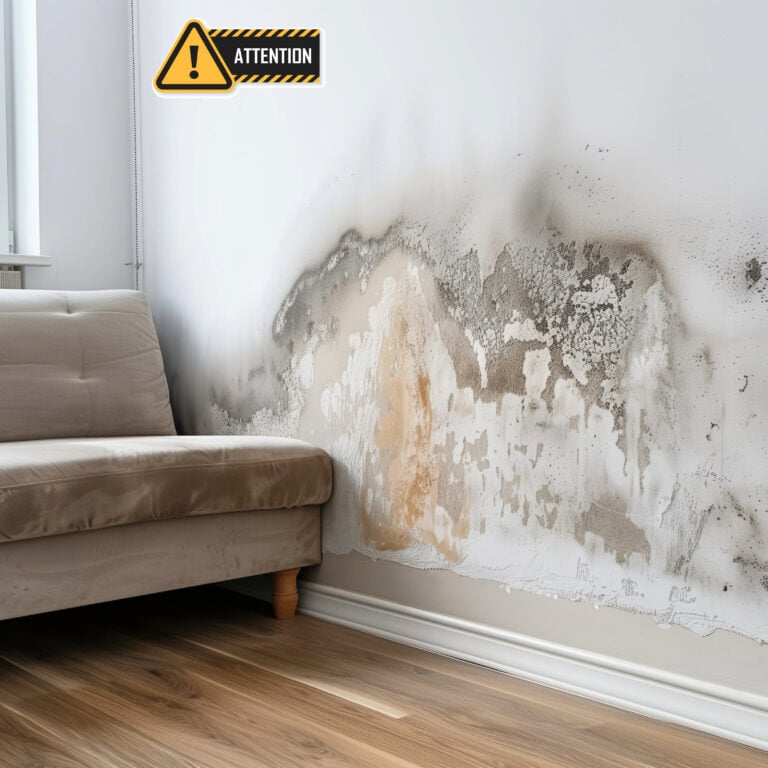
A third of temporary accommodation is deemed inappropriate and poses a risk to tenants, with more than half showing signs of damp and mould, according to new data.
Findings by Switch Management reveal that, despite Awaab’s Law coming into force last year for social housing, local authorities are still struggling to deal with damp and mould in temporary accommodation, as many continue to rely on bed and breakfast placements.
The findings come amid warnings from housing charities that temporary accommodation has become a “normalised emergency”.
Challenge for many councils is having the capacity and systems in place
Awaab’s Law requires all social housing landlords, including councils that manage housing, to fix dangerous damp and mould within strict timeframes and to complete emergency repairs within 24 hours.
The findings are based on 1,800 calls with tenants living in temporary accommodation, alongside 600 visits to bed and breakfasts and hostels being used as temporary accommodation.
The data shows that 50% of on-site inspections identified signs of damp, mould, infestations or other hazards, while 30% of rooms were deemed inappropriate and posed a risk to tenants.
John Angus, managing director of Switch Management, said many councils are struggling to keep pace with their responsibilities.
He said: “Proactive tenant engagement is now a critical part of compliance, particularly in temporary accommodation, where conditions and tenancies can change rapidly.
“Awaab’s Law sets clear, legally binding expectations around how damp and mould must be identified, recorded and resolved. The challenge for many councils is having the capacity and systems in place to deliver and evidence compliance across large and often complex portfolios.
“Our review highlights that it will be extremely difficult for existing council teams to complete the surveys and visits.”
Temporary accommodation statistics have become normalised
The news comes after housing charities gave evidence to the Housing Select committee on the conditions in temporary accommodation.
Matt Downie, chief executive of Crisis, claimed the temporary accommodation crisis was becoming a normalised emergency.
He told the committee: “When the records are broken every time new statistics come through, not just for temporary accommodation but children in temporary accommodation, there appears no way of generating greater political expediency through the statistics because they’re normalised.
“The use of temporary accommodation, the conditions of temporary accommodation and the fact that people are having to be advised all the time, unless you put up with it, you’ll be intentionally homeless. It’s very distressing for everybody involved.
Mr Downie says the focus should not be on temporary accommodation alone, as it represents only a part of the wider housing crisis.
He said: “I think it’s something that requires both a sense of political activity and urgency in how it is dealt with.
“It also cannot be thought of simply as an issue of temporary accommodation, because it is a subset of the wider housing crisis we have. If we just think about how to have better temporary accommodation, we’ll lose sight of the bigger picture.”
Tags:
Awaab's law, damp and mould, social housing landlords, temporary accommodation, temporary accommodation conditions
7 comments on this article
Learn from your peers’ experience
A different perspective could help you spot an issue, avoid a mistake or find a better way forward. Read the comments and add your own views if you wish.
Previous Article
High rents drive rise in older flatsharersNext Article
House prices rise 0.3% in January - NationwideRelated Articles

Government insulation schemes fail thousands of households
9 months ago | 5 comments

Government vows to tackle damp and mould in PRS
10 months ago | 18 comments
Member Since April 2023 - Comments: 179
12:50 PM, 3rd February 2026, About 9 months ago
“Awaab’s Law sets clear, legally binding expectations around how damp and mould must be identified, recorded and resolved”
But how can it resolved if a tenant is causing it and doesn’t respect how to treat an old building? We are not allowed to blame the tenant so how is it resolved?
Member Since September 2018 - Comments: 3766 - Articles: 5
5:48 PM, 3rd February 2026, About 9 months ago
temp accommodation can be acquired from private LL properties on a lease based approach. The LL has no direct contact at all with the T and inspections are carried out by the Council.
So does AL apply equally in those such situations?
A further point is that Councils are not bound by rigid occupancy levels when it comes to the use of temp accom (because by default it is deemed temp) so essentially the Council could (will) put bigger families/more occupants in a two bed flat for example that would be deemed acceptable if the tenancy was a direct AST in a SL area.
So who’s to blame when this happens then? A disaster waiting to happen….
Member Since May 2014 - Comments: 654
1:42 PM, 9th February 2026, About 8 months ago
I have just been watching the BBC one o’ clock news and I could not believe what I was hearing.
This was about mould in LA and Housing association properties.
The report said the usual things like this was unacceptable and more had to be done.
However the reporter then went on to say that conditions are generally worse in the private sector.
What planet do they live on?
The BBC are at it again!
Member Since September 2018 - Comments: 3766 - Articles: 5
3:28 PM, 9th February 2026, About 8 months ago
anyone even thought to even consider that B&B’s are heated as part of the bed rate, whereas temp accommodation (ie the council using a flat/house) is down to the tenant to pay the heating costs for while they are there?
Member Since September 2018 - Comments: 3766 - Articles: 5
3:39 PM, 9th February 2026, About 8 months ago
NB Councils also can and do put more people in unsuitable temp accommodation. ie five people in a two bed flat. They get around the overoccupancy criteria by default of it being temp temp accommodation and not permanent, yet overoccupancy is probably one of the most obvious sources of high internal humidity and therefore internal condensation issues…
A PRS LL would be unable to let a 2 bed to 5 persons (even if one family) under normal rental/contract situations, and especially if in a SL area.
Oh the hypocrisy!
Saying that they photos they showed on BBC this morning clearly related to building failures from what I could see. In that case yes, the Council and HA’s are at fault…but where does the funding come from for all these repairs – shaking a money tree?
Like the guy campaigner himself said, the gov are too focussed on spending money on building more homes…so what’s left to fix the existing ones?
Member Since September 2018 - Comments: 3766 - Articles: 5
3:40 PM, 9th February 2026, About 8 months ago
NB Councils also can and do put more people in unsuitable temp accommodation. ie five people in a two bed flat. They get around the overoccupancy criteria by default of it being temp temp accommodation and not permanent, yet overoccupancy is probably one of the most obvious sources of high internal humidity and therefore internal condensation issues…
A PRS LL would be unable to let a 2 bed to 5 persons (even if one family) under normal rental/contract situations, and especially if in a SL area.
Oh the hypocrisy!
Saying that they photos they showed on BBC this morning clearly related to building failures from what I could see. In that case yes, the Council and HA’s are at fault…but where does the funding come from for all these repairs – shaking a money tree?
Like the guy campaigner himself said, the gov are too focussed on spending money on building more homes…so what’s left to fix the existing ones?
Member Since April 2023 - Comments: 179
3:53 PM, 9th February 2026, About 8 months ago
Reply to the comment left by Reluctant Landlord at 09/02/2026 – 15:40
I assumed private landlords chose not to let to too many people even if it is one family. The occupancy overcrowding rules are quite generous. They allow a 4 family unit to occupy a one bed flat. Parents in the lounge and 2 kids in the bedroom (if age and gender comply). This is why it’s difficult to turn down family’s because they can’t understand why we won’t let to them. Soon enough we are going to be accused of discrimination against families with children because they want to pack them in but we don’t. Overcrowding will lead to damage to the property especially if it’s a Victorian solid walls. Soon enough this control will be taken away from us as well. I predicted this over a year ago and I’m sure it’s going to happen. Our choice of tenant will be removed and quality of accomodation will fall giving another reason why landlords will leave the market because the cost of keeping to a good standard will no longer make sense. I