

Renters may gain the right to install plug-in solar panels
6 months ago | 10 comments


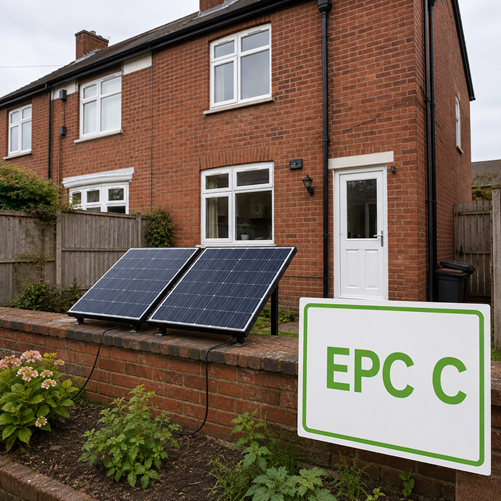
Hello all. I am a landlord with many properties in Nottingham. I am going through the process of getting the EPC ratings to a C before the 2030 deadline. I have looked at the plug-in solar panels which are becoming available soon.
Have any of the readers of Property118 found out if and how they impact an EPC score, how many KW are needed/EPC points , does landlord/tenant ownership matter and what is the situation regarding a feed in tariff?
I am keen to fit these, but I don’t want to spend thousands of pounds across my portfolio, only to find out that they are excluded from consideration re EPC’s.
Like many energy efficiency improvements, these are often advertised as having a payback timeline, but nobody in authority seems to understand or care, that all of the energy cost benefit goes to the tenant, whilst the installation costs are borne by the landlord (inflating rents far beyond the proposed savings).
This seems like a good EPC solution, but anti-landlord terms are sometimes hidden in legislation nowadays.
Hopefully someone can help.
16 comments on this article
A different perspective could help you spot an issue, avoid a mistake or find a better way forward. Read the comments and add your own views if you wish.
Previous Article
Letting agent enforcement must improve - safeagentNext Article
Landlords face plug-in solar panel requests
6 months ago | 10 comments

7 months ago | 6 comments

2 months ago | 12 comments
Member Since August 2026 - Comments: 15
9:26 AM, 31st August 2026, About 2 months ago
The feed-in tariff closed to new applicants in April 2019. Its replacement, the Smart Export Guarantee, needs an MCS certified installation, and a plug-in kit isn’t one, so anything you generate and don’t use goes to the grid for nothing.
The rules that came in on the 27th: 800W max at the inverter, panels up to 2kW DC, no batteries, one kit per property, and the DNO told within 28 days. If a tenant buys their own, that notification still has to happen at your property.
Member Since September 2023 - Comments: 33
10:27 AM, 3rd September 2026, About 2 months ago
Reply to the comment left by Barry Smith at 28/08/2026 – 23:22
Hi Barry. My email is [email protected]
I would be pleased to hear your ideas.
Member Since September 2026 - Comments: 1
3:23 PM, 14th September 2026, About 1 month ago
Useful checklist before you go further:
1. Ask the EPC assessor in writing whether the proposed system is recognised in the current RdSAP methodology. Portable plug-in panels are generally treated as appliances, so do not assume they will change the asset rating.
2. Separate the EPC question from bill savings: check orientation, shading, output, storage, export limitations, and who pays for installation and electricity.
3. Price the whole compliant solution, including fixed mounting, electrical work, certification, maintenance, and any permissions. Check insurance and fire and electrical safety requirements.
4. Compare the cost and likely EPC points with simpler recommendations already on the EPC, and check any current grant or exemption route before committing across a portfolio.
If this is part of choosing or refurbishing a property, a fast England and Wales £/sqft and deal triage screen can be useful. Valu8 Flash is from £4.95 per report. It is a data-led screen, not a RICS valuation or legal advice.
Member Since November 2024 - Comments: 8
10:43 AM, 19th September 2026, About 1 month ago
Reply to the comment left by NewYorkie at 28/08/2026 – 12:08
NewYorkie, “No feed-in tariff” is a slightly odd criticism, given that the Feed-in Tariff closed to new applicants in 2019 and has been replaced by the Smart Export Guarantee (SEG).
And, rather inconveniently for the argument, Octopus are actually offering SEG payments for the plug-in solar kits they supply.
They do, of course, connect to the grid. Any surplus generation that isn’t being consumed or stored is exported to it. A separate AC-coupled battery can also absorb surplus generation, albeit with additional conversion losses.
As for where you’d put them — ideally somewhere sunny.
Member Since September 2026 - Comments: 3
7:06 AM, 22nd September 2026, About 1 month ago
Agreed with the earlier answers — SAP only scores permanently installed systems, so plug-in units are treated as portable appliances and score nothing. That part is settled.
Two things that might matter more to you than the panels, though.
First, timing. Under the current rules a property that reaches C on the existing EER methodology before 1 October 2029 is deemed compliant until that EPC expires — and certificates run ten years. The replacement methodology is still out for consultation and isn’t law yet. So getting your Nottingham stock assessed and up to C on the current method, rather than waiting to see what lands, is worth doing on timing alone. Spend from 1 October 2025 counts towards the £10,000 cap too, so keep those invoices.
Second, if tenants do gain a right to install these, you’ll be handed a different problem. A plug-in unit isn’t a fixture — it’s the tenant’s property sitting in yours. Get it on the inventory when it arrives, photograph the socket and consumer unit, and agree in writing who removes it and who makes good. Otherwise it turns up at check-out as an argument.
I’m an inventory clerk and do EPCs, so that second one is the bit I see go wrong.
Member Since September 2026 - Comments: 3
11:23 AM, 25th September 2026, About 4 weeks ago
On the panels themselves nothing to add, the earlier answers have it right. Portable kit scores nothing because RdSAP only counts what’s permanently installed. Fixed, MCS panels are a different story and do add points, but that’s a proper install, not a plug-in.
The more useful question for a portfolio is what actually shifts the rating for the least money, because on the properties I assess it’s rarely the headline stuff that does it. Lighting is the easy win, 100 percent fixed LED across a property picks up points and costs very little. After that it’s fabric and controls. Loft insulation topped up to current depth, cavity walls filled where the construction allows, the hot water cylinder properly jacketed with a thermostat, and decent heating controls, a programmer, room thermostat and TRVs. Draught-proofing too. None of it is glamorous but it’s what moves a D to a C on the model.
Here’s the bit worth doing before you spend a penny across the portfolio. Get one representative property assessed and ask the assessor to model the proposed measures and show you the points each one earns before you commit. RdSAP doesn’t always reward what your instinct says it should, and you don’t want to find that out after you’ve kitted out twenty houses. Same logic as your panels worry, just applied to the whole list.
I run an EPC and inventory firm here in Birmingham (Capital Complete Solutions), so obvious bias. But that modelling step saves landlords more than any single measure does.