
2 weeks ago | 15 comments
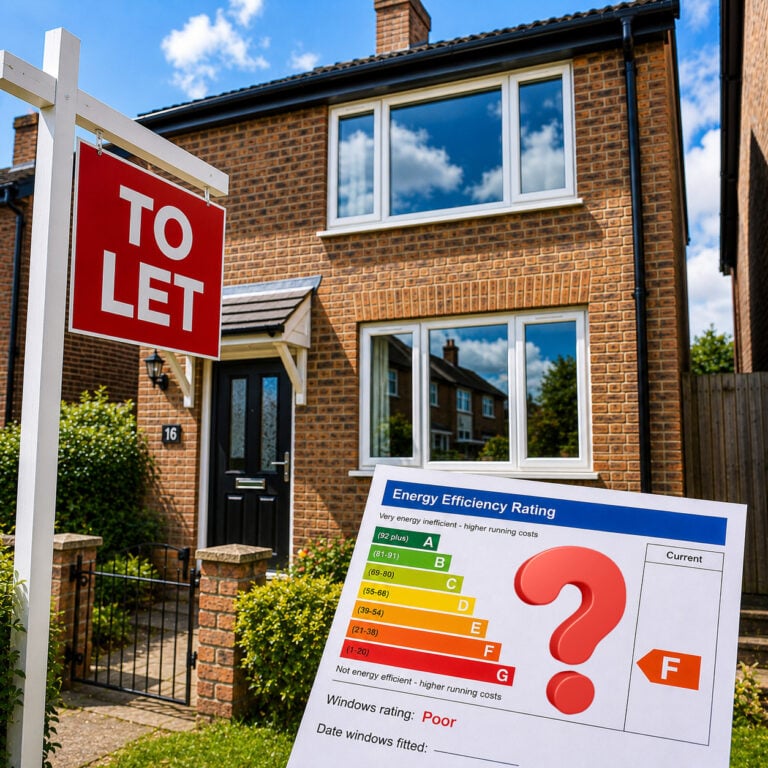
Hello, I’ve just been just been shafted as I’ve had a couple of new EPCs done to ground floor flats, both fully D/G windows throughout.
Got a worse rating within the EPC for the window rating than the previous even though they are exactly the same windows!
Now rates the windows as ‘poor’.
Windows are fully functional and no issues, not blown or anything, all uPVC in place no deterioration etc. It all boils down to the fact that I cannot confirm the date when they were originally fitted. This is getting to be a joke now.
RdSAP 10 window categories explained (current rules):
Under RdSAP 10, double-glazed windows are recorded using specific evidence-based categories.
These are the options assessors must use:
Double glazing – unknown install date
Used when the property has double glazing but no proof of age or specification is available.
Default conservative assumptions apply, often resulting in a “poor” rating.
Double glazing installed before 2002
Reflects pre-Building Regulations standards.
Assumed higher heat loss and higher U-values.
Frequently rated “poor”.
Double glazing installed between 2002 and 2022
Improved regulatory standards and better assumed performance.
Requires evidence to be recorded.
Often rated “average” or “good”.
Double glazing installed during or after 2022
Modern glazing standards and lowest assumed U-values.
Typically rated “good”.
Double glazing – known data
Used when installation date and specification can be proven with documentation.
Allows more accurate EPC inputs and usually improves the window rating.
If no evidence is provided, the assessor must default to the least efficient reasonable category.
3. No supporting evidence was available
Without evidence, assessors cannot guess.
Acceptable evidence includes:
FENSA certificate
Building Control sign-off
Installer invoice
Manufacturer specification
Documentation showing installation year
No paperwork = default values.
Thank you,
Reluctant Landlord
Every day, landlords who want to influence policy and share real-world experience add their voice here. Your perspective helps keep the debate balanced.
Not a member yet? Join In Seconds
Login with
Previous Article
Tenants are renting for longer than planned
2 weeks ago | 15 comments
2 weeks ago | 2 comments
4 weeks ago | 34 comments
Report form is not available.
Member Since May 2024 - Comments: 76
9:57 AM, 4th June 2026, About 1 hour ago
We live in a clown country. I am beginning to hate this business.
Member Since January 2022 - Comments: 10
10:01 AM, 4th June 2026, About 1 hour ago
The gap between the double glazing panes, coatings used, and the material used for the spacers around the perimeter (they hold the two panes a consistent distance apart) all make a big difference to the performance of a window. Older D/G units may be in good condition, but an 18mm D/G unit with an aluminium spacer is far less thermally efficient that a 22mm D/G with a plastic spacer, and much less than a triple-glazed unit.
I would argue that most EPC surveyors should be able to tell the difference and use a generic figure, BUT the new versions of SAP use far more data to give a more accurate (but still a lot of assumptions) picture of the building performance. It’s not PHPP levels of accurate energy assessment, but much better than the old RdSAP. As a Passive hOuse Consultant, I’m seeing more and more Landlords looking for accurate energy modelling, so they can see where their money is best spent, rather than just hoping for the best when the EPC needs renewing.
Take it as a warning for all landlords; keep quotes, specifications, etc for everything. Save pictures (or better still the original) energy labels, and hand a copy to the assessor to get the most accurate rating.
Member Since October 2024 - Comments: 13
10:02 AM, 4th June 2026, About 1 hour ago
The descriptive rating of poor does not impact upon the EPC rating itself, as it is merely a separate calculation outside of the EPC rating methodology. What the descriptive column of poor is now “comparing” itself with is what is now considered the best generally available glazing i.e. Triple Glazing, in other words this is now considered to be the “norm” going forward.
If you can provide the full address I will see if I can locate evidence of a Fensa certificate as these are publicly available, albeit if you want a copy of the actual certificate you would have to pay. The record that there is a Fensa Certificate however is free to see.
Depending on locality of building I may be able to find a Building Control record for you, but this is sometimes less publically available as each authority has its own accessibility rules.
I would suggest your rating has not got worse due to the glazing, but to other additional inputs that now have to be put into the EPC software including, but not limited to, ventilation systems such as extract fans.
Member Since October 2019 - Comments: 412
10:10 AM, 4th June 2026, About 1 hour ago
I had a real jobs worth EPC inspector who failed my beautiful original 100 years old sash window I refused to put plastic in!
Member Since January 2017 - Comments: 121
10:14 AM, 4th June 2026, About 60 minutes ago
In that case – another one of mine will be sold before the new regulations come in.
Member Since October 2024 - Comments: 13
10:14 AM, 4th June 2026, About 60 minutes ago
Reply to the comment left by LaLo at 04/06/2026 – 10:10
The wording on the EPC is not created by the Energy Assessor, they are predetermined statements the Government have prepared within the RdSAP software. The Assessor would enter the type of glazing e.g. single, double, triple, the type of frame e,g, metal, timber, UPVC and the glazing gap if double or triple. The RdSAP engine then takes these factual inputs and decides which description it will assign.
Assessors put in the facts, the software spits out the outcome.
Member Since August 2013 - Comments: 790
10:38 AM, 4th June 2026, About 35 minutes ago
Reply to the comment left by Peter Rowley at 10:14
So it seems like the software is corrupt, so to counter it, you need to get a good corrupted assessor to counter act the corrupted software spewing out rubbish.
Member Since December 2023 - Comments: 1619
10:39 AM, 4th June 2026, About 35 minutes ago
We should be allowed to use a thermal imaging camera to prove that old windows are still providing the insulation that they were designed to provide.
I don’t suppose 20% VAT is one of the reasons for the new rules.
Member Since March 2024 - Comments: 282
11:10 AM, 4th June 2026, About 3 minutes ago
Anything newly installed after 1 April 2002 will (or certainly should) have had paperwork, either FENSA or local authority sign off.
If the current owner has installed DG after this date but it wasn’t done with building regs compliance paperwork they will have more than just an EPC to worry about when they sell as the buyer will expect paperwork. Similarly if the current landlord bought after 2002 and the DG was installed after 2002 there should be paperwork for it as part of the conveyancing if the former owner did it correctly.
The lack of evidence therefore supports pre 2002 installation assuming the current and any former owners and sale conveyancers stuck to the normal processes.
The date of manufacture of the panes is printed on the separator between the panes for later installations covered by building regs. No date would again indicate a pre 2002 installation. Of course panes can be replaced in older frames so this needs bearing in mind.
Apart from the EPC aspect it is worth landlords clarifying the age for when it’s time to sell and making sure 2002 onwards installations have paperwork as would be needed for any other material change to the building – new roof, boiler installation, electrical works etc including those done by previous owners.