

Housing minister seeks to reassure landlords ahead of the Renters’ Rights Act
6 months ago | 11 comments


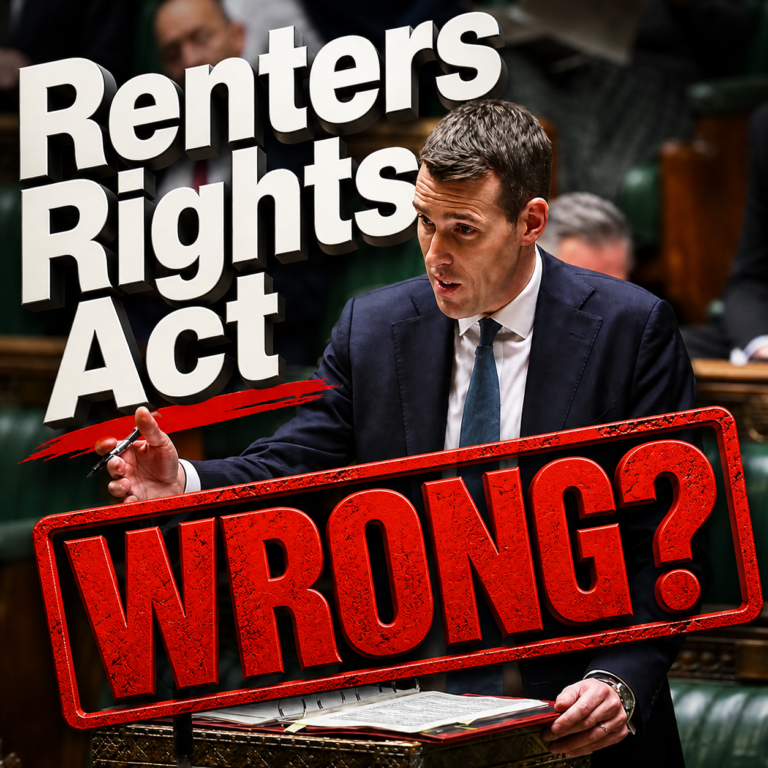
Contrary to what housing minister Matthew Pennycook says, all landlords have more to worry about under his Renters’ Rights Act, and here is why I think so.
In times gone by, it was recognised that social renters found it difficult to cover all costs, so the government ensured they were protected and rent was paid directly to a landlord to keep the roof over their head.
Successive governments have removed this assurance and also reduced rents payable for social tenants. (By keeping LHA benefits flat while workers got rises).
Under section 21, the evidence shows that one in 200 tenancies was subject to a no-fault bailiff eviction, around 0.5%.
However, now, 41% of all social tenancies in some regions were in arrears for less than 13 weeks, and a smaller portion (4%) were in arrears for 13 weeks or more. Whilst this is true of social tenants, the number of private tenants in arrears is not far behind.
This means there are eight times as many people at risk of Section 8 eviction as were being forced out by bailiffs when Section 21 was available.
Essentially, under the Renters’ Rights Act, it’s unlikely evictions will decrease as Section 21 were likely to be because of unpaid rent, they just didn’t ask the question.
A landlord has no control over whether the tenant chooses to pay rent, they can only react. The Renters’ Rights Act ensures the landlord is subject to more cost, delays and stress.
All landlords could find themselves with a non-paying tenant, and all landlords have something to worry about.
What does the Property118 community think?
Thanks,
Paul
17 comments on this article
A different perspective could help you spot an issue, avoid a mistake or find a better way forward. Read the comments and add your own views if you wish.
Previous Article
Landlord exit risk because of Renters’ Rights Act
6 months ago | 11 comments

6 months ago | 5 comments

6 months ago | 1 comments
Member Since July 2024 - Comments: 129
10:19 AM, 6th May 2026, About 5 months ago
Yep, we evicted a benefits tenant on S21 , rent arrears, social misbehaving, druggie. Sold after this experience. Wouldn’t ever take that risk again even tho the Government paid us directly.
Member Since April 2018 - Comments: 637
10:52 AM, 6th May 2026, About 5 months ago
Next move by this government will be to ensure we are back to the 1950/60s with sitting tenants and unsaleable properties. Get this dreadful government out.
Member Since October 2022 - Comments: 275
7:17 PM, 6th May 2026, About 5 months ago
Obviously as the great physicist Sir Isaac Newton said so many years ago, for every action, there is an equal and opposite reaction. And as the chemist le Chatelier said, if you unbalance an equilibrium, it will move in such a way as to minimise the effect of the change.
So landlords will react by being far more proactive about dealing with issues like rent arrears, either by rigorous vetting to avoid subprime tenants in the first place, or by meticulously keeping evidence and acting at the first sign of trouble, issuing formal notices of arrears instead of informal ones, and beginning proceedings at the earliest possible date instead of taking time to try to help the tenant or negotiate with them.
And things like annual rent rises and maximising returns will become the norm rather than the exception. So the disgraceful stereotype of the “greedy landlord” will become true by necessity rather than by choice.
Member Since May 2024 - Comments: 170
10:37 PM, 6th May 2026, About 5 months ago
A section 21 was a “no reason given” end of a fixed term tenancy but everyone allowed the organisations like Shelter to coin a phrase implying that landlords were at fault.
There obviously were reasons for ending agreements under S21 which will now be laid bare, reasons which will probably keep problem renters from private or social housing. This might have been good news except the court system we have to pay for has delays of many months costing thousands which will not be recoverable in most cases. This is why the comments that “good landlords have nothing to fear” is naive or dishonest.
Member Since July 2023 - Comments: 93
4:16 AM, 7th May 2026, About 5 months ago
Yes it’s disingenuous to suggest landlords have nothing to worry about when laws are tightened for all landlords and we will be further penalised for tenants who don’t pay due rent. Maybe delusional on behalf of the government certainly damaging for the rental market.
Member Since August 2025 - Comments: 55
10:30 AM, 7th May 2026, About 5 months ago
As we said no landlord will ever evict a good tenant except if the family needed the extra accommodation or upgrading. If this dreadful RRB is not scrapped then the landlords should contribute to challenge this law in court of law to ask what rights does anyone have over your investment to take away all the control ? Apart from general taxes etc. Any judge will think that after the successful eviction why can’t you re rent the property to reduce the countries renters burden on the country. It appears the law encourages to people sit back do not invest or take risk and slow the economy to no point of return or equivalent to third world country. This is a dreadful act should be scrapped immediately to encourage investment ?(which if government can’t do it then who can the question they need to ask themselves? )and make uk to be attractive place to invest. Or carry on with doom and gloom..
Joe
Member Since May 2018 - Comments: 2550
12:18 PM, 8th May 2026, About 5 months ago
Reply to the comment left by David at 06/05/2026 – 10:52
The iPaper just carried an article with a story about a retired policeman who gets more from his holiday let than he gets from his police pension:
https://inews.co.uk/inews-lifestyle/money/property-and-mortgages/get-holiday-let-police-pension-4393070
So that’s not some ghetto landlord or the Duke of Westminster with an enormous property portfolio…it’s an ex public sector worker who invested in property and now uses it to supplement his public sector pension. In this case that’s as a holiday let so he doesn’t have the problem of trying to evict a non-paying tenant. Over the last decade we have seen a succession of government ministers coming through the revolving door of the housing ministry who have made providing buy-to-let accommodation to long-term tenants much less attractive than providing short-term holiday lets. And it’s not just the rich who invest, it’s often small landlords trying to supplement a pension, as is the case with this story.
Although Matthew Pennycook says that the government is investing in the courts to ensure that landlords who have tenants that don’t pay, don’t look after the property, or exhibit antisocial behaviour can be got rid of, the truth is that this just HASN’T HAPPENED YET. This government is full of empty promises. For many landlords, short-term holiday lets will still be more attractive than the possibility of having a tenant that they can’t evict because the courts are overwhelmed and can’t deal with them.
Matthew Pennycook hasn’t made the situation any better yet and the chances are that he isn’t going to be around long enough to make any difference.
The parties, ministers and leaders who aren’t completely nuts are the ones who aren’t talking about introducing rent controls.
Member Since May 2021 - Comments: 3
10:34 AM, 9th May 2026, About 5 months ago
Reply to the comment left by Beaver at 08/05/2026 – 12:18
But the important point for councils and the Government is that councils will NOT be obliged to house tenants evicted under S8 because they became vVOLUNTARILY homeless – it is their fault they were evicted (rent arrears etc), whereas under S21 the council was obliged to house them because they were involuntarily evicted – through no fault of their own
Member Since July 2023 - Comments: 22
11:03 AM, 9th May 2026, About 5 months ago
Most landlords aren’t “profiteers” — they’ve invested personal taxed income, taken the risk, paid the tax, and carry the mortgage, repairs, and compliance.
When rent stops, they can’t just shrug; they absorb the loss.
So yes, hard-working landlords have plenty to worry about under laws that make possession slower and more costly.
Member Since April 2018 - Comments: 637
11:45 AM, 9th May 2026, About 5 months ago
Reply to the comment left by Ben Beadles Alter Ego at 09/05/2026 – 11:03
According to this government landlords are not working people.