

Landlords sitting on significant idle equity


A theme emerging from the latest landlord data is not about borrowing, but about what is not being done with idle equity. According to the Property118 Landlord Sentiment Survey Q1 2026, a large proportion of landlords now operate with low loan-to-value ratios or no borrowing at all, indicating substantial levels of idle equity sitting within portfolios.
Based on 2,380 completed responses, the majority of landlords report loan-to-value ratios below 50%, with many holding properties outright. You can explore the full dataset here.
The implication is clear: significant capital exists within the sector, but much of it is not actively deployed.
Equity without direction
For many landlords, equity has built up gradually over time through capital growth and mortgage repayment. This has created a position of financial strength, but not always a clear plan for what that capital is intended to achieve. In some cases, it simply remains within the properties themselves, without being actively utilised.
This is not necessarily a problem, but it does raise an important question:
If the equity is not being used to support growth, income or wider financial planning, what role is it serving?
From growth to preservation
The shift towards lower leverage suggests a broader change in mindset. Earlier stages of portfolio building often involve higher borrowing levels to accelerate growth. Over time, as portfolios mature, the focus tends to move towards consolidation and risk reduction.
The survey findings reflect this transition.
Many landlords are no longer looking to expand aggressively. Instead, they are holding substantial equity while reassessing their long-term objectives.
Opportunity or inefficiency?
Unused equity can be viewed in two ways. On one hand, it provides security. Lower borrowing reduces financial risk and creates resilience against market fluctuations. On the other, it may represent an opportunity cost.
Capital tied up in property is not easily accessible, and if it is not being actively deployed, it may not be contributing fully to income generation or broader financial planning.
This is where the distinction between holding assets and actively managing them becomes more relevant.
A factor in changing behaviour
The presence of significant equity also influences how landlords respond to current market conditions. As highlighted elsewhere in the Property118 dataset, many landlords are planning to reduce their portfolios or exit entirely. When equity levels are high, these decisions become easier to implement. Selling a property with low or no debt is a straightforward way to release capital, particularly if there is no immediate need to refinance or restructure, but is that the best option to choose?
A turning point in how portfolios are used
The data suggests that many landlords are approaching a turning point. Having built substantial equity over time, the focus is shifting from accumulation to utilisation. The question is no longer how to build the portfolio, but what to do with what has already been created.
For now, one conclusion stands out: a significant proportion of landlord wealth is tied up in property, but without a clear strategy, that equity risks remaining passive rather than productive.
A conversation worth having?
If you are weighing up your own strategy, whether that’s to sell, expand, or restructure to improve profitibility, it is worth having a discussion with a Property118 consultant to take a closer look at how your portfolio is structured as a whole now, and to forecast the outcomes based on multiple scenario’s.
These conversations are typically most useful for landlords with established portfolios and relatively modest borrowing who are beginning to reflect on how their assets could work more effectively in the years ahead.
|
★★★★★
|
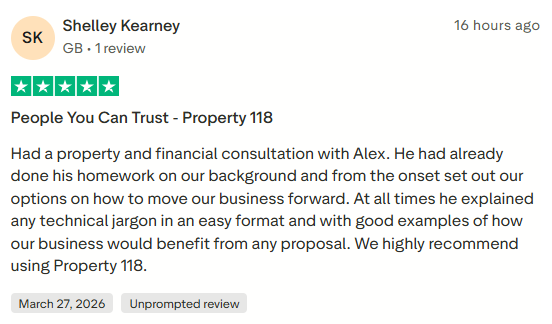
Help other landlords find Property118If you have found Property118 useful, a short Trustpilot review would make a meaningful difference. It helps other landlords decide whether our research is worth following. |

5 comments on this article
Learn from your peers’ experience
A different perspective could help you spot an issue, avoid a mistake or find a better way forward. Read the comments and add your own views if you wish.


Previous Article
Claims of a landlord exodus are 'unfounded'Next Article
Landlord exit risk because of Renters’ Rights Act
Member Since December 2023 - Comments: 1665
10:06 AM, 5th May 2026, About 6 months ago
There was a time when I may have used my equity to buy more properties for tenants to live in.
This gave government SDLT and income tax receipts and gave house builders encouragement to build houses.
Government don’t want me to that these days so now my equity sits in existing property.
This is MY money from MY investment. I can’t put in ISAs but government can leave it alone. It is not their equity.
Member Since January 2024 - Comments: 427
10:47 AM, 5th May 2026, About 6 months ago
I’m selling up and releasing equity. BTL is no longer an attractive investment, I want low admin, low risk, low tax investments. Paying 50% tax as a 40% taxpayer on BTL profits is not very appealing!
If my BTL makes a loss due to interest/finance costs then paying an infinite rate of tax on that loss is even less attractive (assume £30k profits, 30k interest, 40% taxpayer on the rental profits = £6k tax on a loss, so tax rate = infinity!).
Member Since May 2023 - Comments: 240
3:59 PM, 5th May 2026, About 6 months ago
Reply to the comment left by Cider Drinker at 05/05/2026 – 10:06
Section 24 Finance Act taxation on costs not profits means the only way to keep it yours is to prioritise paying off the Finance to reduce tax costs to zero, or as Mark says underutilised capital.
Osborne thought he was helping companies but actually banks without mortgage lending revenue have to chose higher risk lending than property assets.
Member Since December 2023 - Comments: 1665
5:08 PM, 5th May 2026, About 6 months ago
Reply to the comment left by PAUL BARTLETT at 15:59
That’s what I did.
Now, my plan is to sell up and spend the money on foreign holidays and to gift some to my children that live abroad.
Member Since January 2024 - Comments: 427
5:33 PM, 5th May 2026, About 6 months ago
Reply to the comment left by Ryan Stevens at 05/05/2026 – 10:47
The position is even worse for younger or higher income landlords. The rental income BEFORE interest is income that counts towards:
1. Student loan repayments
2. Income for Child Tax Credit restrictions
3. Income for personal allowance restrictions (if it takes your income over £100k)
4. The £100k limit for free childcare.
So, even if you make a loss, or minimal income, AFTER interest you can pay 50% tax AND possibly:
– pay MORE Student loan repayments
– LOSE Child Tax Credits
– LOSE your personal allowance
– LOSE your free childcare hours
It is insane, and makes you question why you would ever buy or retain a BTL property, or, if you did, why you would buy it personally, instead of in a company!
I haven’t bothered to calculate the effective tax rates/loss of other benefits, but in some cases it must be close to 100%, or even exceeding, the net rental income after interest.