

London boroughs’ EPC rankings revealed
6 months ago


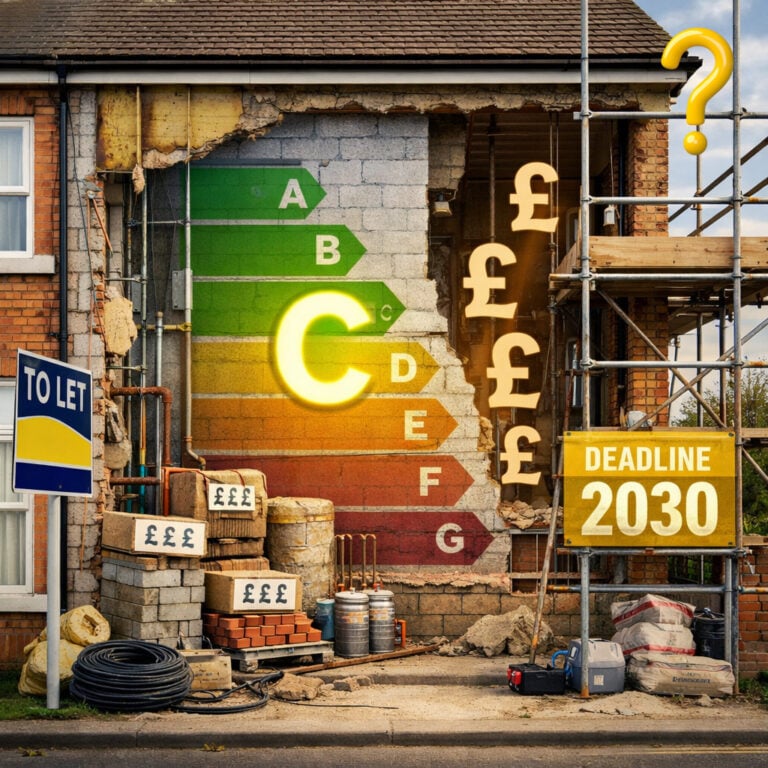
I’ve been digging into the EPC open data register to work out what the EPC C 2030 deadline actually means in practice for a typical small portfolio. Not the headline figures from government consultations, the actual numbers from real EPC certificates in real postcodes.
Thought it might be useful to share what I found, because the picture is more nuanced than “it’ll cost you £6,000-7,000” that keeps getting quoted.
The government publishes every EPC certificate through their open data portal (epc.opendatacommunities.org). It’s free to access. Each certificate includes the current rating, the potential rating after improvements, and a list of specific recommended upgrades with estimated cost ranges.
I pulled every domestic EPC in my local authority area and filtered for properties currently rated D, E, F, or G , the ones that need upgrading.
The spread of upgrade costs is enormous. A D-rated mid-terrace from the 1930s with reasonable loft insulation and double glazing might only need a boiler upgrade and cavity wall insulation to hit C, potentially £2,500-4,000 total. A solid-wall Victorian end-terrace rated E with single-glazed sash windows and no loft insulation could easily exceed the £10,000 cost cap.
The single biggest factor in whether your upgrade is affordable is wall type. Cavity wall insulation costs £350-500 and can shift your rating by 5-10 points. Solid wall insulation (internal or external) costs £5,000-15,000 and many landlords on Property118 have rightly pointed out it can cause damp issues in older properties.
The second factor is your current heating system. If you’ve got a modern condensing gas boiler rated A, you’ve already banked those points. If you’re still on an old non-condensing boiler, the swap alone (£2,000-3,000) can add 10-15 points to your score.
Properties that achieve EPC C under the current assessment method (EER) before October 2029 will be deemed compliant until their EPC expires, which is 10 years. That means if you get assessed at C under the current system before the new Home Energy Model kicks in, you’re potentially covered until 2039.
The new HEM system requires you to meet two criteria: fabric performance AND either smart readiness (solar panels, battery storage) OR heating system performance (heat pumps). This is likely to be harder and more expensive to pass. Several people on webinars have confirmed this interpretation.
So there’s a genuine argument for getting your properties assessed sooner rather than later under the current system, even if your EPCs aren’t due for renewal.
What I’d actually want to know per property after going through this exercise, I realised what would actually help me (and I suspect many landlords) is a simple per-property view.
The specific upgrades recommended for THIS property (not generic advice)
What I’d actually want to know per property:
I’m curious, how many of you have actually looked up your properties on the EPC register and gone through the specific recommendations?
And for those who’ve already started upgrading, did the recommended improvements actually move the needle the way the certificate predicted, or was the reality different?
Interested to hear real experiences. The government estimates feel very average-based and I suspect the property-by-property variation is huge.
Thanks,
Kshitig
68 comments on this article
A different perspective could help you spot an issue, avoid a mistake or find a better way forward. Read the comments and add your own views if you wish.
Previous Article
Rents tick up as Renters’ Rights Act deadline approaches
6 months ago
6 months ago | 1 comments

7 months ago | 1 comments
Member Since October 2024 - Comments: 17
10:02 AM, 2nd April 2026, About 6 months ago
Kshitig, one thing to be aware of is that Solid Wall Insulation is going to be an Exemption option for landlords, at their discretion, where the Solid Wall Insulation would be the only item preventing from getting to a C rating. This does not mean Landlords will have to do nothing, as other recommendations will appear on the EPC that could be done. Government appear to have listened to Landlords about the damp issue, probably because of the fiasco with the solid wall insulation installs reported on in the media over the last couple of years.
Member Since August 2018 - Comments: 170
10:53 AM, 2nd April 2026, About 6 months ago
I can’t help feeling that solar panels are the best option to move the score upwards significantly and quickly. It seems to increase the score by around 9 points for a 2.5KW system and is not particularly invasive. Presumably, a 4KW system would give a higher score. Forget about underfloor or wall insulation for Victorian houses – they’re far too disruptive for the tenants.
Member Since May 2018 - Comments: 2550
10:53 AM, 2nd April 2026, About 6 months ago
Reply to the comment left by Peter Rowley at 02/04/2026 – 10:02
One of my concerns about the various EPC upgrade proposals over the years is filling the cavity. The cavity is there to allow the wall to ventilate. Moisture enters the cavity both from inside the house and outside the house although it’s most likely to come from the external skin where the external skin faces the prevailing weather. If you fill the cavity on an old house you face problems with rotting floor joists as well as damp and mould. The roof on an old house also needs to be able to breathe.
The cost of putting the cavity wall insulation in is negligible compared to the cost of rectifying problems when the insulation fails, the situation must be rectified, and the cavity needs to be cleared out. The cost of the work can exceed the value of the house. Apart from simple measures like increasing the depth of lost insulation, the cost of alternatives also far exceeds government estimates of what it costs to upgrade a Band C house because you have to factor in internal insulation and making good. It’s likely to be tens of thousands, not thousands.
Another complication is that the timing of when you do work can affect which bits of expenditure are calculated towards what you are required to spend to effect your EPC upgrade. With previous government EPC schemes energy efficiency measures I had previously spent money on fell before the date from which expenditure was allowed to count towards the latest upgrade scheme. So you are actually taking a risk if you spend money before you know what the final shape of the scheme is going to be.
It seems to me that rather than going down the punitive route the government should instead look at capital allowances and tax incentives to improve property energy efficiency. Like for example permitting you to offset all your finance costs for a property at EPC band C+. And making it clear that capital investment to improve energy efficiency can be written off against revenues, rather than being capitalised.
Member Since May 2018 - Comments: 2550
11:01 AM, 2nd April 2026, About 6 months ago
Reply to the comment left by Martin Thomas at 02/04/2026 – 10:53
I think that solar panels are likely to be part of the solution but the problem is you get next to nothing for energy sent back to the grid so there’s no incentive for either landlord or tenant to do it. If you want to install solar panels to reduce energy bills you need both the panels and the energy storage battery. It won’t decrease your energy bill but if you are also concerned about energy security and want to consider air or ground source heat pump to replace gas then you also need a lot more kit and internal work. Government figures on this fanciful and the only solution to making the numbers work is altering the tax system to make sustainability and energy security work for landlords, tenants, and owner occupiers.
Member Since April 2026 - Comments: 4
11:27 AM, 2nd April 2026, About 6 months ago
Reply to the comment left by Peter Rowley at 02/04/2026 – 10:02
Thanks Peter, that’s a really important point about the solid wall exemption. I wasn’t aware that had been confirmed.
From what I’ve seen in the EPC register data, a significant proportion of below-C properties in older local authority areas are solid wall construction. If those landlords qualify for the exemption, the effective number of properties that genuinely need expensive upgrades drops considerably. The question is whether most landlords are aware this exemption exists, or whether they’re making sell/hold decisions based on the assumption that solid wall insulation is unavoidable.
Do you know if the exemption applies automatically based on the EPC assessor’s recommendation, or does the landlord need to actively register it?
Member Since April 2026 - Comments: 4
11:29 AM, 2nd April 2026, About 6 months ago
Reply to the comment left by Martin Thomas at 02/04/2026 – 10:53
Good point on solar panels. The 9 points for a 2.5KW system is one of the best point-per-pound ratios available, especially compared to solid wall insulation which costs 10x more for a similar or smaller uplift.
One thing worth flagging though: the new Home Energy Model replacing the current EPC methodology from late 2027 includes “smart readiness” as one of its compliance paths. That effectively means solar panels or battery storage. So landlords who install solar now are arguably future-proofing against the HEM change as well, not just meeting the current EPC C target. It might be one of the few upgrades that works under both the old and new assessment systems.
The complication, as you say, is Victorian properties where roof orientation, structural capacity, or conservation area restrictions make solar impractical.
Member Since April 2026 - Comments: 4
11:38 AM, 2nd April 2026, About 6 months ago
Reply to the comment left by Beaver at 02/04/2026 – 10:53
This is a really thorough breakdown and I agree with most of it, particularly on cavity wall risks.
The ventilation point is critical and consistently underestimated in the government’s cost estimates. The £6,100-6,800 average they cite assumes cavity wall insulation is straightforward, but for pre-1930s solid wall or older cavity properties, the remediation costs when insulation fails can dwarf the installation cost. I’ve seen cases referenced in EPC assessor forums where clearing failed cavity fill has cost £15,000-20,000 — more than the entire cost cap.
On timing, you’ve identified the core dilemma. The cost cap counts spending from October 2025, but the EPC methodology itself is changing to the Home Energy Model in late 2027. Spending now under the current assessment could achieve a C that’s grandfathered until expiry, but the new HEM metrics might require different upgrades entirely. The rational response for many landlords is to wait for clarity, which is exactly what 75% of landlords in the Pegasus Insight survey said they’d do.
Your point about capital allowances is well made. The current treatment of EPC upgrades as capital expenditure rather than allowable revenue expense is arguably the single biggest barrier to voluntary compliance. If the government made energy efficiency improvements deductible against rental income, the payback period would roughly halve for higher-rate taxpayers. That would shift the economics from “I can’t afford to upgrade” to “I can’t afford not to.”
Member Since May 2014 - Comments: 101
11:39 AM, 2nd April 2026, About 6 months ago
I’ve got a simple spreadsheet of my properties with what improvements will get me what points…and I’m doing the low-hanging fruit. When I get to a C I’m having a new EPC to confirm, they’re not expensive in the grand scale.
In 2029 I’ll be getting all C and above properties reassessed and future-proofing for 10 years, which could see me out!
I’ve got one 6-bed HMO let by room where I pay all the utilities. I had solar installed last November and in March I began to see the rewards as the sun came out. I got a battery but I’m not convinced it was worth it with the deal I got from Ovo. I get 20p from exporting surplus (SEG). If it goes into the battery and gets used I save 25p by not importing – so only 5p per unit saved. I think the battery was about £2k (it’s not split out on the quote) – so payback is 40,000 units, so quite a long time. Depends on the deal you get of course but I think a battery can easily be retro-fitted if the calculations change.
Member Since May 2018 - Comments: 2550
11:46 AM, 2nd April 2026, About 6 months ago
Reply to the comment left by Kshitig Tiwari at 02/04/2026 – 11:27
The problem is that a lot of older properties don’t have solid walls…they have cavities, but cavities that should not be filled. They should instead be left to allow the walls to breathe; and these properties also need to qualify for exemption. I don’t know whether anybody on this discussion group has ever applied for a grant for EPC improvements, but whenever I’ve done so access to the grant has always been administered by a company selling cavity wall insulation. Unless you commit to the cavity wall insulation you don’t get the grant. So if the cavity should not be filled then without the relevant tax allowances there’s no way forward.
Member Since May 2018 - Comments: 2550
11:47 AM, 2nd April 2026, About 6 months ago
Reply to the comment left by Neil P at 02/04/2026 – 11:39
If you’ve got a 6-bed HMO where you pay all the utilities then I can see how you could make solar panels work. But for your typical band D property rented out to a tenant with the tenant paying the energy bill there’s no incentive to do this. You may even be penalised for doing this.