



Social housing landlords fail to tackle repairs ahead of Awaab’s law
12:01 AM, 25th September 2025, 1 year ago
Categories:
The Housing Ombudsman reveals social housing landlords are still failing in their duties ahead of Awaab’s Law coming into effect next month.
The organisation’s Annual Complaints Review 2024–25 shows complaints continue to rise, with 71% of complaints upheld.
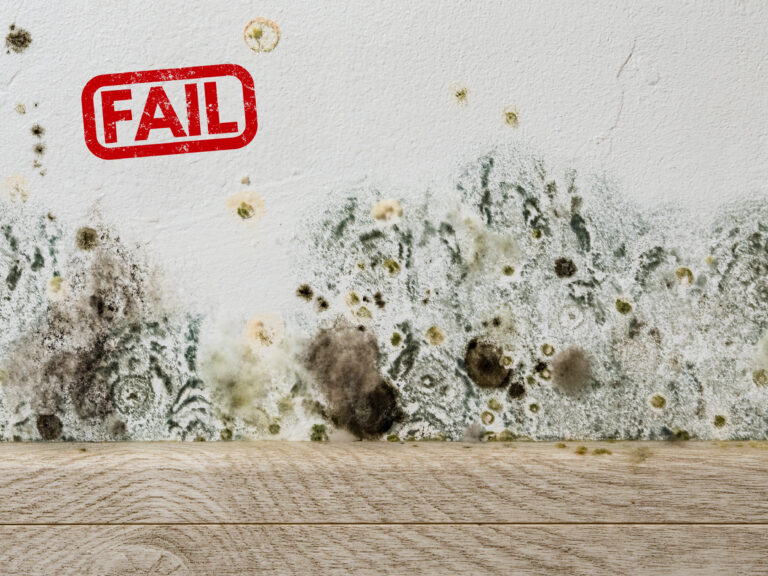
Awaab’s Law will require all social housing landlords to fix dangerous damp and mould within set timeframes and to complete emergency repairs within 24 hours.
Rise in damp and mould complaints
According to the review, 120 landlords had a maladministration rate of over 75%, and 16 landlords improved significantly since last year.
The Housing Ombudsman investigated 43% more complaints about repairs and found that local authorities, as well as housing associations with between 1,000 and 10,000 homes, are struggling more than other landlords to provide timely responses to complaints.
The review reveals that in one case in London, a household lived for two years with bin bags covering a hole in their living room ceiling, posing a risk of asbestos, while another resident lived for three years without functioning heating and hot water.
The review also reveals a rise in damp and mould complaints, with more than 40% of compensation paid out to tenants for failures in handling leaks, damp, and mould. Cases with the largest compensation orders often included amounts calculated based on the rent paid by residents while living in poor conditions.
In 578 cases, the Housing Ombudsman made compensation orders of more than £2,000, more than double the average amount. The largest order in 2024–25 was nearly £32,000.
Acute pressures remain for some social housing landlords
There have been cases of improvement, with evidence of better performance in the complaint handling category, including a 7% drop in maladministration rate and 117 fewer severe maladministration findings.
Two social housing landlords, North Devon Homes and Pickering & Feren Homes, were investigated for several complaints, but no failings were found.
Richard Blakeway, Housing Ombudsman, says there is still room for improvement: “Governing bodies will determine whether complaints are seen as a threat or an opportunity. Our annual review provides them with a strategic moment to reflect on their organisation’s progress.
“Re-examination can be an unforgiving lens. But there are reoccurring lessons across thousands of complaints, which if addressed could prevent future service failure. Culture, communication, and data integrity are pivotal to the outcome of a complaint.
“This review shows the first signs of the sector’s complaint handling improving. It is from a high failure rate and focus cannot be diverted. Still, it shows some things are starting to work.
“But improvements are not universal and are being made quicker by some than others. Acute pressures remain for some social landlords, with the negative impact on the lives of some residents. This review is an opportunity to look afresh at how to improve practice, policy, and performance. And our proactive interventions with some landlords to promote learning from complaints will remain vital.”
Landlords must continue to learn from complaints
Mr Blakeway adds with new legislation around the corner, social housing landlords must prepare.
He adds: “Landlords work in a complex and changing environment. This will include more use of Artificial Intelligence by both landlords and residents in the complaints process. It also includes legal and regulatory changes.
“The advent of Awaab’s Law, a reformed Decent Homes Standard, and the Regulator’s Competence and Conduct Standard could transform housing management over the next decade.
“To ensure the success of these measures, landlords must continue to learn from complaints for the benefit of this and future generations.”
Tags:
Awaab's law, damp and mould, housing complaints, housing ombudsman, social housing, social housing landlords, Tenant rights
Be the first to comment
Your experience could help the next reader
Have you dealt with something similar? Share what you learned, raise a question or offer a perspective your peers may find useful.
Related Articles

Housing Ombudsman criticises social housing landlords over delays in fixing faulty windows
1 year ago | 4 comments

Council to spend millions of pounds to fix damp and mould ahead of Awaab’s Law
1 year ago | 8 comments
Not a member yet? Join In Seconds
Login with