

Spring Budget Statement 2025 – Landlord Reactions
2 years ago | 5 comments


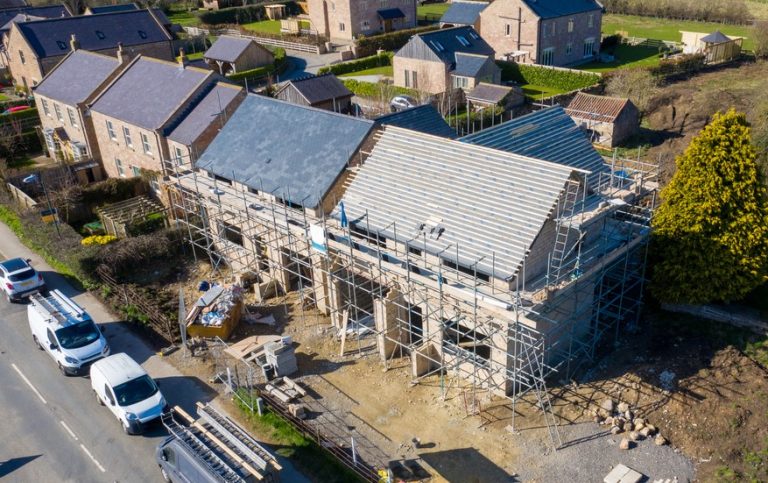
The government’s ambition to tackle the housing shortage is facing a setback, as fresh statistics highlight that it will fail to deliver the number of homes needed to meet its ambitious target in England.
Deputy Prime Minister Angela Rayner has championed a scheme to build 1.5 million homes by 2029 in a bid to address the crisis.
However, projections from the Office for Budget Responsibility (OBR) cast doubt on this plan, suggesting that even with sweeping planning changes unveiled in Chancellor Rachel Reeves’s Spring Statement, the goal will be out of reach.
Ms Reeves confidently told Parliament that the government would come within ‘touching distance’ of the 1.5 million mark and is projecting 1.3 million new properties by the decade’s end.
However, this total includes home construction across Scotland, Wales and Northern Ireland.
In England, it is estimated that just one million homes will actually be built.
But the OBR’s analysis also reveals that a big chunk of these new builds would have occurred irrespective of the government’s policy shifts.
The forecast shows that Ms Rayner’s planning overhaul will yield just 170,000 extra homes in England – which is barely a quarter of what’s needed to fulfil her pledge.
While ministers tout the financial uplift these properties will bring, the Home Builders Federation warns that broader action, such as easing mortgage access for first-time buyers, is critical to bridge the gap.
A government spokesperson countered that forthcoming initiatives, absent from the OBR’s outlook, will bolster efforts to hit the 1.5 million milestone.
One crucial aspect for hitting the target are mandatory building quotas for local councils to approve more developments.
That’s in response to last year’s dismal record of just over 30,000 projects being greenlit in England.
Neil Jefferson, the chief executive of the Home Builders Federation, told the BBC that while the planning tweaks are ‘very positive’, tackling ‘other barriers’ is essential to reverse dwindling supply and provide desperately needed homes.
He stressed that ‘further interventions are urgently needed’ to ramp up construction to the necessary scale.
The government insists the OBR’s projections overlook key measures, such as the Planning and Infrastructure Bill, a long-term housing blueprint, and an expanded Affordable Homes Programme, which will drive progress.
A government spokesperson said: “The OBR forecast only factors in reforms to the National Planning Policy Framework in England which is just one element of this government’s efforts to increase housebuilding.”
7 comments on this article
A different perspective could help you spot an issue, avoid a mistake or find a better way forward. Read the comments and add your own views if you wish.
2 years ago | 5 comments

2 years ago | 2 comments

Member Since July 2013 - Comments: 762
11:55 AM, 31st March 2025, About 2 years ago
What a surprise…
The building numbers were only ever an attention/vote grabbing headline. It was entirely foreseeable that the numbers were completely unachievable. They just pluck numbers out of the air without regard to the underlying requirements.
Can’t politicians see that we can see through them to the reality beyond the nonsense?
Member Since September 2018 - Comments: 3744 - Articles: 5
12:58 PM, 31st March 2025, About 2 years ago
it was never a viable ‘target’ in the first place. Merely a soundbite that many wanted to hear to pacify the claim they were not going to do anything at all…
Irrelevant if the ‘plan’ succeeds or not. They are adept at blaming everyone/everything else so we all know what the end result is going to be.
Immigration increasing (legal or otherwise) and not enough housing for past or current need yet – forget future need!
Member Since September 2018 - Comments: 3744 - Articles: 5
1:03 PM, 31st March 2025, About 2 years ago
Reply to the comment left by Freda Blogs at 31/03/2025 – 11:55
its not landlords they need to pacify though is it?
All this is to apparently help the homeless/those in temp accommodation…blah blah blah.. stop people getting evicted for ‘ no reason’ from evil rogue landlords… blah blah blah
Little do those who need this help/fit into these categories, realise the tsunami coming with the RRB and all its implications…
It may not be a loud bang when the RRB hits, but boy are the aftershocks going to rumble for some time to come….
Member Since June 2019 - Comments: 973
9:10 PM, 31st March 2025, About 2 years ago
Does anyone know anybody who actually believed that target. Even people with no experience of property market were saying it was a fantasy figure.
Member Since May 2018 - Comments: 2550
11:50 AM, 1st April 2025, About 2 years ago
Reply to the comment left by Paul Essex at 31/03/2025 – 21:10
I think this target is a bit like targeting ‘non-doms’. The government know very well that if you target ‘non-doms’ then these people just up sticks and move to Monaco, reducing the tax-take and increasing the burden on the other UK tax-payers. The target is just there so that they can pretend to the voters that they are ‘doing something about the property crisis’….they are doing something about the property crisis…they are making it worse by penalising property owners from investing in property.
Measures like this are just an excuse to attack property-owning middle-income earners which is what most socialist governments do…they like sticks, not incentives. Tony Blair’s ‘think tank’ has just come out and said that bigger properties should be taxed more in council tax:
https://www.telegraph.co.uk/money/property/tax-bigger-homes-more-to-force-boomers-to-downsize/?msockid=0b8a4155c7db6ba1058955b1c6196a07
This suggestion is apparently to “encourage more boomers [with empty rooms] to downsize”. And the suggestion was to ditch the current council tax calculation and tax all properties [I’m guessing that would mean rental properties as well] at a % of the ‘current property value;, whatever that may mean. I’m not really sure that Tony’s “think tank” was really thinking when it thought that one through. It’s another weapon-of-mass destruction and it’s typical of left-wing policy…all stick and no carrot.
What a sensible government would do is make the rent-a-room scheme more generous and extend it such that lodgers from more than one family could be accommodated without the necessity of registering as a HMO. Then there’d be some carrot, not just a socialist stick driving people out of their homes that they’ve perhaps finally acquired after paying a mortgage for 30-50 years.
Member Since March 2024 - Comments: 13
10:51 PM, 10th April 2025, About 2 years ago
I don’t get it, Government say we need 1.5million new homes yet the birth rate has stagnated, possibly fallen , we are told there are 70,000 less kids in school than 2017/18. Most of these (50000) in Greater London.
We certainly don’t need extra homes for our children.
So we can only need extra homes for adults-unmarried, divorced or single adults?
Or would the Government do better to make an incentive to get or stay married.
Member Since May 2018 - Comments: 2550
11:19 AM, 11th April 2025, About 2 years ago
Reply to the comment left by Martin R at 10/04/2025 – 22:51I think the issue is complex: It involves societal change (people wanting to move out of their current accommodation rather than live with their parents, or wanting to live in single accommodation, or single-couple accommodation rather than shared-accommodation). And there is the effect of growing net-migration which both makes it harder to accommodate these societal changes, and also fuels support for right-wing parties like Reform.
There is also an issue of people wanting to move to areas where there is work, good education provision, transport links etc. They don’t necessarily want to buy near the steelworks at Scunthorpe for example.
Net migration does have an effect. Scotland badly needs net migration but people migrating there don’t necessarily want to stay there: They are more likely to want to move to be near London, Birmingham or Manchester where there are more job opportunities, possibly also communities with whom they have some kind of connection, and quite likely also better education and healthcare.
There is of course an issue of affordability and that’s also complicated. It’s difficult to save for a deposit for a house if rents are high; it’s difficult to get or pay for a mortgage if interest rates are high. It’s also difficult to afford a house if your salary is being held down. Increasing the minimum wage and employers national insurance has the effect of holding wages down and disincentivising growth in the economy. This make it harder for working people to afford homes and because builders are also punished by these measures it makes it harder to build homes.
So if you don’t get it….don’t worry, you are not alone!!! The government doesn’t get it either.
And on giving people an incentive to stay married, at the moment you are PENALISED for being married.