

Knotweed affecting value of property
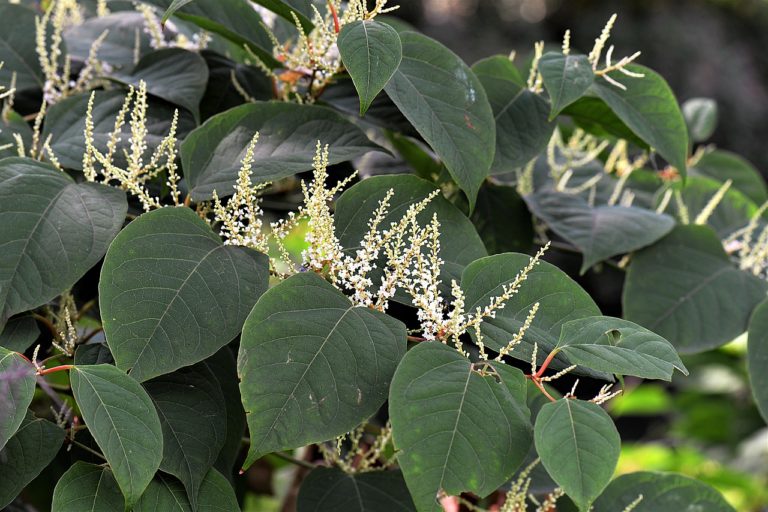

In just two months the Japanese housing horror, knotweed, will start to rear its ugly head again and by June it will have grown to over three metres.
Tradespeople comparison site, HaMuch.com, has looked at the value being wiped from UK house prices due to the nation’s growing knotweed epidemic and what this equates to for the average homeowner in different areas across the UK.
It’s believed that at least 5% of homes across the UK are affected by knotweed, knocking 10%, or £23,530, of the average UK property’s value. With 29 million homes across the nation, that’s 1,450,000 properties impacted with a huge £34.12bn wiped off in value.
The cost of dealing with knotweed is hefty and can run into tens of thousands of pounds for even a modest size garden, taking as long as five years to treat fully.
All the while, the average UK homeowner will see the value of their home slump by £23,530, this is, of course, higher in London (£47,546), the South East (£32,664), the East of England (£29,128) and the South West (£25,976).
With the highest house prices in the land, homeowners in Kensington and Chelsea stand to lose £119,162 on the price of their property if they find it has been infested with knotweed.
Westminster and Camden are the next largest price losses, facing a loss £93,860 and £86,280 respectively, while South Bucks is the home to the largest loss outside of London at £59,792, followed by Elmbridge (£59,673) and Chiltern (£54,617).
Founder and CEO of HaMuch.com, Tarquin Purdie, commented:
“Knotweed is a homeowner’s worst nightmare and there really is no DIY fix for this aggressive backyard vandal. It can take months on end to ensure it has been properly disposed of but can be more costly should you decide to turn a blind eye.
The quicker you can get on top of the problem, the better, as a house with knotweed will not only drop in value but will also struggle to find a buyer.”
| UK – 2019 – overall impact of knotweed | |||
| Existing homes – approx | 29 million homes | ||
| Average UK House Price | £235,298 | ||
| Knotweed impact | 10% | ||
| Knotweed impact value | £23,530 | (Nov 2019 ave hp) | |
| 5 per cent of UK houses are currently affected by knotweed either directly or indirectly | |||
| UK number of homes = | 29,000,000 | ||
| 5 per cent affected = | 1,450,000 | ||
| Therefore: | |||
| Number of affected homes = | 1,450,000 | ||
| Knotweed impact value (on UK ave hp) = | £23,530 | ||
| Total impact in £ value terms = | £34,118,258,466 | ||
| Largest price impact from Knotweed of all UK areas | |||
| Location | Current Average House Price | Impact on value | House Price Afterwards |
| Kensington And Chelsea | £1,191,616 | £119,162 | £1,072,454 |
| City of Westminster | £938,596 | £93,860 | £844,737 |
| Camden | £862,799 | £86,280 | £776,519 |
| Hammersmith and Fulham | £731,044 | £73,104 | £657,940 |
| City of London | £709,998 | £71,000 | £638,998 |
| Richmond upon Thames | £665,390 | £66,539 | £598,851 |
| Islington | £627,907 | £62,791 | £565,116 |
| Wandsworth | £599,334 | £59,933 | £539,401 |
| South Bucks | £597,924 | £59,792 | £538,132 |
| Elmbridge | £596,727 | £59,673 | £537,055 |
| Haringey | £569,364 | £56,936 | £512,427 |
| Hackney | £565,018 | £56,502 | £508,517 |
| Chiltern | £546,167 | £54,617 | £491,550 |
| Three Rivers | £529,439 | £52,944 | £476,495 |
| Barnet | £525,458 | £52,546 | £472,913 |
| East Midlands | £197,792 | £19,779 | £178,013 |
| East of England | £291,281 | £29,128 | £262,153 |
| London | £475,458 | £47,546 | £427,913 |
| North East | £130,712 | £13,071 | £117,641 |
| North West | £169,362 | £16,936 | £152,425 |
| South East | £326,636 | £32,664 | £293,973 |
| South West | £259,758 | £25,976 | £233,782 |
| West Midlands Region | £204,238 | £20,424 | £183,814 |
| Yorkshire and The Humber | £165,642 | £16,564 | £149,078 |
| England | £251,222 | £25,122 | £226,100 |
| Wales | £172,574 | £17,257 | £155,316 |
| Scotland | £154,798 | £15,480 | £139,319 |
| Northern Ireland | £139,951 | £13,995 | £125,955 |
| United Kingdom | £235,298 | £23,530 | £211,769 |
2 comments on this article
Learn from your peers’ experience
A different perspective could help you spot an issue, avoid a mistake or find a better way forward. Read the comments and add your own views if you wish.
Member Since November 2015 - Comments: 45
12:11 PM, 24th January 2020, About 7 years ago
This appeared to work when I tried it a number of years ago:
spray down with industrial strength Roundup mixed with Diesel about 5:1.
Member Since November 2018 - Comments: 52
12:42 PM, 29th January 2020, About 7 years ago
You can spray with Glyphosate (round up) but this needs doing every year at growing phase for up to 5 years to properly remove. I wouldn’t recommend using diesel because this will cause pollution and ground contamination, which is illegal. In my previous job we used to inject undiluted Glyphosate into each growing stem. This is done when it starts to grow after winter, inject each stem with Glyphosate and it will kill the plant and roots. It would be difficult to ensure you’d got it all if you let grow, it has to be at the start of the growing season. Please check the product safety data sheet for health and safety instructions.