

Landlords face a shock 2028 deadline for meeting EPC ‘C’ deadline
1 year ago | 60 comments


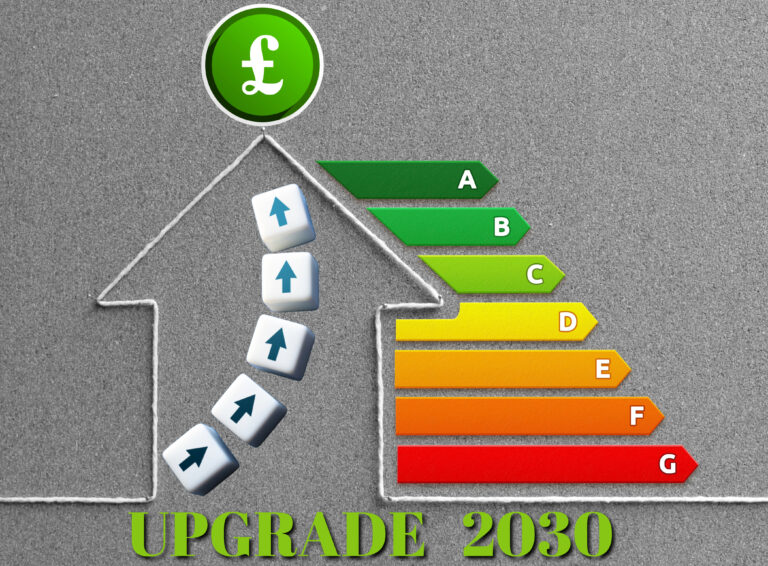
Research reveals that 2.58 million homes in the private rented sector will need upgrading to meet an EPC C requirement.
The findings from epIMS come after the government announced its EPC consultation which could see new tenancies having to meet the C Rating from 2028.
For all tenancies, the deadline is 2030.
However, the government says that it could cost up to £8,000 to upgrade – meaning England’s landlords face a £19.8 billion bill to meet these new standards.
In London, where there are 1.2 million private rentals, upgrading costs are higher at £9,000 to leave landlords looking at a total bill of £4.7 billion.
The firm’s Craig Cooper said: “It’s estimated that over 2.5m privately rented properties currently hold an EPC rating of below a C and so the government’s intention to make a C rating mandatory by 2030 will have a notable impact on the current rental market landscape.
“The average landlord is thought to have eight properties within their portfolio and with the average cost to bring a sub-C rated home up to compliance coming in at £8,000, that’s a potential required investment cost of £64,000 over the next five years in order to ensure their portfolio is compliant.”
He added: “The worry is that forcing a mandatory EPC C rating on the nation’s landlords could cause more to exit the sector, exacerbating the current rental crisis in the process.
“However, what many landlords don’t realise is that an EPC rating is actually compiled using a points-based system and so achieving a C rating could be well within their reach by making just a few small improvements to their rental properties.”
A recent survey commissioned by epIMS revealed a startling lack of awareness among landlords with 40% being unaware of the consultation.
Also, 42% did not know that the minimum EPC standard will soon be upgraded to a C.
And 27% were unsure of the current EPC ratings of their properties – with 32% of landlords unaware of the EPC ratings points system.
Researchers found that 65% of landlords do not know how many points are needed for a C rating.
When asked about their plans for making the necessary improvements, 75% of landlords stated they would wait until the 2030 deadline, with only 15% intending to act within the next year.
The primary challenges cited were the cost of improvements and a lack of understanding about which changes would positively impact their EPC scores.
Homes built after 1990 fare better, with nearly 83% holding a C rating or above.
In contrast, only 39% of pre-1990 homes meet this standard.
Upgrading an EPC D property to a C could reduce annual energy bills by 29% (£717).
For an E rated property, the savings could be 48% (£1,685) per year.
Properties with F and G ratings could see reductions of 61% (£2,838) and 70% (£4,240) respectively, leading to potential savings of over £21,000 in five years.
Every day, landlords who want to influence policy and share real-world experience add their voice here. Your perspective helps keep the debate balanced.
Not a member yet? Join In Seconds
Login with
1 year ago | 60 comments

1 year ago | 115 comments

1 year ago | 12 comments
Sorry. You must be logged in to view this form.
Member Since January 2022 - Comments: 97
3:00 PM, 10th February 2025, About 1 year ago
I own some every efficient flats build in the late 80,s, however the system does not factor in the insulation that IS fitted.,
One of my tenants spends a couple hundred pounds a year on electric, there is no gas installed, the EPC is bs, I believe EPC C should NOT be allowed until current council and social housing matches the current level of private EPC, how is this BS legal!!!
Member Since June 2015 - Comments: 330
3:30 PM, 10th February 2025, About 1 year ago
Reply to the comment left by Liam at 10/02/2025 – 13:28
That’s the predicted figure according to British Gas.
The actual January bill was:
Gas £128.39
Electric £155.39
The July bill was:
Gas £28.22
Electric £126.86
It’s a combi boiler and the tenants can adjust the programmer to whatever they want. They usually just leave it set on a program that changes several times a day so it is warmer at breakfast time and in the evening.
The house is occupied 52 weeks a year by working adults. Some WFH so the heating is never set to anything approaching cold. I don’t understand why their gas usage is as low as it is. Maybe because the fabric of the building never chills down?
Member Since December 2023 - Comments: 1575
4:03 PM, 10th February 2025, About 1 year ago
Landlords in the North East will not be spending 2 or 3 years of gross rent on a capital ‘improvement’ that turns their early 10th century homes into sweat boxes full of damp and mould.
For many, £10,000 would represent 10 years or more of net profit.
The properties will be sold and end up in the hands of poor homeowners who don’t need to improve their homes.
Member Since September 2023 - Comments: 22
5:34 PM, 10th February 2025, About 1 year ago
This drive for improved epc ratings is not for tenants. The
message from the government is fundamentally dishonest. As a business, landlords have to pass on their costs to their customers, tenants. To suggest that landlords being forced to spend 8,10,12 thousand pounds extra on a property in the next few years to save the tenant a few hundred pounds a year will make the tenant better off is plainly false. The increased costs passed on will dwarf any savings made by the tenant. The political parties need to be honest with landlords and tenants alike. They want to get rid of the small, non corporate landlords. The conservatives to enable large corporations to become mega landlords with reduced competition, the Labour Party, both in Central and local government, due to their ideological hatred of landlords. I’ve been a landlord for thirty years with great tenant relationships but we no longer see a future for our business. We can sell up and take the money. Our tenants cannot find similar properties without downsizing and paying much higher rents. Most long term tenants cannot buy a home for different financial reasons and if you are not in a favoured interest group of your local council, you may be no 12,000 in the que for a council house, so no hope there. Does anyone, anywhere, believe Angela Raynors 1.5 million homes fantasy?
Tenants need to be told the truth. They are going to suffer for years and it is not landlords who are causing this. Central government and the ideologically anti-landlord local authorities and pressure groups are driving this chaos.
Member Since March 2023 - Comments: 10
7:21 PM, 10th February 2025, About 1 year ago
If I have a non EPC C property at the deadline date will I have permission to end the tenancy?
If I can’t evict them and they can’t live there what happens?
Member Since June 2020 - Comments: 19
10:55 PM, 10th February 2025, About 1 year ago
Reply to the comment left by Peter Watson at 10/02/2025 – 19:21
As the landlord you will be left with all the headache, financial hit and stress
Member Since May 2018 - Comments: 1999
2:35 PM, 11th February 2025, About 1 year ago
Reply to the comment left by Seabass at 10/02/2025 – 14:59
One of the difficulties with this policy is to do with the fact that at the moment the EPC system is largely meaningless and it needs serious reform before anybody says “meet band C”. Today, different assessors will give you different EPC ratings based on different assumptions for the same property; at the moment it is just a system that needs to be beaten, rather than anything that is of benefit to tenants, to the country as a whole or to climate change.
Another is to do with the fact that some of the changes that could be required are not (legally) tax deductible, except against your CGT bill when you sell; the fact that you cannot offset your finance costs against your rents (unless you are incorporated) means that you have to push up rents for tenants even higher than you would need to just to service the extra investment. The government needs to change the tax system before anybody says “…meet band C.” Unless the government does this the consequences of this bad policy will be inflicted upon tenants.
Another issue is to do with the way our governments have tried to implement this kind of change. With one of my properties when I first rented it out I spent some money doing something that fixed the area of greatest heat loss BEFORE I first rented it. I did this not because anybody said “…you must make band C” as this was not a requirement then but because it made the property more attractive to rent at a higher PCM rent. However, the last time we had a government [conservative] policy to oblige all landlords to meet band C I found that the date at which I made this investment fell before the date that you could count it towards any EPC improvements. And so I found that whilst I had provided a benefit for my tenants I had spent the money for no real gain in EPC terms.
Every time somebody in government raises this issue they either change the goal posts or take the goal posts away at the last minute. So the only sensible policy for many properties (unless you are already incorporated) is:
1. Do nothing other than what you are legally obliged to do to meet band D
2. Issue a section 8 (renovations) at the last moment when the picture becomes clearer and get rid of the tenants.
3. Do the works required then re-rent the band A, B or C property at a much higher rent, or sell at a much higher price and offset the costs of upgrading the property against CGT.
Clearly, the people who are going to pay the price for this bad policy are tenants. It has nothing to do with social justice or what’s good for the UK.
The fact that this is the only thing that really makes sense is not the fault of landlords. It is the fault of poor government policy. People are very fond of blaming George Osborne from stopping non-incorporated landlords from being able to offset their finance costs, but the truth is that he was only implementing policies being considered by Gordon Brown’s government.
All the main parties have gone down the same route of attacking small landlords and the worst offender was the SNP government in Scotland run by in my view our most Teflon Politicians. (We do have to give some credit here to Mark Drakeford in Wales who actually understood that rent controls would make things worse).
Unfortunately we are in a situation where none of our politicians appear to have any new ideas or are sufficiently competent to have got to grips with the realities of renting property and come up with a strategy that is coherent.
Via the CGT and other changes small landlords are presently being harvested by this government in much the same way that this government is using the increases in NI to harvest small businesses to pay for above inflation pay and benefit increases to public sector workers. This again has nothing to do with social justice.
I’m a small portfolio landlord and my portfolio would not permit me to claim that my BTL business is a ‘significant enterprise’ and roll it into a limited company by claiming roll-over relief. Perhaps I could get some lawyer or accountant to certify something at some point to say that I qualify for this although in reality if I have to break the rules to do this you have to question the rules themselves. Currently I cannot do it and have not done it; other people who have done it are being pursued by HMRC either for CGT or extra stamp duty. You do have to wonder what useful social purpose this actually serves, if any.
The reason that we have roll over relief for small businesses when they incorporate is because it benefits the economy as whole…we need the economy to grow sustainably. If any party out there is still competent enough to understand the economics of a rental business (sustainably) they have to realise that any coherent policy or strategy depends upon the tax system. If the purpose of claiming roll-over relief is business continuity (which is a reasonable objective) and this results in a more professional sector that is able to provide safe, energy efficient housing for long-term tenants because an incorporated business can offset its investments and other finance costs then perhaps the economy, our growing population and the climate would all be best served if HMRC stopped pursuing those landlords who have tried to find ways to incorporate their portfolios and let all small landlords do this as well rather than trying to enforce rules that were probably as questionable than the practices HMRC were trying to end.
If the government were to permit ANY landlord to offset all their expenses including their finance costs by claiming roll-over relief and incorporating without penalty I think many of us would just look at the EPC proposals go “…fair enough…this system is still b******s but we’re not being victimised any more here…happy to do it.”
So here’s a strategy for any competent politician out there of any flavour of political party, male, female or anything in between (please just be competent):
(1) Allow any property to be rented at any EPC band.
(2) Sort out the EPC system so that it becomes meaningful and consistent.
(3) Allow any small landlord to incorporate ANY BTL property portfolio and claim roll-over relief as this will allow the deduction of all costs including finance costs for sustainability reasons.
(4) Stop pursuing those people who have already incorporated if they were doing it for business continuity purposes: It serves no useful social purpose and does nothing for climate change.
Implementing the four-step strategy above would facilitate competition in the market (this is socially useful and provides a public benefit) and enable the market to become party of the solution to homelessness, energy security and reduction of CO2 emissions. A lot of small businesses won’t do it anyway because they will be put off by the extra accounting costs of running a limited company. Those people who are looking to provide sustainable accommodation for long-term tenants will no longer be victimised and become part of a coherent solution.
Member Since September 2018 - Comments: 3508 - Articles: 5
3:21 PM, 11th February 2025, About 1 year ago
the reality is, it means nothing and I for one wont be worrying about it until the last min. If the tenant is in situ (and lets face it anyone who has secured accommodation would be best place to keep it!), but refuses for the work to take place, the LL can fill in an exemption. That another 5 years ‘grace’ after the two years this becomes applicable for existing tenancies.
By my reckoning that’s 2035, so 10 years from now.
If the tenant leaves anytime after 2030 and before 2035, you will then have vacant possession and time to determine what you want to do at that point. Upgrade, sell, use as a second home, Air bnb, commercial tenant…..
Member Since May 2018 - Comments: 1999
4:08 PM, 11th February 2025, About 1 year ago
Reply to the comment left by Reluctant Landlord at 11/02/2025 – 15:21
That’s right. The timing of this current announcement probably isn’t anything to do with climate change or being fair to tenants.
The next general election has to be no later than 15th August 2029. So this government will want to harvest as much tax as they can from small landlords and small businesses by 2028 in order that they can give above inflation pay rises and benefits to a small number of public sector workers.
This government’s present economic policies won’t deliver economic growth in the UK, energy security, food security, housing security or biodiversity…as Andrew Bailey recently pointed out we have far more people but a flat economy, so productivity must have declined.
This band C stick isn’t good policy. It’s not good for tenants and it favours the larger incorporated landlords over the majority of small portfolio landlords. It stinks. By 2028 though a lot more people may have recognised the stench for what it is.
Member Since December 2021 - Comments: 11
4:29 PM, 11th February 2025, About 1 year ago
Reply to the comment left by Seabass at 10/02/2025 – 14:02
Is there any secondary heating in there?
It won’t mention it on the EPC but an electric fire reduces the rating by 4-5pts, gas fires 2-3pts.
If all the habitable rooms are heated by the CH.