

Landlords are being forced out of the market warns industry body
2 years ago | 2 comments


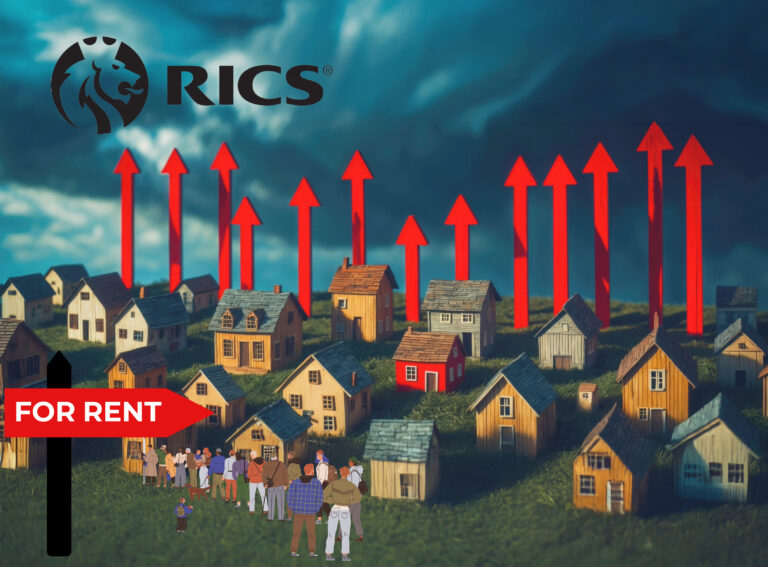
There has been a big rise in tenant demand with a strong showing of RICS’ members saying so – but there are fewer landlords offering homes.
Its UK Residential Property report for March highlights that this growth is the first since October 2024.
This imbalance is leading members to predict higher rents over the next three months – and the imbalance means renters will struggle to find somewhere to live.
Speaking about the RICS report, Tom Bill, the head of UK residential research at Knight Frank, said: “The Renters’ Rights Bill feels like it may prove to be bad news for tenants as supply weakens and upward pressure on rents intensifies.
“Protecting tenants is a positive aim but not if landlords feel the new legislation, combined with tougher green regulations and higher mortgage costs, mean it no longer stacks up.”
He adds: “For those landlords remaining in the sector, the positive news is that yields are rising as rents get pushed higher.”
Meanwhile, the RICS report paints a different picture of the sales market with house prices remaining largely unchanged nationwide.
Buyer inquiries and agreed sales have dipped further into negative territory, reflecting a cautious outlook among market professionals.
RICS says this is the weakest sentiment since September 2023.
Agreed sales also weakened slightly.
The report also reveals that the initial surge in activity before the April 1 stamp duty deadline has tapered off towards the end of March.
Short-term sales expectations suggest a further decline in activity, though longer-term forecasts remain mildly optimistic.
House price sentiment, as measured by the survey’s key indicator, indicates that prices are stabilising.
Scotland and Northern Ireland show the best prospects for price rises but global turmoil over US tariffs could unsettle the market.
Simon Rubinsohn, the organisation’s chief economist, said: “The expiry of the stamp duty break was always going to lead to a pause in activity in the sales market.
“However, the latest results, and indeed the anecdotal remarks from respondents to the survey, suggest that the shift in sentiment has been aggravated by the slew of negative macro news over the past few weeks.
“Looking forward, the impact on the market will in no small part depend on how the economy is affected by the emerging trade war and the response of the Bank of England to the shifting environment.
“For now, it is noteworthy that the longer-term RICS expectations metrics are still relatively resilient, but they have the potential to be blown off course if the tariff headwinds intensify.”
Knight Frank’s Tom Bill said: “As buyers adapt to higher rates of stamp duty from this month, they also face headlines about a global recession sparked by US tariffs.
“While that may not be conducive to positive sentiment, the good news is that markets now expect the Bank of England to cut rates three times this year rather than two to deal with a possible economic slowdown.”
He added: “The risk is that tariffs may ultimately prove to be inflationary, and the spillover effects mean upward pressure on mortgage costs in the UK.
“For now, the housing market feels steady although the prospect of a tax-raising autumn Budget will throw more uncertainty into the mix later this year.”
Meanwhile, RICS has also released a guide for homeowners on retrofitting properties to boost energy efficiency which landlords might find informative.
This free resource, developed with input from industry experts, covers essential areas such as heating systems, appliances, ventilation, insulation and professional energy audits.
As the UK pushes towards its net-zero target, with a goal of retrofitting 500,000 homes annually from 2025 and one million by 2030, this guide offers insights for reducing energy costs.
1 comment on this article
A different perspective could help you spot an issue, avoid a mistake or find a better way forward. Read the comments and add your own views if you wish.
Previous Article
Landlords are being forced out of the market warns industry body
2 years ago | 2 comments


2 years ago
Member Since April 2021 - Comments: 104
12:09 PM, 10th April 2025, About 2 years ago
Tariffs aren’t inflationary, they are a tax on the populous of the country imposing the tariff on imports. Inflation is the increase in the money supply, which will come when the central banks rush to QE rather than face an economic depression. So I would expect mortgage rates to reduce at that point.