
Tenant demand drives up rents – Aldermore
3 months ago | 3 comments



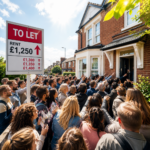
There’s more evidence of fewer landlords offering homes in the PRS with a drop in landlord instructions, despite tenant demand rising.
The latest RICS UK Residential Survey for June 2026 shows tenant demand in the lettings market rose to a headline net balance of +18%, the strongest reading since May 2025.
However, landlord instructions remained in negative territory at -18%, pointing to a continued drop in the number of homes available to rent.
RICS said rents are expected to keep rising, with projected rent growth over the next 12 months standing at around 2.5%.
RICS’ members in the north of England are more optimistic about the future of the private rented sector than those in the south.
Jeremy Leaf, a north London estate agent and a former RICS residential chairman, said: “Lettings activity is proving more resilient than sales.
“Demand remains strong although the quantity of enquiries is outweighing quality.
“Rents are holding up well – and even hardening for family houses – but that’s more to do with the shortage of supply prompted by landlords’ selling due principally to future tax and regulatory concerns including the Renters’ Rights Act.”
He added: “Looking forward, we expect this pattern to continue as we are aware more landlords will try to sell when existing tenants’ tenancies end and are not being replaced in anything like sufficient numbers to noticeably shift the rental dial.”
The data also shows that the sales market also remained subdued in June, although several indicators moved in a less negative direction for a second month.
The headline house price balance stood at -33%, barely changed from -34% in May and -35% in April.
The South East and South West of England continued to report more negative price trends than the UK average, while Northern Ireland and Scotland remained more positive.
Near-term price expectations also stayed negative but improved to -32% from -44%. Looking 12 months ahead, a net balance of +8% of respondents expected prices to rise, up from +6% previously.
RICS’ head of market research, Tarrant Parsons, said: “June’s survey results offer some cautious encouragement that the worst of the slowdown in market activity may be beginning to pass, with several key indicators moving in a less negative direction for a second consecutive month.
“That said, any nascent improvement remains fragile and is now being tested by renewed political uncertainty on the domestic front.”
He added: “While the Bank of England left interest rates unchanged, uncertainty around the outlook for inflation and borrowing costs continues to weigh on sentiment, even if the recent decline in oil prices is a welcome development.
“Until there is greater clarity over both the political backdrop and the path of interest rates, housing market activity is likely to remain relatively subdued in the near term.”
New buyer enquiries remained negative, with a headline net balance of -29%.
That’s a small improvement on the -34% recorded in each of the previous two months and was the least negative reading since February.
Newly agreed sales were still weak, posting a net balance of -32%, compared with -35% previously.
Near-term sales expectations improved to -16%, having fallen to -34% in March.
Over the next 12 months, respondents expected sales volumes to be broadly flat, with a net balance of +1%.
Tom Bill, the head of UK residential research at Knight Frank, said: “UK housing market activity is improving from a low base as the military conflict in the Middle East de-escalates and mortgage rates edge lower.
“However, there is no respite for buyers and sellers with a summer of speculation underway about which property taxes will rise in the Budget.”
He added: “Current propositions include a land value tax, which feels like a long-term wish rather than a short-term plan, and capital gains tax reforms that have been considered and discarded by previous administrations.
“For the third year in a row, uncertainty will keep a lid on prices and sales volumes this summer.”
1 comment on this article
A different perspective could help you spot an issue, avoid a mistake or find a better way forward. Read the comments and add your own views if you wish.
3 months ago | 3 comments

4 months ago | 5 comments

4 months ago | 1 comments
Member Since September 2022 - Comments: 14
3:55 PM, 9th July 2026, About 3 months ago
I will be putting rents up at least 5% irrespective of how long my tenants have been there. From April there will be an additional 2% extra to cover the additional tax I’ll be paying. Renters Right Bill going well I suppose.