



Peers warn tenant access could hinder social housing electrical safety checks
12:01 AM, 15th October 2026, 5 hours ago
Categories:
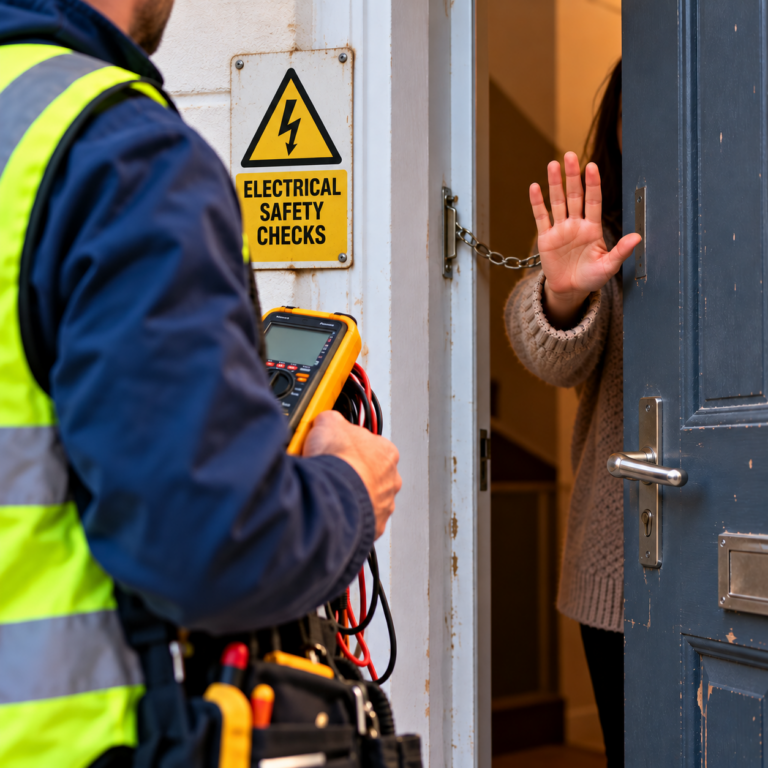
The government has acknowledged the challenges social housing landlords can face when tenants refuse access for electrical safety checks.
A House of Lords debate on electrical safety checks in the private rented sector and social housing also discussed the introduction of Phase 2 of Awaab’s Law in social housing.
The news comes as the government has launched a consultation on extending Awaab’s Law to the private rented sector.
Difficulty gaining access
During the debate, Baroness Pinnock from the Liberal Democrats raised the question of what happens when a tenant refuses entry or does not answer the door to allow essential safety checks such as electrical tests.
Lord Jamieson from the Conservatives also raised the issue of tenants’ responsibilities when it comes to electrical safety checks. He questioned whether everything should be down to the landlord and said that a tenant’s view of what is reasonable may differ from that of the landlord.
In response, Labour’s Lord Wilson of Sedgefield said social housing landlords must be able to demonstrate that they have taken reasonable steps to comply with electrical safety requirements, even when difficulties arise in gaining access to a property.
He said: “A social housing landlord is not in breach of their duty to comply with the remedial notice served under the regulations if they can show that they have taken all reasonable steps to comply.
“A social housing landlord could show reasonable steps by keeping copies of all communications that they have had with their tenants and with electricians as they try to arrange the work, including any replies that they have had.
“Social housing landlords may also want to provide other evidence that the installation is in good condition while they attempt to arrange work. The government are aware of growing concerns regarding the legal framework surrounding access to social housing. Ministers and officials are giving careful consideration to the matter and are working closely with residents, providers and other experts to examine whether future clarification is necessary.”
Awaab’s Law does not apply to overheating
Lord Wilson of Sedgefield also clarified that Awaab’s Law does not apply to overheating.
He said: “Awaab’s law does not apply to overheating which is due solely to outside temperatures being particularly high, including because of climate change. It is about ensuring that landlords take prompt action where a defect or deficiency in a home is creating a serious excess heat hazard for a tenant.
“For example, this could include a window that cannot be opened, defective ventilation or a fault with a heating system that is causing excessive indoor temperatures. That is fair, because social housing landlords cannot be blamed for outdoor temperatures and climate change, but the social housing landlord can address these practical issues.”
The government has launched a consultation on extending Awaab’s Law to the private rented sector. However, the government’s own impact assessment admits that extending the legislation could have financial implications for landlords and cause some landlords to leave the market.
Tags:
Awaab's law, electrical safety checks, House of Lords debate, Private Landlords, social housing landlords
Be the first to comment
Your experience could help the next reader
Have you dealt with something similar? Share what you learned, raise a question or offer a perspective your peers may find useful.
Previous Article
Homes to let fall as tenant competition intensifies

Not a member yet? Join In Seconds
Login with