

HMO landlords brace for chaos as EPC rules could tighten
1 year ago | 3 comments


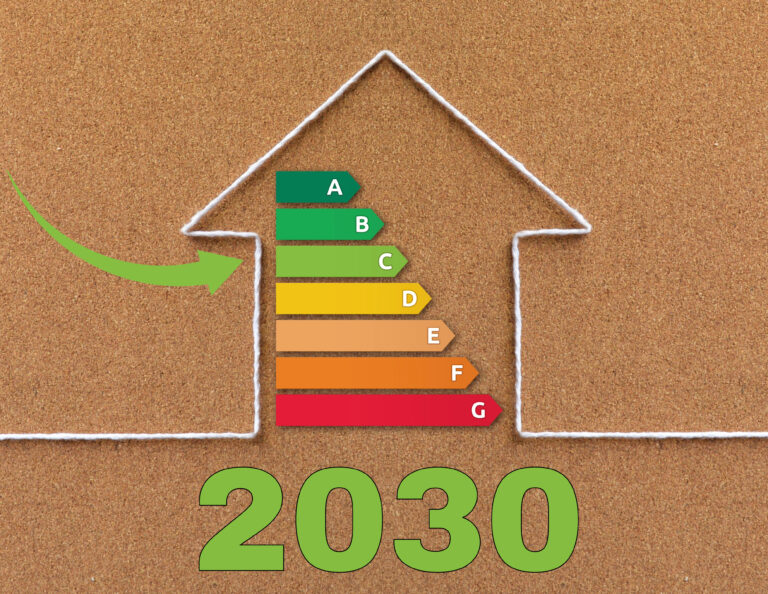
Six out of 10 homes across England and Wales now have an Energy Performance Certificate (EPC) rating of C or above, research reveals.
According to epIMS, a platform for landlords to boost energy efficiency, this demonstrates that over the last four years, C has emerged as the predominant EPC rating.
And that points to a shift towards greater energy efficiency in homes is already underway – well before the government’s planned 2030 deadline on rental properties having a minimum C rating.
The firm examined a decade’s worth of EPC lodgement records to track shifts in the balance between A-C and D-G ratings.
It says that landlords who are apprehensive about the effort and expense involved in elevating their properties to meet this benchmark shouldn’t worry.
The firm’s Craig Cooper said: “Landlords may have concerns when it comes to being forced to upgrade all of their properties to an EPC rating of at least C, but the nation’s dwellings have already been steadily improving year on year even without governmental pressure to do so.
“Advancements in areas such as building materials and heating systems mean that energy efficiency in the home is improving as a matter of course.”
He added: “Our ability to understand how best to improve efficiency is also improving, with advanced technology such as AI now able to analyse a home and quickly identify its weak spots which can then be addressed in the most practical and affordable way.
“As such, landlords who are concerned about the time and cost required for upgrading their properties in order to adhere with the government’s proposed rules might actually be pleasantly surprised at how affordable it is, just so long as they approach the challenge in the most efficient manner.”
The epIMS study found that in 2014, a hefty 69% of properties assessed had a D rating or lower, with D dominating at 44.4% of the 2.2 million certificates issued.
Fast forward to 2021, and the landscape flipped – 51.6% of homes secured a C or better, with C emerging as the top rating at 36%.
By 2024, this figure soared to 60.5%, with C still leading at 44.3%.
Notably, A-rated homes crossed the 1% threshold for the first time, rising from 0.8% in 2023 to 1.7% in 2024.
With the government’s 2030 target looming, epIMS says that landlords have fretted over the expense and effort needed to upgrade.
Every day, landlords who want to influence policy and share real-world experience add their voice here. Your perspective helps keep the debate balanced.
Not a member yet? Join In Seconds
Login with
Next Article
BTL lenders lower rates and boost landlord options
1 year ago | 3 comments

1 year ago | 7 comments

1 year ago | 3 comments
Sorry. You must be logged in to view this form.
Member Since October 2024 - Comments: 49
1:27 AM, 24th February 2025, About 1 year ago
I do not believe this survey.
Modern houses built in recent years will be EPC band C or better but most UK housing stock is older so the true figure is probably 80% off UK housing stock being band D or E with 20% being B.
Member Since December 2023 - Comments: 1573
10:01 AM, 24th February 2025, About 1 year ago
Reply to the comment left by John Gelmini at 24/02/2025 – 01:27
Whilst I believe the survey to be accurate, I don’t think the ratios of A to C and D to G will be similar across all tenure types.
Landlords own a disproportionate number of older properties that are more expensive to upgrade.
For example, according to a 2023 survey, landlords owned 1,531,000 pre-1919 homes whereas Housing Associations and Local Authorities owned just 282,000 such homes.
On the other hand, for properties built between 1945 and 1964, landlords own 591,000 properties whereas SH and LA own 1,261,000.
So, the fact that many properties owned outside of the PRS are rated C or better brings no comfort to landlords of housing stock built over 100 years ago.
Many houses were built with outside loos, no bath and certainly no massive steam-producing showers. Older houses had open fires and draughty windows and doors.
Member Since May 2014 - Comments: 616
10:02 AM, 24th February 2025, About 1 year ago
Reply to the comment left by John Gelmini at 24/02/2025 – 01:27
There are far too many older properties that will struggle to reach a C
The vast majority in this survey must be new or fairly new properties.
Member Since December 2023 - Comments: 1573
10:35 AM, 24th February 2025, About 1 year ago
Reply to the comment left by Stella at 24/02/2025 – 10:02I had 2 x EPC Rated D properties that only needed reassessing, with the ridiculous assumptions corrected, to reach EPC Rating C. The properties were built in the 1970s.
Many PRS homes will have had new boilers or additional loft insulation since their current assessments were done.
Only when the incorrect assumptions are fixed and EPCs are updated (to reflect the new boilers etc.,) will the true picture will become clear.
Member Since June 2015 - Comments: 330
11:01 AM, 24th February 2025, About 1 year ago
Incorrect assumptions 10 years ago were certainly a major factor. Sometimes because the assessor was inexperienced and sloppy, sometimes because grant funding for insulation required a suitably low EPC. Back then the score didn’t really matter. An EPC was just a number that was often wildly inaccurate.
Now EPCs have serious consequences some of the assessors have become more thorough and professional. I would imagine more landlords choose to be present for the assessment of borderline properties and are better prepared with documentary proof of any insulation they have had installed.
Member Since December 2023 - Comments: 1573
12:10 PM, 24th February 2025, About 1 year ago
Reply to the comment left by Jo Westlake at 24/02/2025 – 11:01
I think landlords were just happy to have an EPC Rating A to E because that was all that was needed.
Assessors knew this and, once they saw that a property would probably be Rated D, they didn’t need put any effort into evidencing an EPC Rating C.
Member Since September 2018 - Comments: 3504 - Articles: 5
2:36 PM, 24th February 2025, About 1 year ago
get replying people!
Lets tell them what WE KNOW!
https://consult.communities.gov.uk/energy-performance-of-buildings/consultation-on-reforms-to-epb/