

Labour cuts red tape in planning reforms but industry warns more reforms are needed
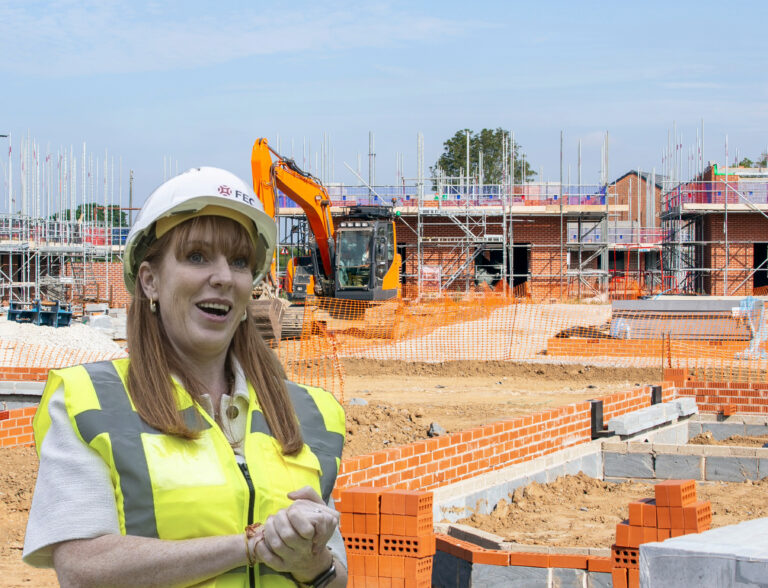

The Labour government have announced thousands of homes will be built across the country due to simpler planning rules, but one industry body warns that easing planning rules alone won’t solve the housing crisis.
Deputy Prime Minister and Housing Secretary, Angela Rayner, says the current system makes it far too difficult for smaller builders to get spades in the ground, and claims the new rules will help deliver Labour’s promise of 1.5 million homes.
However, Propertymark say Angela Rayner’s housing plans need to be backed by broader reforms.
Remove red tape
Under new rules proposed by the Labour government, small housing developments of up to nine homes will now face eased Biodiversity Net Gain (BNG) requirements, and decisions will be made by expert planning officers rather than planning committees.
A new ‘medium site’ category will also be introduced, covering developments of 10 to 49 homes. These sites will face fewer regulations and reduced costs, including a proposed exemption from the Building Safety Levy and simplified BNG rules. Labour says this approach will make it easier to create biodiverse habitats while accelerating the delivery of much-needed homes.
Ms Rayner says these new rules will remove unnecessary barriers and red tape.
She said: “Smaller housebuilders must be the bedrock of our Plan for Change to build 1.5 million homes and fix the housing crisis we’ve inherited – and get working people on the housing ladder.
“For decades, the status quo has failed them and it’s time to level the playing field.
“We are taking urgent action to make the system simpler, fairer and more cost-effective, so smaller housebuilders can play a crucial role in our journey to get Britain building.”
Need a process that considers the wider picture
However, Propertymark warn simpler planning rules are not enough without wider reform in the housing sector.
Nathan Emerson, chief executive of Propertymark, said: “Keeping pace with housing demand remains an incredibly challenging ambition to achieve. It is important to review the entire homebuilding process from top to bottom to help ensure the process identifies areas of potential housing need and delivers a streamlined process that supports the provision of sustainable housing.
“We currently have the Planning and Infrastructure Bill working its way through Westminster; however, this still has some distance to go before it becomes law. Ultimately, we need a process that considers the wider picture, and it is important to factor in the creation of a workforce that brings the required skillsets to construct much needed new homes. It is also crucial to establish a materials supply chain that brings efficiency and consumer value.”
He adds: “From planning to completion, each aspect of the process must work in harmony via sector-wide collaboration, as the challenge is not just about the physical laying of bricks. There needs to be a system that has a true focus on supporting and inspiring housing developers of all scales to deliver new housing stock at an enhanced pace, however there must be equally robust backing for all others involved in the delivery process of new homes also.”
2 comments on this article
Learn from your peers’ experience
A different perspective could help you spot an issue, avoid a mistake or find a better way forward. Read the comments and add your own views if you wish.
Member Since December 2023 - Comments: 1665
9:45 AM, 3rd June 2025, About 1 year ago
There will not be 1.5 million new homes during this Parliament.
Labour have increased SDLT which is a significant blocker for people moving home. House builders only build to make a profit. First time buyers often cannot afford a new build,
Member Since September 2018 - Comments: 3758 - Articles: 5
12:39 PM, 3rd June 2025, About 1 year ago
‘…expert planning officers’
hahahaha!
‘These sites will face fewer regulations and reduced costs, including a proposed exemption from the Building Safety Levy and simplified BNG rules. Labour says this approach will make it easier to create biodiverse habitats while accelerating the delivery of much-needed homes’.
Time to apply for all these exemptions still costs. Its not attractive enough to say you could be exempt, why not just say something is not applicable then there are no time delays and costs incurred in the first place
Much needed homes does not equate to affordable homes or social rent type. If the LA/HA’s cant afford it, then the only thing that will be built is accommodation to sell directly to the public or build to rent….which most will not be able to afford. Therefore BTR is NOT going to make a difference to the true homeless demand as it is by default PAYING consumer driven. These are not customers that are already feature on homeless stats/temp accommodation etc.