
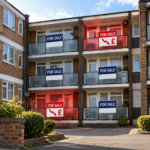
A quarter of flats sell at a loss
2 days ago | 1 comments



Landlords looking to sell face a market in which fewer than four in 10 homes listed for sale in England have an offer agreed.
Figures from estate agency eXp UK put buyer demand at 39.8% in the third quarter, with the firm reporting a quarterly fall of 1.6% and an annual decline of 3.8%.
Its data tracks the proportion of homes advertised for sale that have already attracted an agreed offer.
The latest fall follows a 1.1% decline between the first and second quarters.
Adam Day, head of eXp UK and Europe, said: “There’s certainly an element of buyers adopting a wait-and-see approach ahead of the Autumn Budget, but the widespread decline in demand suggests that this isn’t the only factor at play.
“Affordability remains a challenge for many buyers and, while there is still a healthy level of activity across much of the market, it’s clear that some households need greater confidence before committing to a purchase.”
He added: “Any meaningful initiatives designed to stimulate demand, improve affordability and help more people onto or up the property ladder would be warmly welcomed.
“If the government can deliver on these fronts, it could provide the catalyst needed to revive buyer confidence and encourage more people to make their move.”
Only five counties recorded an increase during the quarter, led by the Isle of Wight, where demand rose by 2.4% to reach 28.4%.
The other increases were in the City of London, Rutland, Oxfordshire and Dorset.
Warwickshire recorded the largest quarterly decline at 3.6%, followed by Bristol at 3.5%.
Meanwhile, the Isle of Wight and East Riding of Yorkshire were the only counties to register annual growth, both recording a 0.7% increase.
Tyne and Wear had the highest proportion of homes with an offer agreed, at 51.5%.
Bristol was next at 50.3%, despite recording the largest annual fall in demand, down 7.7%.
South Yorkshire took third place, followed by Greater Manchester and Merseyside.
Only two counties in the south of England featured in the 10 areas with the highest demand, with the remainder in the north and Midlands.
Be the first to comment
Have you dealt with something similar? Share what you learned, raise a question or offer a perspective your peers may find useful.
Previous Article
EPC C targets could reduce Scotland’s rental supplyNext Article
Self-managing landlords work 51 hours every month


Not a member yet? Join In Seconds
Login with