

Awaab’s law risks pushing landlords out of the PRS in Scotland
5 months ago | 1 comments



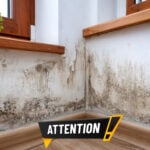
An organisation is warning social housing landlords that Awaab’s Law should not be viewed through a lens of damp and mould.
Inventory Base says new requirements coming into force later this year will expand legal duties to cover a much wider range of housing hazards.
The news comes as Awaab’s Law has already taken effect for social housing landlords, with plans under the Renters’ Rights Act to extend it to the private rented sector in 2027.
Sián Hemming-Metcalfe, operations director at Inventory Base, said: “Damp and mould have been the catalyst for change, but Awaab’s Law is rapidly becoming something much bigger.
“There’s still a perception in some parts of the housing sector that this is primarily a damp and mould regulation, but that’s a dangerous misunderstanding. The direction of travel is clear: housing providers will increasingly be expected to prove they identified risks, assessed them correctly and acted within a defensible timeframe.”
Under Awaab’s law, for social housing landlords, all emergency hazards need to be fixed within 24 hours and any potential significant hazards must be investigated within 10 working days of becoming aware of them.
New rules are set to come in later this year for social housing landlords, the next phase extends those principles to a far wider range of hazards, including excess cold and heat, fire and electrical risks, structural hazards, falls, hygiene issues and food safety concerns.
Ms Hemming-Metcalfe says social housing landlords need to start preparing now before the changes take effect.
She said: “The real challenge isn’t repairs, it’s visibility. You can’t respond to a hazard within regulatory timeframes if you don’t have accurate information about the condition of a property, the risks present and a clear record of when those risks were identified.
“As regulators, residents and legal teams place greater emphasis on evidence, organisations need to be able to demonstrate what they knew, when they knew it and what action they took.
“Those that adapt early won’t just reduce compliance risk. They’ll gain something far more valuable: visibility across their portfolios. In an environment increasingly shaped by regulation, resident scrutiny and legal accountability, that visibility will be the difference between proactive management and permanent firefighting.”
According to the English Housing Survey, in 2024, an estimated 940,000 homes contained Category 1 fall hazards on stairs, compared with approximately 635,000 homes affected by excess cold and 155,000 homes with Category 1 damp hazards.
The news comes as private landlords could face on-the-spot fines of £7,000 for each hazard found in a property and a £40,000 civil penalty for failing to remedy the issue and continuing to breach the new health and safety standards.
Be the first to comment
Have you dealt with something similar? Share what you learned, raise a question or offer a perspective your peers may find useful.
5 months ago | 1 comments

6 months ago | 3 comments
8 months ago | 6 comments
Not a member yet? Join In Seconds
Login with