



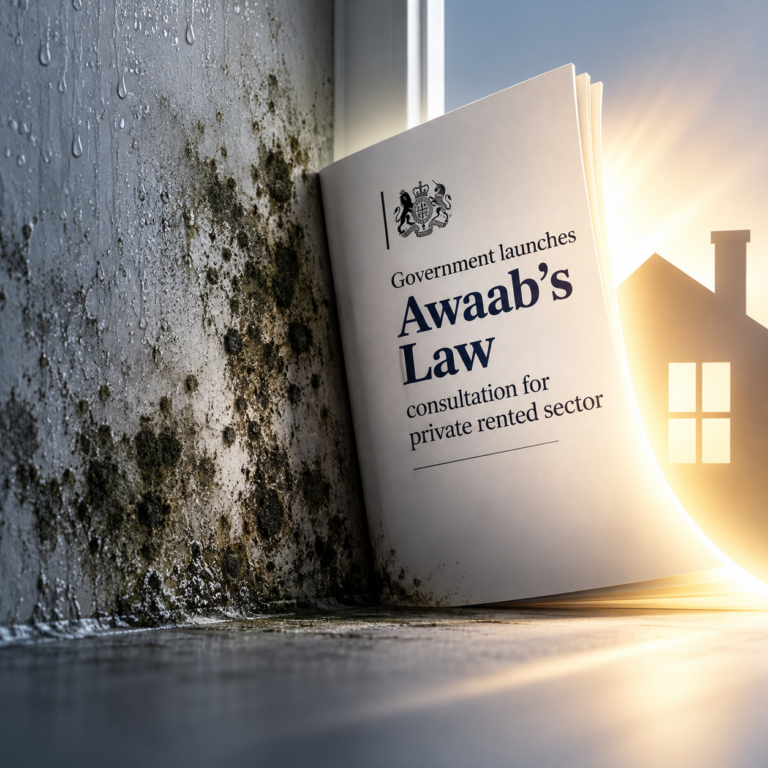
Government launches Awaab’s Law consultation for private rented sector
12:10 AM, 9th October 2026, 47 minutes ago
Categories:
The government is seeking views on extending Awaab’s Law to the private rented sector (PRS), including how the rules should work and when they should come into force.
Private renters, landlords, and charities are being invited to share their views to help shape the new requirements.
Awaab’s Law is already in force for social housing landlords to fix damp and mould in strict timeframes.
Fix severe damp and mould
The government says the consultation will look at how Awaab’s Law should be introduced for private renters, as well as what other types of accommodation could benefit from the protections in future, including temporary accommodation for homeless people and families, and accommodation for young people leaving care.
The government claim Awaab’s Law will benefit more than five million households and force landlords to quickly fix dangers like severe damp and mould.
Housing Minister Matthew Pennycook said: “Irrespective of tenure, all renters have the right to live in a safe and decent home and have complaints responded to in a timely manner.
“Awaab’s Law is already helping to drive up standards in the social housing sector. We’re now moving to extend it to private landlords so that England’s 11 million private renters can enjoy the same protections.”
The government says the consultation will close on 18 December and an options assessment on the potential impacts of introducing Awaab’s Law to the private rented sector will be published alongside the consultation.
Take action on serious hazards
The government claims around one in 10 privately rented homes contain a category one hazard.
Under the Renters’ Rights Act, councils can issue landlords with financial penalties of up to £7,000 where they fail to take reasonably practicable steps to deal with these serious hazards.
The government says extending Awaab’s Law to the private rented sector would go further, requiring landlords to take action on serious hazards within set timeframes.
At the Labour Party conference, Prime Minister Andy Burnham also pledged to crack down on poor-quality private rented homes, with government plans allowing councils to take control of properties left empty for six months, down from the current two-year threshold.
Industry reaction
Ben Beadle, chief executive of the National Residential Landlords Association (NRLA), said: “The death of Awaab Ishak due to dangerous conditions in a social rented home was an unimaginable tragedy that should never have happened. The law in his name must ensure that no landlord, regardless of sector or size, can expect to get away with letting sub-standard, dangerous housing.
“Today’s consultation rightly recognises that there are important differences between the private and social rented sectors, and for the law to be effective, it must be designed and applied appropriately.
“However, changing the law means nothing unless it is properly enforced without exception or favour, and irrespective of tenure. For too long bad actors across the rental sectors have been able to ignore standards and regulations already in place because the chance of being held to account is too remote to cause concern. This must change.
“Alongside consulting on these measures, the government needs to deliver on its aspirations and put their words into action. All good landlords are united in the desire to root out those rogue and criminal operators who put tenants at risk and undermine the reputation of the compliant majority. More regulation alone will not achieve that.”
Timothy Douglas, head of policy and campaigns at Propertymark, said: “Everyone should have the right to live in a safe, decent home, and there can be no excuse for serious hazards being left to put tenants’ health and lives at risk. Awaab’s Law is a significant reminder of the devastating consequences when dangerous housing conditions are not addressed, and extending these protections to private renters and other vulnerable households is an important step.
“The consultation now needs to ensure the law works effectively in practice. Early identification, clear reporting routes and timely access to competent contractors will be vital, alongside properly diagnosing the underlying cause of damp and mould rather than relying on short-term fixes.
“Responsible landlords and agents want tenants to live in safe homes, and clear, workable requirements will help deliver that. Getting the detail right will be critical to ensuring these protections translate into faster action and, ultimately, safer homes.”
Holly Williamson, chief executive of Generation Rent, said: “Homes are the foundations of our lives. But too many renters live in homes that are harmful to our health and often wait months for landlords to act on issues.
“We’re pleased to see the government moving forward with bringing in Awaab’s Law. It must be put in action as soon as possible to make sure every renter can live in a good quality home.”
Clara Collingwood, director of the Renters’ Reform Coalition, said: “A home should be a place of safety, and nobody in the UK should have to live in a home that is making them ill or putting their lives at risk, regardless of whether they rent their home from the council or from private landlords.
“We welcome the government’s consultation, and hope that the public responds with urgency, every additional day in which a child like Awaab Ishak’s life continues to be at risk should weigh heavily on us.”
Tags:
Awaab's law, Awaab's law private rented sector, Awaab's Law social housing, damp and mould, Matthew Pennycook
Be the first to comment
Your experience could help the next reader
Have you dealt with something similar? Share what you learned, raise a question or offer a perspective your peers may find useful.
Previous Article
Please stop making good landlords' lives harder
Not a member yet? Join In Seconds
Login with