

Bank of England hold interest rates at 4% amid stubborn inflation
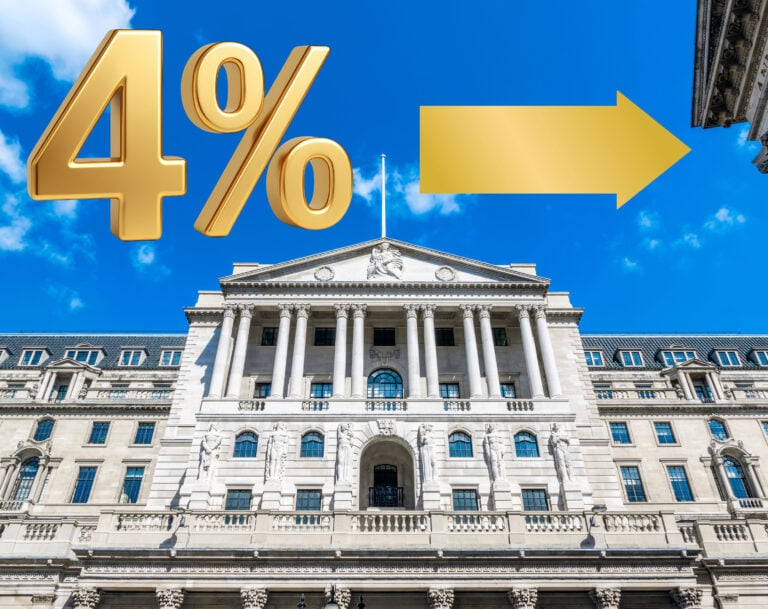

The Bank of England has decided to keep interest rates at 4% amid persistently high inflation.
Despite a rate cut last month, inflation remains at 3.8%, well above the government’s 2% target.
The Bank of England’s Monetary Policy Committee (MPC) voted 7-2 to maintain the rate at 4%, with two members supporting a reduction of 0.25 percentage points to 3.75%.
Slow the pace of its quantitative tightening
Experts predicted interest rates would not be cut this time around due to uncertainty.
The Bank of England’s Monetary Policy Committee (MPC) announced that it will slow the pace of its quantitative tightening (QT) programme, which reduces its holdings of government bonds.
The decision comes amid concerns that the Bank’s bond sales have been contributing to instability in the debt market, raising borrowing costs and creating losses for the Bank of England.
The bank report says: “The MPC recognised that, as well as being uncertain, the effect of QT might vary over time. In common with other advanced economies, term premia on long-term government bonds had risen through 2025. That had reflected global economic policy uncertainty, high issuance of government bonds across countries and structural changes within the UK bond market that had reduced demand for long-term government debt.
“Although the UK gilt market had continued to function in an orderly manner, these factors could pose a risk that QT would have a greater impact on market functioning than previously.
“Over the previous 12 months, following the MPC’s September 2024 decision about the pace of QT, the stock of gilts held for monetary policy purposes had been reduced by £100 billion, of which £13 billion had been through gilt sales.”
The report adds: “At its September 2025 meeting, the Committee considered the case for the Bank to reduce the stock of UK government bond purchases held for monetary policy purposes by £70 billion from October 2025 to September 2026, of which £21 billion would be through gilt sales.
“Seven members supported that stock reduction. A decrease in the pace of QT to £70 billion from £100 billion over the previous year, would be consistent with the MPC’s key principles and objective.”
Property sector reaction
Nathan Emerson, CEO of Propertymark, said: “Throughout the world, many central banks have faced considerable pressure to reduce interest rates, and the UK has been no exception. The Bank of England remains in a challenging position to achieve long-term economic growth and not risk disrupting the progress already made.
“Today’s freezing of interest rates will give perspective to current homeowners and provide reassurance to those looking to take a new mortgage product, that costs will generally remain steady for the time being.
“Ultimately, it would be good to see base rates track downwards. However, it remains positive that we have seen an overall reduction since the start of the year, which has assisted in generating greater affordability for many.”
Nick Hale, CEO of Movera, said: “This move was expected by the MPC, despite yesterday’s news that inflation did not hit 4% as forecast. With ONS data also confirming this week that the jobs market has continued to cool, a further base rate cut would be beneficial in November.
“But only time will tell whether the Autumn Budget is likely to impact spending habits and derail the Bank of England’s inflation projection – pushing the prospect of another cut back into 2026.”
Steve Cox, Chief Commercial Officer at buy-to-let lender, Fleet Mortgages, said: “The Bank of England’s decision to hold Bank Base Rate at 4% today comes as little surprise, but it should probably mark a shift in expectations for what might happen in the months ahead.
“With inflation projected to edge up in the short term and economic growth continuing to be conspicuous by its absence, it’s understandable why the MPC is taking a cautious stance now and is likely to do so for a number of months to come. While markets had previously priced in multiple rate cuts this year and next, that outlook has definitely softened. Economic headwinds – both domestic and global – mean the path to lower rates is likely to be slower and more uncertain than previously hoped.”
Matt Smith, Rightmove’s mortgage expert, said: “A Base Rate hold today had looked fairly nailed on, especially after yesterday’s news that inflation remains stuck at 3.8%. The later-than-usual Budget is very much on the horizon, and the markets are having to wait until the end of November for answers to the questions that are driving a lot of the current uncertainty. So, it’s not surprising we’ve seen market expectations for the next Base Rate cut shift from late 2025, into early 2026.
“We’ve seen average rates drift up recently, and with today’s decision unlikely to relieve the pressure lenders are feeling, we could see rates continue to rise in the coming weeks. This time last year, we saw a jump in activity as the Bank cut the Base Rate for the first time in four years. Our data shows that sales agreed are currently +3% higher than they were during this busy period, signalling that, for now, mortgage rate increases are not putting off those looking to move home.”
1 comment on this article
Learn from your peers’ experience
A different perspective could help you spot an issue, avoid a mistake or find a better way forward. Read the comments and add your own views if you wish.
Next Article
The Tenant Who Stabled a Horse Indoors
Member Since December 2023 - Comments: 1664
10:44 PM, 18th September 2025, About 1 year ago
I think the next move will be upwards. It is Labour after all.
Falling house prices and rising rents may encourage (or force) some landlords to keep their properties.
Those that kept borrowing, by taking higher mortgages, may find that they don’t have enough money, after selling, to pay CGT.
If my rental is worth £120k and the rent is £6k, that’s a gross yield of 5%. Drop the price to £100k and put the rent up to £7k and the gross yield is 7%. Of course, profit may be lower.