

Landlords face a shock 2028 deadline for meeting EPC ‘C’ deadline
1 year ago | 60 comments


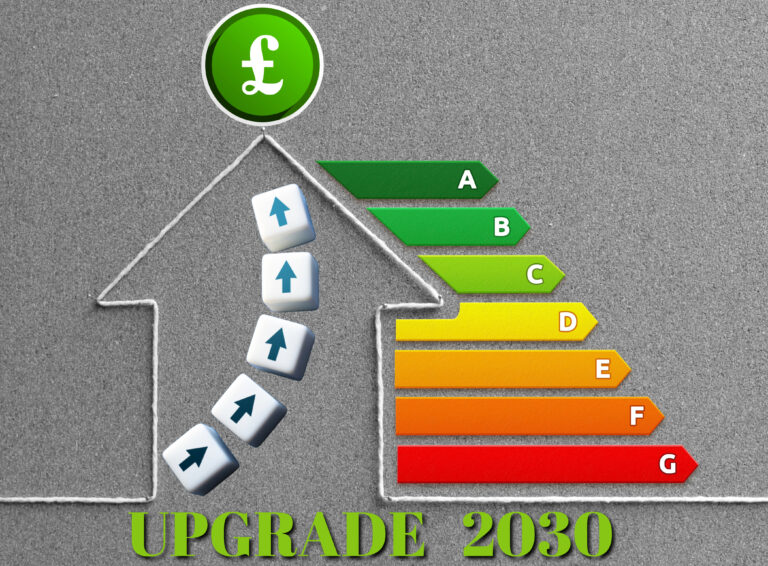
Research reveals that 2.58 million homes in the private rented sector will need upgrading to meet an EPC C requirement.
The findings from epIMS come after the government announced its EPC consultation which could see new tenancies having to meet the C Rating from 2028.
For all tenancies, the deadline is 2030.
However, the government says that it could cost up to £8,000 to upgrade – meaning England’s landlords face a £19.8 billion bill to meet these new standards.
In London, where there are 1.2 million private rentals, upgrading costs are higher at £9,000 to leave landlords looking at a total bill of £4.7 billion.
The firm’s Craig Cooper said: “It’s estimated that over 2.5m privately rented properties currently hold an EPC rating of below a C and so the government’s intention to make a C rating mandatory by 2030 will have a notable impact on the current rental market landscape.
“The average landlord is thought to have eight properties within their portfolio and with the average cost to bring a sub-C rated home up to compliance coming in at £8,000, that’s a potential required investment cost of £64,000 over the next five years in order to ensure their portfolio is compliant.”
He added: “The worry is that forcing a mandatory EPC C rating on the nation’s landlords could cause more to exit the sector, exacerbating the current rental crisis in the process.
“However, what many landlords don’t realise is that an EPC rating is actually compiled using a points-based system and so achieving a C rating could be well within their reach by making just a few small improvements to their rental properties.”
A recent survey commissioned by epIMS revealed a startling lack of awareness among landlords with 40% being unaware of the consultation.
Also, 42% did not know that the minimum EPC standard will soon be upgraded to a C.
And 27% were unsure of the current EPC ratings of their properties – with 32% of landlords unaware of the EPC ratings points system.
Researchers found that 65% of landlords do not know how many points are needed for a C rating.
When asked about their plans for making the necessary improvements, 75% of landlords stated they would wait until the 2030 deadline, with only 15% intending to act within the next year.
The primary challenges cited were the cost of improvements and a lack of understanding about which changes would positively impact their EPC scores.
Homes built after 1990 fare better, with nearly 83% holding a C rating or above.
In contrast, only 39% of pre-1990 homes meet this standard.
Upgrading an EPC D property to a C could reduce annual energy bills by 29% (£717).
For an E rated property, the savings could be 48% (£1,685) per year.
Properties with F and G ratings could see reductions of 61% (£2,838) and 70% (£4,240) respectively, leading to potential savings of over £21,000 in five years.
Every day, landlords who want to influence policy and share real-world experience add their voice here. Your perspective helps keep the debate balanced.
Not a member yet? Join In Seconds
Login with
1 year ago | 60 comments

1 year ago | 115 comments

1 year ago | 12 comments
Sorry. You must be logged in to view this form.
Member Since May 2018 - Comments: 1999
11:19 AM, 14th February 2025, About 1 year ago
Reply to the comment left by Chris H at 14/02/2025 – 10:57
Peat makes sense because it’s full of organic material generating heat, albeit slowly. You can do the same with compost.
But one of the difficulties with working out how to run a better heating system is all the lies and misinformation, the lack of science that you can rely on because you cannot rely either on government to tell the truth or even to have the competence to understand the science. Even when they do, because they are sometimes economically illiterate what they come out with is still misleading.
That nonsense about it costing £5-6K to upgrade from band D to C for example will be based on the lies they’ve been propagating about CWI. They like that lie because it suits their other lies.
That stuff about carbon-capture is nonsense. Restoring wetlands to enable soils to capture carbon and stopping destroying soils isn’t nonsense. But government policy in that area isn’t coherent. They still like their short-term nonsense because these lies allow them to pretend that they are doing their jobs.
Photovoltaics are a well-tested technology and may make sense. They only work efficiently within a defined temperature range so probably if you were to add cooling plates, pump the hot water in the summer down into the bore holes feeding your ground source heat pump and you had some mechanism to store the surplus electricity from your photovoltaics, e.g. hydrogen, then it would probably be possible to heat your property entirely from renewables and send some energy back to either a local or national grid. But what would that cost you? £50-60K? £100k? More? Whatever it is, today it’s only for rich people.
So it’s probably technically possible and some of the rich David Attenborough enthusiasts out there may well be doing it. But for the majority of people, what stops it being worthwhile for them to have energy security and high efficiency housing is the tax system, and the fact that when they get in to power left-wing governments are committed to damaging left-wing ideologies, not to the truth.
There are already houses in the Euro-Scandinavian region storing hydrogen generated successfully from photovoltaics.
But today in my own principle private residence the thing that makes economic sense is a condensing gas boiler. If I were to invest extra money that the thing that would make the most sense is probably upgrading the solid fuel stove, and possibly also adding a back boiler, like the houses we had in the 1970s. Adding photovoltaics for when Vladimir knocks the grid out would probably also make some sense, but not in economic terms.
In my rental property, the thing that would make the most sense is a gas condensing boiler, possibly allowing the tenants a solid-fuel stove with a back boiler if they want it, and triple glazed windows.
The thing that stops me doing any of this is again, the tax system. And a labour government that seems committed to harvesting small portfolio landlords to generate tax. In theory, if they spent the extra income tax and CGT on building social housing (which is what they believe in) they could make a difference; in practice, they won’t because as is always the case they will spend any extra money on providing better public sector pensions, flexitime, four-day working weeks and everything else other than better housing infrastructure.
If they genuinely believed in making a difference they would allow small portfolio landlords to incorporate with roll-over relief and people that are actually competent enough to understand the science could then sort the problem out. Unfortunately, we expect too much of government: We expect them to be competent, when they are clearly not. We need to adjust our expectations and elect people who won’t get in the way of solving real-world problems.
Carbon-capture my a**e.
Member Since May 2018 - Comments: 1999
3:35 PM, 14th February 2025, About 1 year ago
By the way.
Just in case anybody is interested in the debate over how the EPC system will be modified and whether you should scrap your gas condensing boiler for an electricity-hungry heat pump and disconnect from the gas network you might wish to know that a huge gas field has just been discovered under Lincolnshire.
Drill, drill, drill y’all.
https://www.independent.co.uk/news/uk/home-news/gas-field-lincolnshire-uk-fracking-net-zero-b2698167.html