

Landlords face a shock 2028 deadline for meeting EPC ‘C’ deadline
1 year ago | 60 comments


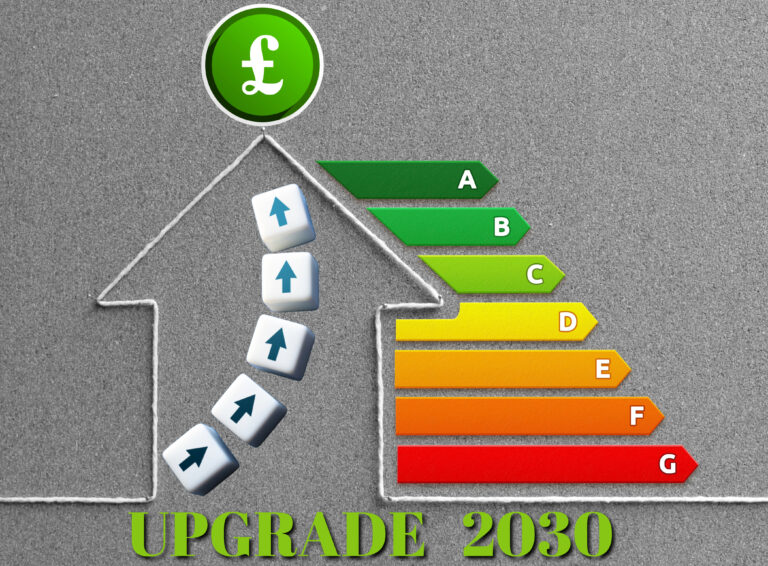
Research reveals that 2.58 million homes in the private rented sector will need upgrading to meet an EPC C requirement.
The findings from epIMS come after the government announced its EPC consultation which could see new tenancies having to meet the C Rating from 2028.
For all tenancies, the deadline is 2030.
However, the government says that it could cost up to £8,000 to upgrade – meaning England’s landlords face a £19.8 billion bill to meet these new standards.
In London, where there are 1.2 million private rentals, upgrading costs are higher at £9,000 to leave landlords looking at a total bill of £4.7 billion.
The firm’s Craig Cooper said: “It’s estimated that over 2.5m privately rented properties currently hold an EPC rating of below a C and so the government’s intention to make a C rating mandatory by 2030 will have a notable impact on the current rental market landscape.
“The average landlord is thought to have eight properties within their portfolio and with the average cost to bring a sub-C rated home up to compliance coming in at £8,000, that’s a potential required investment cost of £64,000 over the next five years in order to ensure their portfolio is compliant.”
He added: “The worry is that forcing a mandatory EPC C rating on the nation’s landlords could cause more to exit the sector, exacerbating the current rental crisis in the process.
“However, what many landlords don’t realise is that an EPC rating is actually compiled using a points-based system and so achieving a C rating could be well within their reach by making just a few small improvements to their rental properties.”
A recent survey commissioned by epIMS revealed a startling lack of awareness among landlords with 40% being unaware of the consultation.
Also, 42% did not know that the minimum EPC standard will soon be upgraded to a C.
And 27% were unsure of the current EPC ratings of their properties – with 32% of landlords unaware of the EPC ratings points system.
Researchers found that 65% of landlords do not know how many points are needed for a C rating.
When asked about their plans for making the necessary improvements, 75% of landlords stated they would wait until the 2030 deadline, with only 15% intending to act within the next year.
The primary challenges cited were the cost of improvements and a lack of understanding about which changes would positively impact their EPC scores.
Homes built after 1990 fare better, with nearly 83% holding a C rating or above.
In contrast, only 39% of pre-1990 homes meet this standard.
Upgrading an EPC D property to a C could reduce annual energy bills by 29% (£717).
For an E rated property, the savings could be 48% (£1,685) per year.
Properties with F and G ratings could see reductions of 61% (£2,838) and 70% (£4,240) respectively, leading to potential savings of over £21,000 in five years.
Every day, landlords who want to influence policy and share real-world experience add their voice here. Your perspective helps keep the debate balanced.
Not a member yet? Join In Seconds
Login with
1 year ago | 60 comments

1 year ago | 115 comments

1 year ago | 12 comments
Sorry. You must be logged in to view this form.
Member Since May 2018 - Comments: 1999
3:23 PM, 13th February 2025, About 1 year ago
Reply to the comment left by Chris H at 13/02/2025 – 15:06
For a petition to work it really needs to be clear about what it is asking for. And tenants need to know that they will be damaged by this, not just landlords. No petition from landlords focusing on the needs of landlords is going to succeed because all the main parties try to present landlords as ‘the great evil’ in housing and their own party as ‘the saviour of tenants’.
Tenants need to know that the effect of making non-incorporated landlords meet band C whilst they are unable to offset their finance costs against rents has the following effects:
(1) Pushing up EPC bands increases the amount of investment required to provide a rental property and as higher EPC band properties command higher rents this also drives up market rents.
(2) Pushing smaller, non-incorporated landlords out of the market decreases choice for tenants and competition in the market, and this raises rents.
(3) Because non-incorporated landlords cannot offset their finance costs, when interest rates rise they have to raise rents even higher than would otherwise be the case.
(4) If non-incorporated landlords have to raise extra finance to carry out significant EPC improvements, because they face an additional tax bill they have to raise rents even further to cover this tax bill, so in effect tenants are penalised by these proposals.
(5) Government policy is already driving a change towards properties being held in limited companies.
A solution to the above would be a petition to enable all landlords, however small, to apply for roll-over relief and incorporate easily without a CGT penalty (roll over relief doesn’t have the effect of saving tax, it defers tax and has the benefit of stimulating growth in areas of the economy that we wish to grow). The additional accounting costs are not high but unless incorporation is easy there can be a lot of additional costs that have to be paid to expensive lawyers and accountants.
If all landlords can incorporate easily with roll-over relief they can offset their finance costs. There probably also need to be more capital allowances for energy efficiency improvements, e.g. triple-glazed windows or other measures that reduce dependence upon fossil fuels.
This government seems to me to be very cynical and may still want to be seen as the pro-tenant-anti-landlord-crusading-government. However, they ought to be able to get around this one by pinning the blame on George Osborne.
(In fairness to George Osbourne he was only implementing policies being considered by Gordon Brown’s government).
Either way, cynical as they appear to be, this government would have a scapegoat to throw to the media.
Member Since February 2025 - Comments: 5
3:51 PM, 13th February 2025, About 1 year ago
As the owner of a single property, I ask myself a simple question: Will it rent more easily with a nice new bathroom or an energy saving of maybe £20 a month? If I have to spend £5k + on solar panels, that new bathroom is not going to happen.
Member Since January 2022 - Comments: 97
4:19 PM, 13th February 2025, About 1 year ago
Reply to the comment left by Seabass at 13/02/2025 – 15:51
I totally agree, sadly I doubt it would really add up to £20 a month saving for a tenant.
But then again, it really has nothing to do with tenants saving money ;/
Member Since May 2018 - Comments: 1999
4:20 PM, 13th February 2025, About 1 year ago
Reply to the comment left by Seabass at 13/02/2025 – 15:51
The government thinks that the average cost of moving from band D to C is around £5-6K but that’s nonsense. It’s going to be far higher than that.
In my experience what tenants want is a nice bathroom, nice kitchen and a modern condensing gas boiler. If I had to spend an extra £5K I think I would be more likely to get more happy tenants if I spent the money on an extra bathroom or extra toilet.
Member Since January 2022 - Comments: 97
4:28 PM, 13th February 2025, About 1 year ago
Reply to the comment left by Beaver at 13/02/2025 – 15:23
Eloquently worded and some excellent points made.
I think it should be pushed as improving millions of social and council houses, which would then drive the material cost of such works down.
Which in theory should then enable the private sector to arrange works on a more cost effective basis.
Further if the true and honest aim of the EPC’s was to improve the housing stock, why not allow the costs to be offset, other than of course this would impact on the Gov gravy train cash income….
Member Since May 2018 - Comments: 1999
4:50 PM, 13th February 2025, About 1 year ago
Reply to the comment left by Chris H at 13/02/2025 – 16:28
This is of course correct. The reason we allow roll-over relief so that for example a self-employed business or partnership can grow by becoming a limited company and keep the cash in the business to stimulate future growth: We do it because it’s good for the economy and the country. Roll-over relief is socially-useful.
So it appears to me that any government that is genuinely interested in tenants having a wide choice of safe, high quality, energy-efficient housing should enable any small landlord to incorporate via roll-over relief because this is what the housing economy needs.
Those rabid left-wingers that Keir Starmer was probably forced to take by the Unions probably won’t want this because left-wingers don’t want the electorate to have freedom: They want the electorate to be dependent upon them. They probably want to harvest lots of CGT and build social-housing instead. Allowing small landlords to claim roll-over relief would enable the market to fix the problem but the rabid left-wingers will be ideologically opposed to it.
At the moment though the left-wingers are still busy peddling their lies. The government has said that it will cost approximately £5-6K to move a property from band D to C. This is probably based on the cost using CWI, which they have a bias towards for some reason. The typical cost of cavity wall insulation is about £1,000-4,000.
https://www.checkatrade.com/blog/cost-guides/cavity-wall-insulation-cost/
In contrast the typical cost of installing one triple-glazed window is approximately £1,200 PER WINDOW.
https://www.checkatrade.com/blog/cost-guides/triple-glazing-cost/
Cost of introducing heat pumps and all the extras is likely to be £20K upwards for an energy saving of maybe a few hundred pounds a year (although tenants’ energy costs may actually go up, along with their rents).
The left-wingers like the cavity-wall-insulation-lie because it suits their policy, not because it’s true.
The government hasn’t accepted the real cost of moving from band D to band C: But government lies have consequences. Government lies on insulation didn’t work out for the poor people who died in the Grenfell disaster; it didn’t work out for all the landlords and flat owners who ended up with flats with dodgy insulation that they can’t sell; and it didn’t work out for all the tenants living in flats they don’t know to be safe.
If the government GENUINELY wants to fix the problem they should allow small landlords to claim roll-over relief and introduce capital allowances that would for example enable a landlord to fit triple-glazed windows (and possibly heat pumps for the David Attenborough fans with lots of money).
Member Since February 2025 - Comments: 5
5:30 PM, 13th February 2025, About 1 year ago
Reply to the comment left by Beaver at 13/02/2025 – 16:20
Absolutely! My tenants have a better/more attractive property than when I lived in it!
Member Since January 2022 - Comments: 97
6:44 PM, 13th February 2025, About 1 year ago
Reply to the comment left by Beaver at 13/02/2025 – 16:50
I once watched a program, where they installed a ground source heat pump, the pipework was installed in a peat bog, which significantly improved the temperature of the project, the only successful system I have seen, of course as electric costs rise, the value heat pump add is impacted, to the degree that unless there is a huge improvement in the technology, they will be pretty much useless, as tenants will not want to pay to use such an expensive waste of electric
Member Since May 2018 - Comments: 1999
9:32 AM, 14th February 2025, About 1 year ago
Reply to the comment left by Chris H at 13/02/2025 – 18:44
I have looked at the cost of installing ground source heat pumps. But I have seen online information saying that their performance deteriorates after ten years or so and whenever I ask anyone how long they are effective for I never get an answer.
This article:
https://www.sciencedirect.com/science/article/abs/pii/S221067071731750X#:~:text=Typical%20problems%20associated%20with%20the,the%20heating%20and%20cooling%20loads).
Says:
Typical problems associated with the long-term operation of a GSHP under intensive operating conditions are changes in the ground temperature and gradual deterioration in the system performance caused by load imbalance in the building (i.e., imbalance between the heating and cooling loads). Long-term operation with unbalanced loads can lead to thermal depletion or buildup in the ground, rendering it impossible to maintain sustainable production levels.
Because the GSHP is a relatively recent technology, information on long-term monitoring results is very limited. Although some reports used the term “long-term,” the only monitoring extending beyond 10 years was conducted by Rybach and Eugster (2010) and Rybach et al. (2000). They measured the heating operation of a GSHP installed in Switzerland for 15 years. The system has one coaxial borehole heat exchanger (BHE) and was operated with a peak heating load of 70 W/m. The results showed that the ground temperature rapidly decreased for the first few years and then it reached a quasi-steady-state.
Additionally, they numerically analyzed the amount of time required for the ground to return to its original thermal state after 30 years of GSHP operation. It similarly takes 30 years for the ground temperature to recover naturally.
So as far as I can tell if you pump a lot of heat out of the ground very quickly to recover your investment cost then the tens of thousands of pounds that you invest in your heat pump probably aren’t going to pay back.
Member Since January 2022 - Comments: 97
10:57 AM, 14th February 2025, About 1 year ago
Reply to the comment left by Beaver at 14/02/2025 – 09:32
Yes, that program would be about that time, it would be interesting to see where how efficient compared to the above, using the peat, I should have added this was a new build, so they have the opportunity to really go to town on the perfect conditions.
If it is anything like the Salford experiment, 3 housing estates designed by Salford Uni, built in collaboration with Salford council, Salford Uni went back to review years later as agreed, people had left, the paperwork was lost (council), they had knocked down one of the housing estates and thrown up sub par housing, the other two estates performed significantly better than the replacement and all equivalent housing for the time period (1980’s), in both repairs and running costs.