
Scottish housing crisis deepens as construction plummets
1 year ago | 1 comments


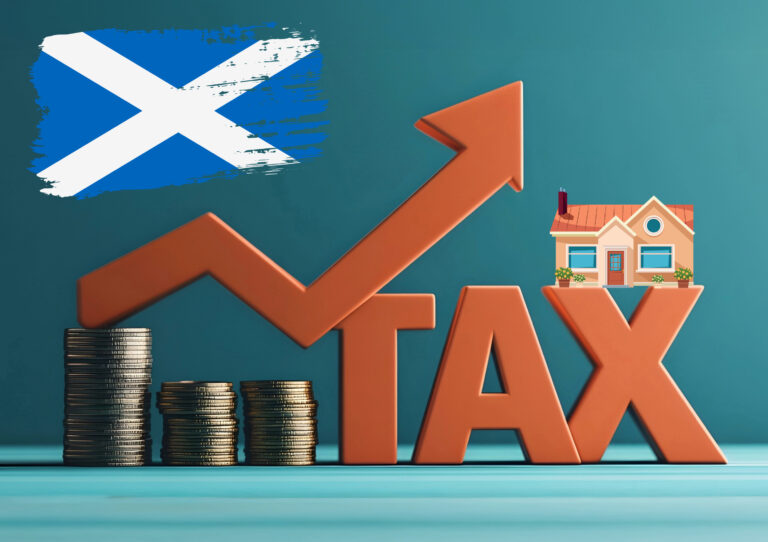
There has been a 750% surge in property tax revenue which has transformed Scotland’s housing market over the past decade, data reveals.
According to DJ Alexander Ltd, the country’s largest lettings and estate agency, the land and buildings transaction tax (LBTT), generated £7m from 6,880 property sales.
That’s an average of £1,017 per transaction.
It was introduced in April 2015 but by April, this figure had ballooned to £61m from 8,100 transactions, equating to £7,530 per sale.
The firm’s chief executive, David Alexander, said: “The 750% increase in revenues from LBTT must be a record for any tax.
“To increase by that amount over just 10 years is extraordinary.”
The tax’s scope expanded in 2016 with the additional dwelling supplement (ADS) targeting second homes and investment properties.
Initially raising £1.5m, the ADS brought in a record £22.4m in April, accounting for 36.7% of the month’s total LBTT revenue.
Mr Alexander highlighted the disparity in taxation compared to England, noting that Scotland imposes higher rates on first-time buyers.
The higher rates also affect those purchasing properties above £325,001, and second-home buyers.
He said: “The attitude is that these are all fair targets and can be taxed at a much higher rate than their counterparts south of the border.”
In Scotland, first-time buyers face LBTT from £175,000, while in England, property tax begins at £300,000.
For higher-value homes, Scotland’s 10% LBTT rate applies at £325,001, compared to £925,000 in England.
Mr Alexander continued: “Ministers may argue that if you can afford to buy a £175,000 first home or a £325,001 property then you can afford to pay a higher rate of tax.
“It is doubtful, however, that this is a credible argument given the level of taxation and the starting point.”
Critics argue the tax places an undue burden on Scottish homebuyers.
Mr Alexander also points out the lack of transparency in how the revenue is spent.
He said: “The other element of this tax which galls so many is that there is no obvious use of the money to build more homes or reduce the impact of the current housing emergency.
“Hypothecating this additional taxation directly into the housing sector could go some way to at least explaining why Scots – at all levels from first-time buyers to other home purchasers – are charged so much more for the fundamental right to have a home.”
Without clear plans for the revenue, Mr Alexander warns that public frustration may grow.
He said: “At the moment there is little explanation of why this occurring and what the money is being used for.
“Perhaps by the time of LBTT’s 20th birthday we shall have a clearer explanation. In the meantime, we must simply pay up when we buy a home.”
Be the first to comment
Have you dealt with something similar? Share what you learned, raise a question or offer a perspective your peers may find useful.
Next Article
Should I go for a Section 8?


Not a member yet? Join In Seconds
Login with