

Rental affordabilty in England – Average salary of £30,264 equated to 32.1% of average rent
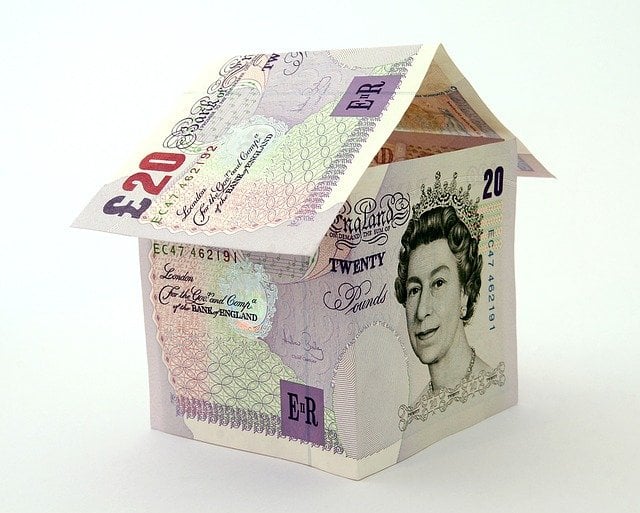

Paragon’s Rental Affordability Index takes recently published Government data, and by overlaying gross annual earnings with the average amount spent on rent, reveals an average rental affordability ratio for local authority areas across England with the average salary of £30,264 equating to 32.1% of the average rent
The least affordable local authorities in which to rent a home were all found in London. In response to this, tenants in the capital often spread rental costs with others, resulting in London having the highest proportion of UK renters who share a property with people outside of their family.
In Kensington & Chelsea average annual incomes stood at £34,157 in 2021, while mean rents totalled £36,520 per year. This results in an affordability ratio of 106.9%, making the area England’s least affordable rental location by a considerable margin. Westminster was found to be second due to rent costing 81.1% of annual salaries on average while Hammersmith and Fulham made up the top three least affordable rental location with an affordability ratio of 60.7%.
Analysing the figures at a regional level highlights how the north of England is home to all of the most affordable regions. Yorkshire & The Humber boasts the lowest rent cost to income ratio of 23.2%, followed by the North West at 23.4% and the North East at 23.8%.
London (50.2%), the South East (36.1%) and East of England (33.3%) were the least affordable.
| Region | 2021 income £ | Mean rental £ | Affordability ratio % |
|---|---|---|---|
| Yorkshire & Humber | 28,616 | 6,653 | 23.2 |
| North West | 29,288 | 6,853 | 23.4 |
| North East | 26,981 | 6,424 | 23.8 |
| East Midlands | 27,830 | 6,689 | 24.0 |
| West Midlands | 29,281 | 7,504 | 25.6 |
| South West | 27,451 | 8,952 | 32.6 |
| East of England | 30,801 | 10,268 | 33.3 |
| South East | 32,068 | 11,586 | 36.1 |
| London | 36,326 | 18,244 | 50.2 |
Richard Rowntree, Paragon Bank Managing Director of Mortgages, said: “Our rental affordability index shows considerable variation in how affordable privately rented homes are. A key influence on this is where properties are located with a general trend for more affordable housing being found in the north of England.
“The lower purchase prices for homes in regions such as Yorkshire and The Humber means that investors can keep rent prices relatively low while still covering their overheads.
“It’s important to acknowledge, however, that there is a limit to this, and the current economic conditions mean that it is becoming more expensive to manage a lettings business. Alongside supply of properties that is exceeded by demand, this is placing pressure on rents.
“The Government and industry must work together to facilitate investment that will boost the number of homes available to rent, giving tenants more choice and helping to regulate rental costs.”
As expected, affordability correlates with property size, indicated by the number of bedrooms. Renting an average four-bed home in England costs 59.8% of salary, a three-bed 40.8.%, followed by properties with two bedrooms at 33.2%. One-bedroom homes equate to 26.4% of average salaries, studios 18.8% and a single room costs 17.4% of the average annual salary.
Top 10 most affordable areas in England
| Area | 2021 income £ | Mean rental £ | Affordability ratio % |
|---|---|---|---|
| Copeland | 49,812 | 5,236 | 10.5 |
| Ribble Valley | 38,900 | 6,164 | 15.8 |
| Staffordshire Moorlands | 30,420 | 4,844 | 15.9 |
| North Lincolnshire | 29,996 | 5,136 | 17.1 |
| Knowsley | 29,100 | 5,216 | 17.9 |
| Amber Valley | 30,102 | 5,414 | 18.0 |
| Northumberland | 27,177 | 4,918 | 18.1 |
| Ashfield | 27,335 | 4,958 | 18.1 |
| West Lindsey | 30,660 | 5,650 | 18.4 |
| Hyndburn | 26,521 | 4,958 | 18.7 |
Top 10 least affordable areas in England
| Area | 2021 income £ | Mean rental £ | Affordability ratio % |
|---|---|---|---|
| Kensington & Chelsea | 34,157 | 36,520 | 106.9 |
| Westminster | 45,295 | 36,722 | 81.1 |
| Hammersmith & Fulham | 39,005 | 23,694 | 60.7 |
| Wandsworth | 33,503 | 20,306 | 60.6 |
| Camden | 41,114 | 24,848 | 60.4 |
| Richmond upon Thames | 35,684 | 20,674 | 57.9 |
| Ealing | 32,114 | 17,800 | 55.4 |
| Lambeth | 35,627 | 19,742 | 55.4 |
| Epsom and Ewell | 29,084 | 15,994 | 55.0 |
| Haringey | 31,960 | 17,334 | 54.2 |
2 comments on this article
Learn from your peers’ experience
A different perspective could help you spot an issue, avoid a mistake or find a better way forward. Read the comments and add your own views if you wish.
Previous Article
Tricky Use Class Issue (D1/E or F1)?
Member Since April 2014 - Comments: 984 - Articles: 2
2:08 PM, 19th May 2022, About 4 years ago
The assumptions above needs to relate to “household income” as opposed to “salary”. As written I am unsure as to whether a rental with two tenants with incomes is included in the calculation. Please advise? Thanks
Member Since May 2018 - Comments: 2550
2:11 PM, 19th May 2022, About 4 years ago
“The lower purchase prices for homes in regions such as Yorkshire and The Humber means that investors can keep rent prices relatively low while still covering their overheads.”
This is true. And it is also linked to the availability of investment capital and low interest rates. If interest rates go up, rents will go up; if capital is restricted (i.e. if investors can’t borrow or can’t borrow at reasonable rates) fewer investors will invest.