

Renters’ Rights Bill hands more power and money to councils through tougher enforcement
1 year ago | 2 comments


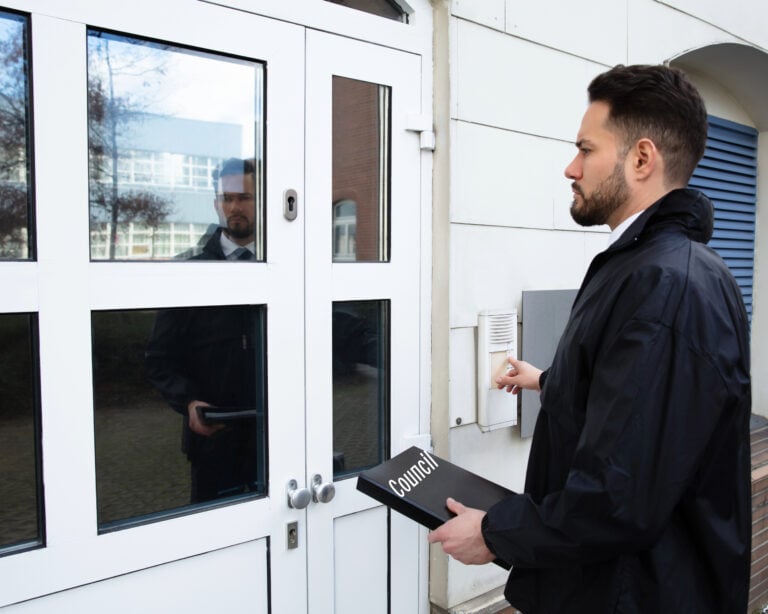
The Renters’ Rights Bill will place an enforcement burden on councils without more funding, claims an organisation.
In evidence to the Housing, Communities and Local Government (HCLG) select committee about housing conditions in England, the Chartered Institute of Environmental Health (CIEH) claims local authorities are under-resourced and struggling to meet existing enforcement burdens.
The organisation also claims there should be separate fees for the administration of the Ombudsman and Private Rented Sector Database schemes.
In a written submission to the select committee, CIEH claims the bill will generate more cases for environmental health officers as they struggle to deal with cases.
Previously, the New Economics Foundation (NEF) claimed renters face a ‘postcode lottery’ in housing standards enforcement on average, each enforcement officer in England oversees more than 3,300 private rented properties.
However, this figure conceals significant regional variations with Nottingham boasting the highest enforcement capacity, with one officer managing 267 properties.
The CIEH argues that more funding is needed to support councils and suggests that ombudsman fees could help cover these costs.
The organisation says: “We welcome the Renters’ Rights Bill but are concerned about the large enforcement burden that the provisions of the bill will impose on local authorities and the need for proportionate funding that is sustained and predictable.
“The success of the landlord redress scheme, the private rented sector database and the changes around possession of properties all depend on effective enforcement. The bill allows for database fees to be passed on to local authorities but there is no comparable source of direct revenue generation for funding enforcement burdens associated with the new ombudsman service.
“We believe that the government should make it possible for ombudsman fees to be used to fund the enforcement costs of the scheme.”
As previously reported on Property118, the government has hinted at combining the registration process for the PRS database and Ombudsman, but stopped short of confirming whether landlords will be required to pay separate fees for each scheme.
However, Mr Pennycook previously claimed the Private Rented Sector (PRS) Ombudsman will not be able to make a profit and the fee will be “proportionate and good value”.
However, CIEH fails to mention that under the Renters’ Rights Bill, councils will have more powers to carry out surprise enforcement inspections.
Previously, councils were required to give tenants and landlords 24 hours’ notice before taking enforcement action. This requirement will still apply to tenants.
However, landlords will now be informed within ‘a reasonable amount of time’ AFTER the entry has taken place.
Phil Turtle, landlord law expert at Landlord Licensing & Defence, said the new rules won’t tackle rogue landlords.
He said: “The new powers have little to do with tackling rogue landlords. Councils use these powers daily to penalise landlords who may not have everything 100% perfect.
“It’s a system ripe for abuse, with officers acting like bullies to extract fines.”
The CIEH also claims that even with Awaab’s Law, local authorities will still need selective licensing schemes to proactively enforce housing standards.
Awaab’s law, which will come into effect for social housing landlords later in October, will be extended to the private rented sector in the future and will force private landlords to fix damp and mould within strict timeframes.
The organisation claims: “Awaab’s Law will not remove the need for local authorities to be able to use licence conditions to deal proactively with general disrepair in areas with poor housing conditions. The enforcement of Awaab’s Law will depend on the ability and willingness of tenants themselves to seek redress and, ultimately, to take legal action through the courts.
“It is often difficult for tenants to use legal remedies themselves. Areas with poor housing conditions contain many poor and vulnerable tenants who are particularly badly placed to do so. Licensing would clearly be a much better way of targeting support on them.”
They also add that the Decent Homes Standard will not place “an extra burden on landlords”, this is despite warnings from an industry body claiming the Decent Homes Standard and Awaab’s Law will cause increased costs for landlords and major disruption for tenants.
The organisation also calls for selective licensing schemes to be extended from five to ten years.
Be the first to comment
Have you dealt with something similar? Share what you learned, raise a question or offer a perspective your peers may find useful.
1 year ago | 2 comments

1 year ago | 9 comments

1 year ago | 5 comments
Not a member yet? Join In Seconds
Login with