

Urgent Petition needed re EPC?
1 year ago | 9 comments


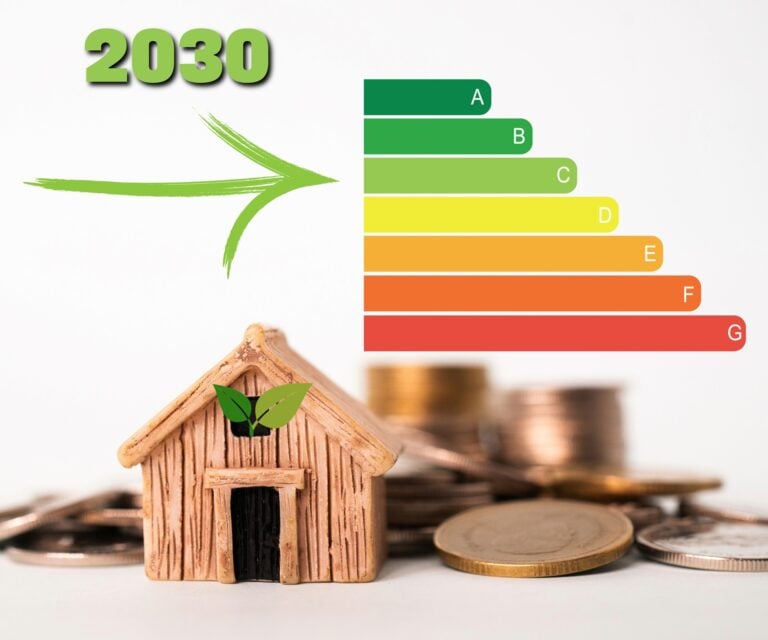
Private landlords in England will need to upgrade their properties to meet a minimum Energy Performance Certificate (EPC) rating of C by 2030, under a consultation announced by the government.
Nottingham landlord Mick Roberts has hit out at the government plans saying they ‘will simply increase rents and make tenants homeless’ – see his hard hitting video below.
This new requirement, the government says, will improve living standards for renters and reduce energy costs.
Currently, 48% of private rentals already meet this standard.
The changes will necessitate investments in insulation, double glazing, and other energy-saving measures.
The government’s consultation is inviting feedback from tenants and landlords on plans to boost living standards in the PRS and lower energy costs. Key proposals include:
A consultation on a revised fuel poverty strategy will also address home energy performance, affordability for low-income households, and protection from high energy prices.
One of Nottingham’s biggest landlords has slammed the government’s plans for EPC C targets arguing it will simply increase rents and make tenants homeless.
In a video to Ed Miliband, Mick Roberts, one of Nottingham’s largest landlords to house benefit tenants, says the EPC C plans are bonkers.
Mick explains: “What if the tenant was paying cheap rent say £200 per month below the normal rate and suddenly the landlord has got to spend £6000 just to get to EPC C. What do you think is going to happen to that rent? Come and ask the tenant if they want to save £20 per month off their gas bill, but your rent will increase by £200 per month.
“These renter groups love hearing you talking and you get their votes, but in reality, you end up making their lives worse! Mick warns the EPC C changes will leave tenants homeless. Go after the bad landlords that are charging top whack and don’t fix their boiler. Leave alone the private tenants that haven’t got a problem. You say you’ve listened to tenants. You haven’t. You’ve only listened to the ones with problems. You say you have the backing of tenants.
“You don’t have my tenants’ backing. When are you coming to talk to them? They don’t contact you because they’re happy with how things are. Stop interfering with their lives. Ed, every time you talk, you make more tenants homeless.”
Ben Beadle, the chief executive of the National Residential Landlords Association, said: “We all want to see rented homes as energy efficient as possible, but that will require a realistic plan to achieve this.
“The chronic shortage of tradespeople to carry out energy efficiency works needs to be addressed, alongside a targeted financial package to support investments in the work required as called for by the Committee on Fuel Poverty and Citizens Advice.”
He added: “Importantly, a realistic timetable is needed if the 2.5 million private rented homes, which will not currently meet the government’s proposed standards, are to be improved.”
Deputy Prime Minister and housing secretary, Angela Rayner, said: “For far too long we have seen too many tenants plagued by shoddy and poor conditions in their homes and this government is taking swift action to right the wrongs of the past.
“Through our Plan for Change we are driving up housing standards, improving quality of life, and slashing energy bills for working people and families.
“Today is just one of many steps we are taking to deliver on our promise to transform the lives of millions of renters across the country, so families can put down roots and raise their children in secure and healthy homes.”
Energy secretary Ed Miliband said: “For years tenants have been abandoned and forgotten as opportunities to deliver warm homes and lower energy bills have been disregarded and ignored.
“As part of our Plan for Change, these new changes could save renters £240 a year by raising the efficiency of homes to cut the cost of bills.
“These plans will also make sure that all private landlords are investing in their properties, building on the good work of many to upgrade their homes to Energy Performance Certificate C or higher already.”
Every day, landlords who want to influence policy and share real-world experience add their voice here. Your perspective helps keep the debate balanced.
Not a member yet? Join In Seconds
Login with
Previous Article
Why Labour's squeeze on the PRS is creating a perfect storm
1 year ago | 9 comments

1 year ago | 2 comments

1 year ago | 19 comments
Sorry. You must be logged in to view this form.
Member Since June 2013 - Comments: 3237 - Articles: 81
5:38 AM, 9th February 2025, About 1 year ago
Reply to the comment left by Beaver at 08/02/2025 – 16:06
Great explanation Beaver
Member Since February 2025 - Comments: 52
5:55 AM, 9th February 2025, About 1 year ago
Mick Roberts has given a correct speech. He’s said what’s going on.
Member Since January 2025 - Comments: 13
10:29 AM, 9th February 2025, About 1 year ago
Reply to the comment left by Dylan Morris at 07/02/2025 – 10:41
Council tenants ARE worthy, it’s just that Councils don’t care and are treated differently to the PRS because, essentially, Councils are part of the Govt.
Member Since August 2019 - Comments: 59
12:37 PM, 9th February 2025, About 1 year ago
Reply to the comment left by G H at 09/02/2025 – 10:29
Yes, multiple rules.
You can’t hate the government enough for what they have done to prs. In this country success is trampled upon.
Member Since May 2018 - Comments: 1999
11:01 AM, 10th February 2025, About 1 year ago
Reply to the comment left by Shaheen Hamadani at 08/02/2025 – 16:55
My experience of applying for grants is that the company assessing you for the grant sells cavity wall insulation and won’t let you have the grant unless you fit their cavity wall insulation.
Double glazing can be offset against rents. Many other things cannot (or at least not legally, you would have to lie and hope that you didn’t get found out).
I believe that some landlords may have been able to get grants for some things with tenants in situ because the tenant is eligible for the grant. However, sometimes the works are so extensive that it’s not possible with the tenant in situ and as soon as the tenant leaves you are not eligible for the grant.
Member Since January 2024 - Comments: 341
11:06 AM, 10th February 2025, About 1 year ago
And of course the price of anything on which you can get a grant is bumped up. So you never get the full value of the grant because the material and labour prices are inflated.
Member Since April 2023 - Comments: 174
11:11 AM, 10th February 2025, About 1 year ago
Reply to the comment left by Ryan Stevens at 10/02/2025 – 11:06
I would love a grant for secondary glazing but they say not available. We are not allowed double glazing because it’s a listed buildings.
Member Since May 2018 - Comments: 1999
1:10 PM, 10th February 2025, About 1 year ago
Reply to the comment left by Slooky at 10/02/2025 – 11:11
It can be very complicated can’t it? The UK has one of the most complicated tax codes in the world.
HMRC have accepted that you can write off the cost of replacing single glazing with double glazing in the year in which you do it rather than treating it as capital expenditure. Triple glazing is an improvement:
https://www.calderwindows.co.uk/are-windows-a-capital-improvement-your-expenses-explained#:~:text=The%20short%20answer%20is%20that,as%20a%20deductible%20capital%20expense.
Whenever I’ve looked at getting grants in the past the assessor has been a company that makes its money by selling cavity wall insulation and the answer has been “…no grant unless you install our CWI”. As CWI would damage my properties that’s been a no from me….I’m staying at Band D for now thank you….I’ll issue section 8 (renovations) when I need to.
If on the other hand I was able to find a company that was able to say to me “…yes you can have a grant without installing CWI and we will issue you an EPC certificate that moves you from EPC band D to band C if you fit our triple-glazing and a porch at front because you’ve shown us that’s where you are actually losing the heat” then I’d be happy to consider doing it even with tenants in situ if the tenants actually wanted to pay the extra rent. But even if we ignore the obvious question about corruption that raises a few questions doesn’t it?
Most properties are Band D and already have double glazing. Installing triple-glazing is not a like for like replacement. Will HMRC now still consider this a significant improvement and expect you to capitalise and finance it? Or will they now let you write it off against rents? They don’t permit you to do this today: IMPROVEMENTS have to be capitalised. If you have to lie to write off the cost today, what does that tell you about they system?
And however you do it unless you are awash with cash you are probably going to have to raise finance. Under the present tax regime if you are a small portfolio landlord and the sum total of all your gross income exceeds £50K per annum then you cannot offset your finance costs. (If your income is below £50K per annum you get a tax credit for the finance costs).
If the tenant wants you to invest and is prepared to pay the extra rent and you go ahead and raise the finance and do the work with the tenant in situ then the increase in rent that you have to charge can push you over the £50K income limit even if you are not already over it. If you go over the £50K limit then in order not to be disadvantaged you need to charge the tenant not only the extra rent to service the extra finance costs, but also the extra rent to cover the extra tax charge that you will face (because you are not incorporated).
So tenants will have to pay more because of the tax system….in effect you are making tenants a tax-collector recovering 40% tax. And the tax system disproportionately punishes small portfolio landlords and their tenants because incorporated businesses can offset their costs.
If on the other hand the government changes the system so that you can offset your finance costs of IMPROVEMENTS designed to improve your EPC and permits you to offset the cost of finance for a property at EPC band C or above against your rents then this would make a lot of things more possible and would also mean that you would not necessarily have to pass the penalties on to your tenants.
If the government stopped the nonsense of not being able to rent out a band D, E or F property (i.e. it got rid of the stick) and allowed you to offset the costs of energy efficiency improvements against your rents if you are a landlord, your income if you are an owner occupier, or possibly your IHT bill if you are retired then a lot of things would be much more possible. There would be some carrots….not just sticks wielded by politicians who are either economically illiterate or just plain dishonest.
These carrots would benefit not just landlords, but long-term tenants. And they would ensure that choice in the market for tenants is not unnecessarily restricted by driving out the choice and competition provided by small portfolio landlords who historically tended to hold rents down a bit to encourage long term tenancies.
This government doesn’t appear to understand markets. And most people don’t understand the tax system because it is horribly complicated.
Member Since August 2023 - Comments: 44
1:25 PM, 10th February 2025, About 1 year ago
I have looked at my EPC’s for my properties,
they are mostly D but another 9 points and they a C, all of the reports state that cavity wall insulation would enhance the score, but these houses are Victorian terraced properties made with large stones not brick, will insulation cause damp and condensation once installed?
Member Since May 2018 - Comments: 1999
1:48 PM, 10th February 2025, About 1 year ago
Reply to the comment left by graham mcauley at 10/02/2025 – 13:25
If you look online via e.g. google then you will find lots of sites telling you that cavity wall insulation doesn’t cause damp. These are mostly sites run by companies selling cavity wall insulation. They tell you this because they want to sell you CWI.
But if you keep looking then you will also find sites like this:
https://www.lawble.co.uk/cavity-wall-insulation-claim/#:~:text=If%20unsuitable%20or%20defective%20cavity%20wall%20insulation%20has,any%20associated%20damage%20to%20your%20property%20or%20health.
Sites like this one from lawyers looking to help people sue for CWI being incorrectly installed or installed where it should not have been installed exist because a lot of CWI has been installed where it shouldn’t have been. When this happens it is very expensive to sort it out.
The cavity exists to stop moisture being transmitted from the exterior wall to the interior wall. In many older properties CWI should not be installed. The alternative to CWI is to fit internal insulation….dry-lining, Celltex, that kind of thing. Even then that’s not always suitable for properties with lime mortar and lime plasterwork. These properties need to breathe.