

Landlords holding rather than expanding as confidence shifts


A notable feature of the latest landlord data is not just how many are planning to sell, but how many are choosing to do nothing at all. According to the Property118 Landlord Sentiment Survey Q1 2026, a significant proportion of landlords are opting to hold their current positions rather than expand their portfolios.
Based on 2,380 completed responses, while 57% of landlords plan to reduce their portfolios and only 6.8% intend to expand, a substantial middle group indicate that they will simply maintain their current holdings. You can review the full results here.
The implication is clear: growth is no longer the default strategy.
A pause rather than a push forward
For many landlords, the decision is not between buying and selling, but between acting and waiting. Holding a portfolio may appear passive, but in practice it reflects a conscious choice. Rather than committing to new acquisitions or making immediate disposals, landlords are taking time to reassess their position.
This pause suggests a shift in confidence. When expansion slows and holding becomes more common, it often indicates that landlords are uncertain about the direction of the market or the suitability of their current structures.
Why holding can be a strategic decision
The survey findings show that many landlords are operating with relatively low leverage and strong equity positions. This provides flexibility. Without immediate financial pressure, landlords are able to delay decisions, monitor conditions and consider their options more carefully. Holding, in this context, is not inertia, it is optionality. It allows landlords to preserve income while maintaining the ability to act when circumstances become clearer.
A reflection of wider uncertainty
The increase in holding behaviour should be viewed alongside other findings from the Property118 dataset, including rising intentions to reduce portfolios and limited appetite for expansion.
Together, these trends point towards a more cautious sector.
Landlords are not rushing to deploy capital or take on additional commitments. Instead, they are preserving their current position while assessing the implications of regulatory change, financing conditions and long-term strategy.
Implications for market activity
A shift towards holding has practical consequences. If fewer landlords are actively buying, transaction volumes may reduce, particularly within the investment segment of the housing market. At the same time, if those holding eventually transition into selling, this could contribute to a delayed but more concentrated wave of disposals. This creates a different kind of market dynamic. Rather than continuous activity, the market may experience periods of relative quiet followed by more pronounced shifts as decisions are implemented.
A sector waiting for direction
The data suggests that many landlords are currently in a holding pattern, not because they lack options, but because they are evaluating them. This is often a transitional phase. Holding can precede either renewed investment or gradual exit, depending on how conditions evolve and how individual portfolios are structured.
For now, one conclusion stands out: landlords are no longer moving forward by default; many are pausing, reassessing and waiting for clearer direction.
A conversation worth having?
If you are weighing up your own strategy, whether that’s to sell, expand, or restructure to improve profitibility, it is worth having a discussion with a Property118 consultant to take a closer look at how your portfolio is structured as a whole now, and to forecast the outcomes based on multiple scenario’s.
These conversations are typically most useful for landlords with established portfolios and relatively modest borrowing who are beginning to reflect on how their assets could work more effectively in the years ahead.
|
★★★★★
|
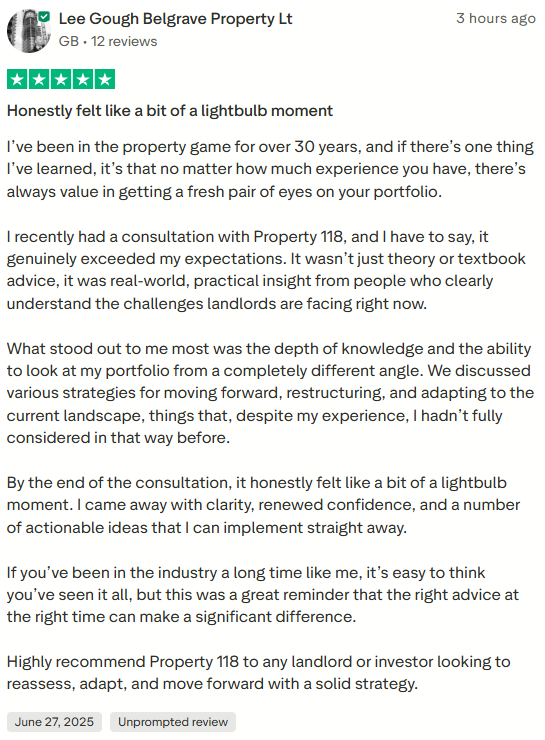
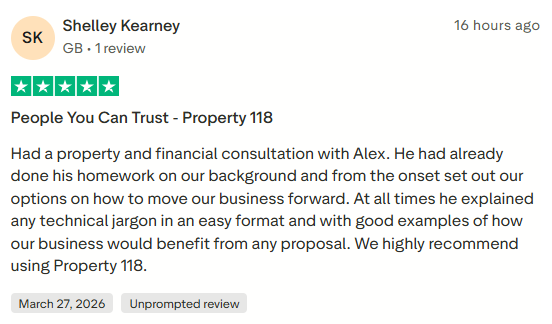
Help other landlords find Property118If you have found Property118 useful, a short Trustpilot review would make a meaningful difference. It helps other landlords decide whether our research is worth following. |
Be the first to comment
Your experience could help the next reader
Have you dealt with something similar? Share what you learned, raise a question or offer a perspective your peers may find useful.


Not a member yet? Join In Seconds
Login with