

The insurance blindspot that left a landlord unprotected
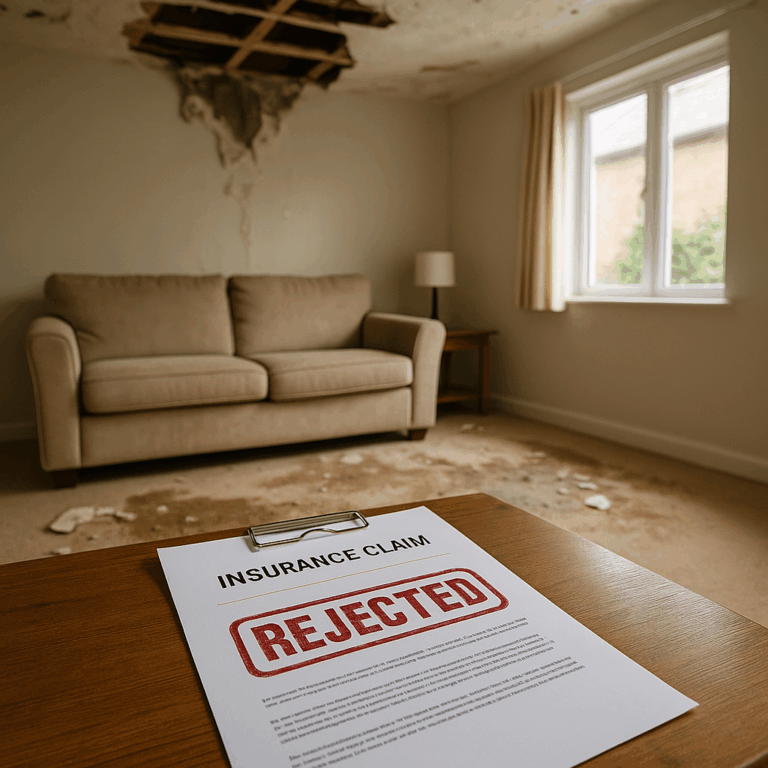

The property was well looked after, the tenants were reliable, and the landlord assumed their standard home insurance would cover any mishaps. When a major leak destroyed ceilings and carpets, the claim was submitted without worry. But the insurer refused to pay out — the policy specifically excluded properties let on assured shorthold tenancies. Without proper landlord insurance in place, the landlord was left covering thousands of pounds in repairs alone.
This is a mistake many first-time or accidental landlords make. Standard home insurance policies are not designed for rental properties, and they often exclude claims where the property is occupied by tenants. Specialist landlord insurance policies typically cover loss of rent, malicious damage, liability claims and legal expenses, in addition to buildings cover. In this case, the absence of the right policy left the landlord financially exposed at the very moment they needed protection most.
The lesson is clear: landlord insurance is not just a box-ticking exercise, it is an essential safeguard. It should be checked annually, updated when circumstances change, and tailored to the risks of letting. Relying on a standard home policy is like driving without the right licence — you might get away with it for a while, but when things go wrong, the consequences are severe.
What do you think?
Do you use specialist landlord insurance, or have you ever discovered gaps in your cover only when making a claim?
Source: Association of British Insurers on landlord insurance
Previous articles in this series
Landlord Lessons: The AST date mistake
Landlord Lessons: The missing inventory
Landlord Lessons: The verbal agreement trap
Landlord Lessons: The gas safety lapse
Landlord Lessons: The unprotected deposit
Landlord Lessons: The unlicensed HMO
Landlord Lessons: The electrical safety lapse
3 comments on this article
Learn from your peers’ experience
A different perspective could help you spot an issue, avoid a mistake or find a better way forward. Read the comments and add your own views if you wish.
Previous Article
Renters’ Rights Act could backfire on tenants warns think-tank
Member Since July 2013 - Comments: 2076 - Articles: 21
3:03 PM, 11th November 2025, About 11 months ago
Good points, Mark. Insurance (unlike most contracts, where the principle caveat emptor applies) a contract of insurance is a contract “of utmost good faith”. That means being completely open with the insurers both when obtaining cover and when submitting a claim.
Another big thing to watch out for is informing the insurers in a timely manner of any incidents that might lead to a claim and also disclosing such incidents on renewal, even if a claim is not made.
There is a duty to disclose “any matter that might affect the mind of a prudent insurer”. Not making a claim is one thing. Not telling the insurer about the incident is another. If insurers become aware that such information has been kept from them, they may avoid a claim, even if that claim is unrelated to the non-disclosure.
Member Since March 2023 - Comments: 1514
10:45 AM, 12th November 2025, About 11 months ago
.. and that will bligfht them from getting insurance in future as well. All all claims including rejected ones are registered and other insurance companies usually have access to them.
Member Since July 2013 - Comments: 463
11:56 PM, 12th November 2025, About 11 months ago
Choosing the right level of cover is a nightmare. The free RICS calculator is primitive on the extreme, and even if you follow it, the insurer is completely at liberty to claim you are under-insured and only pay out 75% of whatever figure they choose when you make a claim. It’s very difficult to prove they are wrong and a full insurance survey costs hundreds of pounds. Who wants to bear that cost every year – arguably necessary when building costs are going up by so much?
Of course if you over-insure to our property by 10% or 25%, they don’t pay you proportionally *more* than the repair is worth. Their “adjustments” are always in only one direction.
The contrast with owner-occupier buildings insurance is striking. You can easily get cover “up to” £500K, say, which will cover most rebuild or repair eventualities, and there’s none of this ridiculous pretence with landlord insurance that you have to value your property to the nearest £1000 every year.
How do commercial insurers get away with this unfair practice?