



Failures by social housing landlords continue even with Awaab’s Law
12:01 AM, 22nd December 2025, 10 months ago
Categories:
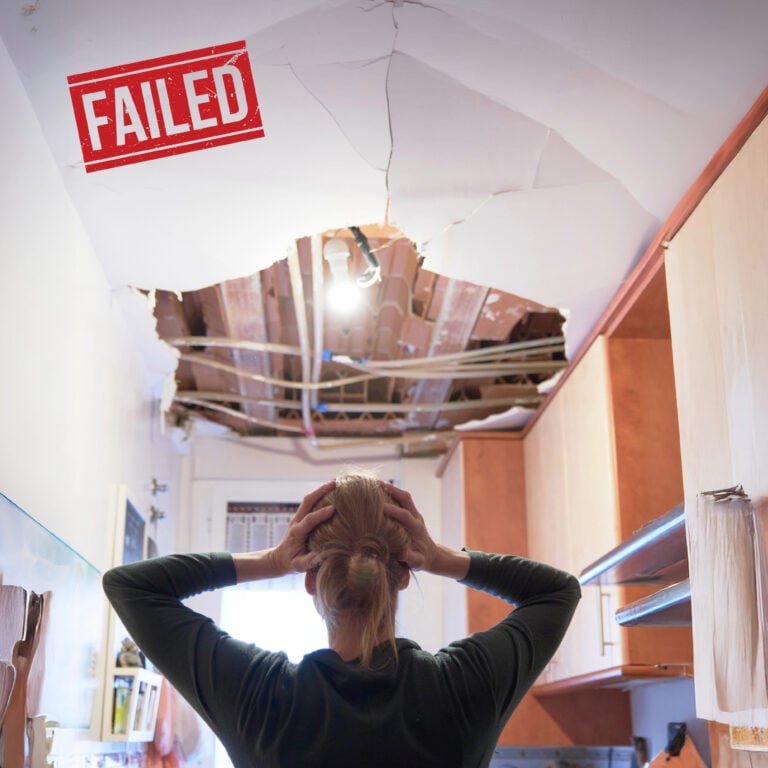
Despite Awaab’s Law already being in place for social housing landlords, many are still failing in their duties, including incidents such as a ceiling collapsing onto a child’s bed.
A report by the Housing Ombudsman reveals severe maladministration among a number of social housing landlords.
Awaab’s Law requires all social housing landlords to fix dangerous damp and mould within set timeframes and to complete emergency repairs within 24 hours.
Left a resident and her family living in a house with collapsed ceilings for two years
According to the report, Haringey Council left a resident and her family living in a house with collapsed ceilings for two years after failing to arrange a temporary move.
The Housing Ombudsman reveals that a bedroom ceiling fell onto a child’s bed while they slept, and plaster also fell from the bathroom ceiling.
Although Haringey Council, acted quickly to raise the temporary move request after a surveyor recommended it and its Housing Decision Panel approved the move.
The council failed to inform the resident for two months and then did not carry out the move for another 13 months, despite the resident repeatedly raising the same concerns.
In the report, the council said that no works could be carried out at the property because there was no suitable alternative accommodation.
The Housing Ombudsman says the social housing landlord did not consider the household’s individual circumstances. The report adds that if the council had used its internal complaints process to resolve the issue, it might have avoided a finding of severe maladministration.
Failed to repair a wet room for a disabled resident for 12 months
In another case, Birmingham Council failed to repair a wet room for a disabled resident for 12 months. The council did not carry out a risk assessment or consider a temporary move.
Despite the resident having no other shower facilities, the council cancelled appointments with no further communication, and when it did attend, there were no notes on any work carried out.
The council said the subcontractor could have done more but accepted responsibility for the repair, which has now been completed, and said it will review how it applies these lessons going forward.
See person behind the repair
Richard Blakeway, Housing Ombudsman, said: “It is always important to see the person behind the repair.
“In these cases, had individual circumstances been adequately considered by the landlords when making decisions, the outcomes could have been different.
“Instead, we see the impact of services failures exacerbated because the residents are disabled, domestic abuse survivors or children.
“And these cases show the importance of a customer focus in one particular area: appointments.
“Throughout these cases, repairs appointments do not take place. This is inefficient for landlords and can waste resident’s time. A missed appointment can trigger a series of events from which the landlord finds it hard to recover.
“It is important for residents to allow access for landlords to do repairs. But these cases indicate inadequate or outdated systems or approaches to appointments which lack a customer focus.”
Be the first to comment
Your experience could help the next reader
Have you dealt with something similar? Share what you learned, raise a question or offer a perspective your peers may find useful.
Related Articles


Social housing landlord denied right to force entry for gas safety check
12 months ago | 11 comments
Not a member yet? Join In Seconds
Login with