


Councils to gain power for surprise inspections without notice at the end of this year
9:25 AM, 29th October 2025, 5 months ago
13
Categories:
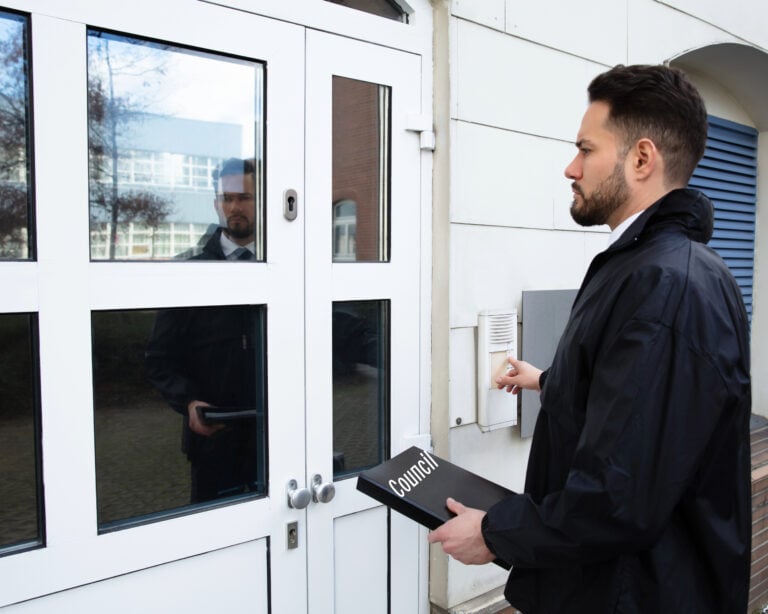
From December, councils will have the power to enter private rented properties without needing a warrant in certain circumstances.
Under the Renters’ Rights Act, councils will have the power to carry out surprise inspections, and landlords will not have to be notified before an inspection takes place.
The government has now published investigatory powers guidance for local authorities to investigate whether a landlord or agent letting out private rented housing has broken certain laws, ahead of it coming into force on 27 December.
Power of entry under landlord database
Under the guidance, it says council housing officers can use the power of entry under certain circumstances, including: “breach of the duty on a residential landlord to ensure an active landlord and active dwelling entry in the database and the offence of knowingly or recklessly providing false or misleading information to the database operator.”
This means that if a council officer reasonably suspects a property is being let without the required registration for the landlord database, and needs to inspect the premises to confirm it is being rented as a home, they may use their power of entry under section 126 of the Renters’ Rights Act 2025 to investigate.
However, failing to register does not automatically trigger an inspection or give the council an immediate right of entry. The power can only be exercised where there are reasonable grounds to suspect a breach and an inspection is necessary to verify that a residential tenancy exists.
No prior notice needed
The guidance also says council housing officers can enter a landlord’s property without a warrant “if the authorisation states the specific purpose for which they are authorised to enter the residential premises.”
The council housing officers can also take photographs and make recordings when they enter the property without needing the landlord’s permission.
The guidance says a landlord does not need prior notice but should be informed in writing after the entry has taken place. The guidance only says this must be done after a reasonable period but does not list an exact timeframe for when council housing officers should give notice.
It states: “You must give notice to a residential landlord informing them that the property was entered, including the date of the entry and the purpose of the entry, within a reasonable period after the entry.”
The guidance adds: “This notice must be in writing, be given by an officer of the local housing authority, include an explanation on why you need to enter the premises, and an explanation on what laws a person may be breaking if they obstruct the entry or fail to comply with properly imposed requirements.”
A council can still inspect a property even if the tenant and landlord refuse permission
Landlord law expert at Landlord Licensing & Defence, Phil Turtle, tells Property118 the new power of entry is simply embodying what councils have been able to bend the law to achieve for years.
He explains: “A council can still inspect a property even if the tenant and landlord refuse to give permission. Councils have more power than the police to enter your home.
“Already, before the Renters’ Rights Act powers of entry: The Housing Act gives councils entry under Section 239 which gives them the ability to go in and inspect because of an official complaint to determine whether any function under parts one to four of the Housing Act should be exercised. If the council think anything is wrong in the property or if anybody has complained, they can go in under Section 239 in 24 hours.”
“But when dealing with an unlicensed property, councils do not need to give 24-hour notice. If the council believe that there is an offence under Housing Act 2004 Section 72 which is anything to do with HMO licensing or Section 95 (selective licensing) and they have reason to believe the property is unlicensed, they don’t need to give notice they can just turn-up and demand entry.
“Often the council will do a dawn-style raid at five in the morning with eight or so officers dressed to look like police uniforms, and they’ll threaten their way in.”
He says landlords and tenants can be fined if they obstruct entry to the inspection.
He adds: “We hear so many stories that councils tell foreign nationals that if they don’t let them in, they will get deported.
“The officers will barge their way upstairs to count how many people are in beds and claim they are all living there. Councils seem to think that an unlicensed HMO is second only to murder!
“If a landlord or a tenant obstructs this entry it will be classed as a level four fine costing up to £2,500, and they can still enter the property!
“If you refuse entry, they simply go to the Justice of the Peace (Magistrate) and get a warrant and enter by force.”
Tags:
council entry powers, council housing officers, council powers, Landlord Database, Landlord Licensing & Defence, Renters’ Rights Act, Renters’ Rights Bill 2025, surprise inspections
Comments
Have Your Say
Every day, landlords who want to influence policy and share real-world experience add their voice here. Your perspective helps keep the debate balanced.
Not a member yet? Join In Seconds
Login with
or
Related Articles

Councils granted new powers to target landlords in enforcement crackdown
9 months ago | 31 comments

Can the council force tenant inspections and demand evictions for smoking?
1 year ago | 22 comments
Member Since February 2021 - Comments: 106
10:27 PM, 1st November 2025, About 5 months ago
Reply to the comment left by Harjit Mahal at 01/11/2025 – 22:05
Homelessness crisis is already here😳😬
Member Since October 2024 - Comments: 188
5:35 PM, 5th November 2025, About 5 months ago
Reply to the comment left by Harjit Mahal at 01/11/2025 – 22:05
If the council visit and tenants open the door, they will first ask the tenants of any issues. If none they will find issues just to fine the landlords. Tehy will never say it is all fine. They will need to find faults. Otherwise they will feel they have wasted time. They will slap some penalty to the labdlords and that is not just for rogue landlords.
Member Since January 2023 - Comments: 317
7:45 PM, 5th November 2025, About 5 months ago
Still unclear how these ‘without a warrant’ inspections would work. I.e. They won’t inform the LL but will inform tenant 24 hours beforehand so what is the tenant supposed to do- cancel all their important business meetings in the office and stay at home or will the council negotiate a new inspection date with the tenant?