



Council at fault in landlord eviction case – Ombudsman
8:31 AM, 13th April 2026, 2 hours ago
1
Categories:
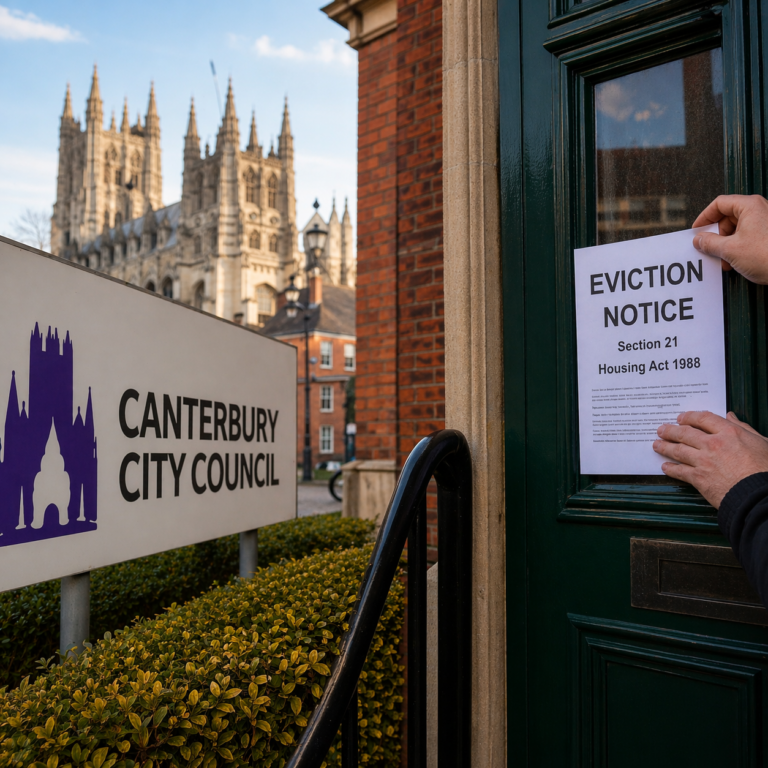
A council failed to contact a landlord or assess whether tenants should remain in a rented property during eviction proceedings, the Local Government and Social Care Ombudsman has found.
The case centres on Canterbury City Council after a private landlord, known as Mr X, served a Section 21 notice in February 2024 so he could carry out repair works.
The notice expired in May, but the tenants did not leave, pointing to advice they received from the council.
The Ombudsman said the authority ‘did not contact Mr X, as the landlord, throughout the process, or consider whether it was reasonable for the tenant to remain in occupation during the relevant period’.
That failure, it added, led to ‘frustration and uncertainty’.
Tenants in arrears
The landlord reported that rent payments had stopped and the tenants stayed on beyond the notice period.
He later issued a Section 8 notice over arrears, secured a possession order, then moved to enforcement through bailiffs.
Over those weeks, he contacted the council repeatedly and, on each occasion, he was told he would receive a call back.
However, that did not happen.
Council should communicate
Official guidance, the Ombudsman noted, says that councils should engage with landlords early and keep that dialogue going.
The Homelessness Code sets out what must be considered once a valid notice expires.
These include the landlord’s intentions, the tenant’s position, the risk of arrears building, and the impact of court action all form part of that assessment.
In this case, those steps were not followed.
The Ombudsman said the council ‘missed opportunities to turn its mind to the relevant points’ and did not consider whether continued occupation remained reasonable as events moved on.
The Ombudsman points out that the council was not at fault to advise tenants of their legal right to remain until a court order is enforced.
It also rejected claims that the council caused the arrears or should have cleared them through Discretionary Housing Payments.
The ruling states: “Rent arrears remains the responsibility of tenants, not the Council.”
There was no evidence the that tenants were told to stop paying rent.
Council fell short
However, the council’s complaint handling also fell short and the Stage 1 response arrived outside the expected timescales.
It also did not explain how Mr X could escalate the matter further.
The Ombudsman found the council’s actions left the landlord uncertain about whether events might have unfolded differently.
Although it could not determine whether earlier engagement would have changed the outcome.
The council has agreed to apologise in writing and make a £200 payment.
It will also remind housing staff to contact both landlords and tenants at an early stage and maintain that contact throughout possession proceedings.
Newham Council tax failures
Meanwhile, Newham Council has been ordered by the same Ombudsman to compensate a landlord over council tax failures.
The council has been told to pay £350 to a landlord after failing to respond to multiple emails about council tax notices.
That was despite being informed that the tenants were students and later that the property had become vacant.
The Local Government and Social Care Ombudsman said the payment should ‘reflect the scale of the injustice’ caused.
The council said it had ‘significant backlog’ of correspondence, but a contractor was helping to respond within five working days.
Tags:
Canterbury City Council, housing complaints, landlord eviction, landlord rights England, Newham Council, Ombudsman decision, possession order, rent arrears, Section 21 Notice
Comments
Have Your Say
Every day, landlords who want to influence policy and share real-world experience add their voice here. Your perspective helps keep the debate balanced.
Not a member yet? Join In Seconds
Login with
or
Previous Article
Government claims strong Renters' Rights Act awarenessRelated Articles

Scottish renters should get last two months’ rent-free if evicted – Generation Rent
2 weeks ago | 5 comments

Lengthening court possession delays will see landlords leave the PRS
2 weeks ago | 13 comments
Member Since June 2019 - Comments: 767
9:17 AM, 13th April 2026, About 56 minutes ago
Why was the council not at fault insisting the tenants should stay on, the previous government gave them clear guidelines to the contrary?