

Scottish eviction reforms need scrutiny
4 years ago | 9 comments


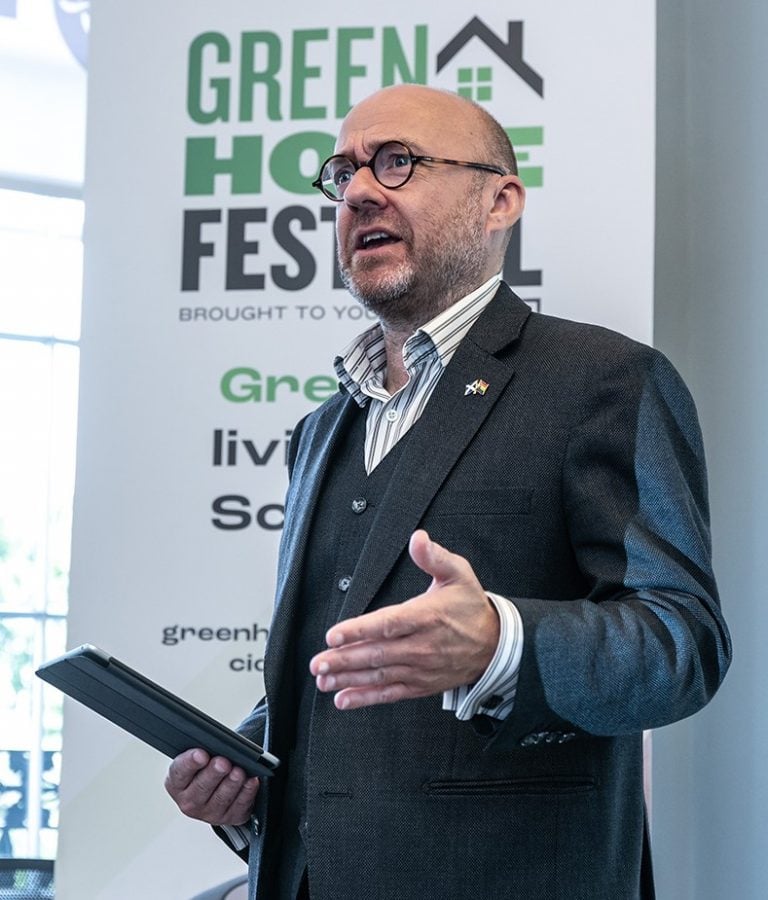
Landlords in Scotland could be facing hefty bills to improve their homes to meet the EPC C rating after one minister said the country is facing a ‘monumental but essential task’ in overhauling its old housing stock.
The warning comes from the Minister for Zero Carbon Buildings, Active Travel and Tenants’ Rights, Patrick Harvie (pictured, right).
He was speaking to delegates at the Scottish HQ of the Royal Institution of Chartered Surveyors (RICS), where he outlined the scale of the challenge.
The Scottish Greens co-leader said: “Our homes and workplaces account for around a fifth of Scotland’s total greenhouse gas emissions.
“Our statutory target for 2030 means that we need to reduce emissions from heating buildings by 68% below their level in 2020.”
He added: “This is a monumental but essential task. Our building stock is relatively old and wasn’t always built to high energy standards.”
Mr Harvie said that a legacy of poor energy efficiency has contributed to emissions and fuel poverty – and things need to be ‘drastically’ improved to boost standards.
He said: “By 2030, we want to see a large majority of homes achieving a level of energy efficiency at least equivalent to an EPC C – with all homes meeting that standard by 2033, where feasible and cost effective.
“This will reduce emissions from our buildings, but it will also help make our energy more affordable, by removing poor energy efficiency as a driver of fuel poverty.”
Mr Harvie also warned that, as well as improving energy efficiency, Scotland needs to switch to zero direct emissions heating.
He said: “Meeting our 2030 target means that we need over a million homes and the equivalent of 50,000 non-domestic buildings to switch from fossil fuels.
“This is a huge transition, affecting communities, businesses and homes across Scotland.
“Getting there will need a much faster installation rate for these zero direct emissions heating systems.”
In recent years, Scotland’s installation rate for those systems has been around 3,000 homes annually, but the government wants to reach around 200,000 each year by 2030.
Mr Harvie also said that the cost-of-living crisis and unprecedented surges in energy prices make the challenge even harder – and the government can’t foot the bill on its own.
He said: “Our funding will make a huge difference to the heat transition.
“But the cost of transforming our building stock – around £33 billion to 2045 – can’t be met by government alone.”
He added: “Our Green Heat Finance Task Force is now working on innovative solutions to maximise private sector investment, and to find new ways to help spread the upfront cost of making properties warmer, greener and more energy efficient.”
2 comments on this article
A different perspective could help you spot an issue, avoid a mistake or find a better way forward. Read the comments and add your own views if you wish.
4 years ago | 9 comments
5 years ago | 3 comments

5 years ago | 2 comments
Member Since June 2014 - Comments: 327
3:22 PM, 18th August 2022, About 4 years ago
Key phase is where feasible and cost effective, except Scottish Government view of cost effectiveness is vastly different from that of most landlords.. To achieve Band D the cost cap was £10,000, we have yet to see what is to be proposed cap to achieve Band C.
Member Since August 2022 - Comments: 3
12:11 PM, 22nd August 2022, About 4 years ago
Typical politically motivated nonsense from the Scottish greens.The housing stock in all the major cities in Scotland is made up of large numbers of 1900’s tenement buildings.These are next to impossible to get up to band c because of their construction, not to mention that many are in conservation areas where changing windows etc is prohibited.They are so blind they can’t see there are going to be virtually no rental properties left in Scotland in a couple of years time.We were going to purchase another 2 properties to rent but have gone into commercial instead.