

Bank of England raises interest rates to 4% as inflation rises
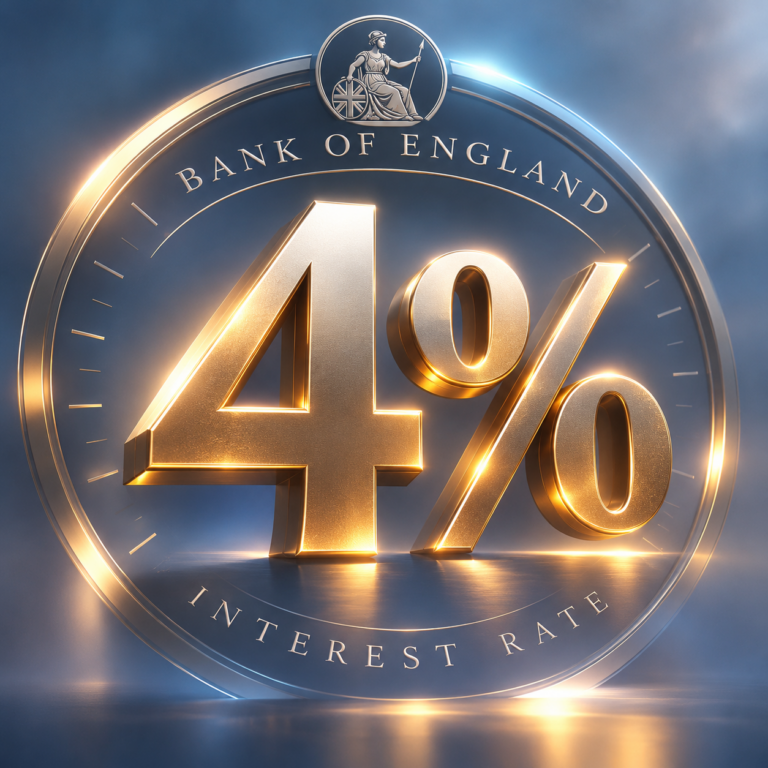

For the first time in three years, the Bank of England has raised interest rates to 4% amid mounting economic pressure.
Many experts were not surprised by the move, which had been widely predicted amid the ongoing war in Iran and rising costs.
The Bank of England’s Monetary Policy Committee (MPC) voted by a majority of 8-1 to raise the interest rate by 0.25 percentage points, taking it to 4%.
Further increases are likely
The Bank of England also confirmed that inflation has risen to 3.5%, with further increases expected to push it to around 5% by mid-2027. Higher energy prices are expected to have a knock-on effect, driving up costs further.
Governor of the Bank of England Andrew Bailey warned further increases were likely.
He said: “There is now enough inflationary pressure in the pipeline caused by the rise in energy prices that an increase in Bank Rate is warranted.
“Today’s increase shouldn’t be seen as the first in an inevitable long sequence of hikes. But, unless the conflict in the Middle East is resolved, neither does it seem likely to be the last increase.
“The MPC will judge the outlook at each meeting, responding as necessary to bring inflation sustainably back to our 2% target.”
Sufficient to warrant an increase in Bank Rate
The MPC said of its decision to raise interest rates: “The conflict in the Middle East is now in its ninth month. Global energy prices have continued to rise from an already elevated level. UK CPI inflation increased to 3.5% in September.
“It is now expected to rise to around 5% by the middle of next year. It is then projected to fall as the impact of rising energy prices on 12-month inflation rates fades, and still restrictive monetary policy bears down on inflation.
“While the direct effects of higher energy prices are clear, and will continue to feed into firm and household energy bills, there remains limited evidence of knock-on effects on other prices and wages. However, the degree of inflationary pressure in the pipeline is now sufficient to warrant an increase in Bank Rate.
“Activity data in recent months have generally been stronger than expected, adding to the case for modestly tighter monetary policy.”
Industry reaction
Andrew Lloyd, managing director, Search Acumen said the increase would hurt tenants and landlords.
He said: “For consumers already limping from years of higher bills, this rate rise is another boot landing. Around 1.8 million fixed-rate mortgages are due to expire in 2026, with a further 2.3 million households facing refinancing in 2027.
“This will be another blow to tenants as many landlords look to reset rents at the first available opportunity as pressure mounts from rising borrowing costs alongside a heavier tax burden. Whether landlords choose to sell up or pass costs on through higher rents, tenants are likely to end up feeling the greatest squeeze.
“Property can shift from asset to liability remarkably quickly when the cost of holding it outweighs the benefit of keeping it and pressure is building on both sides of the market. For developers and investors, higher financing costs can turn an already challenging sales market into a costly waiting game.”
Landlords dealing with higher mortgage rates
Steve Cox, chief commercial officer at Fleet Mortgages, said: “For buy-to-let, the more immediate issue is that landlords have already been dealing with a higher mortgage rate environment, and that has consequences for affordability, refinancing decisions and the ability to make future purchases.
“We’ve seen lenders having to respond to rising funding costs over recent weeks, and there is no reason to assume today’s decision will bring an end to that process. However, this is also where lenders need to think carefully about the products they offer and how they can support landlords who remain committed to the sector.”
Not a surprise
Joshua Elash, founding director of specialist lender MT Finance, said the decision to raise interest rates was not a surprise.
He said: “Today’s increase in base rate to 4 per cent comes as no surprise. Persistent inflation has forced the Monetary Policy Committee’s hand, and it has long been a question of ‘when?’ not ‘if’.
“The decision is a direct reflection of what’s happening in the global economy and it’s vital that the Bank of England gets a handle on inflation.”
Largely priced in already
Amy Reynolds, head of sales at Richmond estate agency Antony Roberts, said: “Today’s rate rise has been largely priced in already. Fixed-rate mortgages have been heading towards 6 per cent for weeks, and mortgage approvals have dropped to their lowest level in almost three years.
“The real damage is psychological. Another rate rise tells people that borrowing is getting more expensive, not cheaper, and that makes them hesitate. The people hit hardest are those remortgaging and second-steppers trying to stretch to one more bedroom.
“On the back of this, we expect a quiet December for the housing market and a slow start to 2027. The sellers who still get deals done will be those who price realistically from day one.”
Budget did little to lift the pressure on the BOE
Jeremy Leaf, north London estate agent and a former RICS residential chairman, said: “The Bank of England must weigh up concerns about rising inflation as Middle East hostilities show little sign of ending any time soon, against the prospect of choking off any growth in the economy.
“The Budget did little to lift the pressure on the Bank to raise rates and the impact of a rise on an already fairly flat housing market will not be positive.
“The only silver lining is that a recent price war has prompted some larger lenders to reduce mortgage rates, although loans are still more expensive than they were at the start of 2026.”
Rising inflation
Nathan Emerson, CEO at Propertymark, said: “As the Bank of England continues to navigate wider economic pressures, including rising inflation, it comes as little surprise that base rate decisions remain focused on maintaining economic stability.
“While these decisions are never straightforward, the Bank of England must carefully balance the need to control inflation against the wider impact that borrowing costs can have on households.
“Last week’s Autumn Budget acknowledged several important consumer concerns, including rising energy costs and the ongoing challenges facing many first-time buyers. Measures aimed at addressing some of these pressures are focused on stability, particularly where they could help improve access to homeownership and ease the long-term financial burden on households. Over the coming months, much will depend on how inflation and consumer confidence evolve.”
High mortgage rates
Richard Donnell, executive director at Zoopla said: “Higher mortgage rates have been a drag on housing market activity since the Spring with sales agreed down 8% on last year and this latest increase in the base rate set to make more buyers pause and wait on their home buying decisions.
“Current mortgage rates already reflect financial market expectations of four further base rate increases, meaning average mortgage rates are unlikely to rise significantly in the short term unless those expectations change.”
“While there are fewer sales than this time last year, sales that are being agreed are happening just as quickly as a year ago as serious buyers become more selective. There is demand to buy homes but sellers need to price their homes carefully to ensure they attract the active buyers.”
Squeeze on mortgage affordability
Emily Williams, director of research at Savills, comments: “The Bank of England has raised rates for the first time in over three years, but we don’t expect to see much reaction in the mortgage market, as lenders have already priced in the expectation of increases for the last few months.
“The continued squeeze on mortgage affordability is expected to weigh on activity and values in the near term, and we expect UK house prices will fall by an average of -1.5% in 2027. But a stronger economic outlook from 2028 onwards, coupled with easing debt costs, will provide the foundation for a housing market recovery.
“House price growth is forecast to accelerate to 5.0% in both 2029 and 2030, as mortgage rates reach their low point and six consecutive years of income growth outpacing house price growth improves buyers’ purchasing power.”
Be the first to comment
Your experience could help the next reader
Have you dealt with something similar? Share what you learned, raise a question or offer a perspective your peers may find useful.
Not a member yet? Join In Seconds
Login with