

Bank of England split as three policymakers push for rate hike
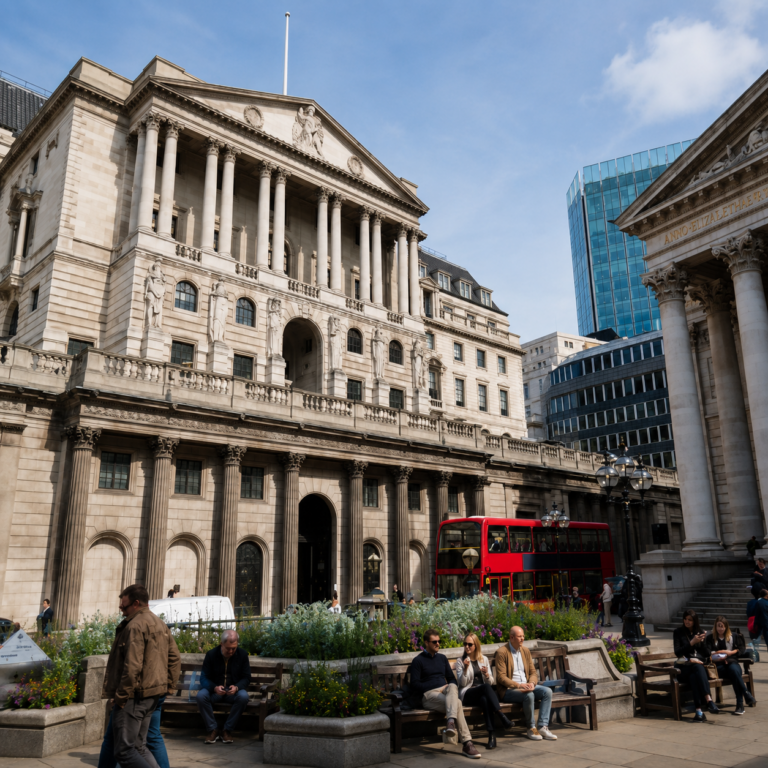

In a divided vote, the Bank of England has held interest rates at 3.75%.
The Monetary Policy Committee (MPC) narrowly voted 6-3 to keep the Bank Rate unchanged.
Three members voted to increase the Bank Rate by 0.25 percentage points, to 4%.
Energy prices have remained volatile
The MPC said of its decision: “In response to events in the Middle East, crude and refined energy prices have remained volatile and higher than pre-conflict. The impact of the energy shock on the UK economy remains uncertain.
“CPI inflation has fallen to 2.6% since the previous meeting, although it is expected to rise later this year as the effects of higher energy prices continue to pass through. The risk of material second-round effects in price and wage-setting, against which policy needs to lean, is greater the longer higher energy prices persist.
“There is little evidence so far to suggest such effects, and there have continued to be clear signs of underlying disinflation in recent data.”
Industry reaction
Samuel Fuller, director at Financial Markets Online, said: “The Bank of England’s hawks are doubling down. Three members of the Committee voted for an immediate increase in interest rates, one more than did so in June.
“Their militancy is reflected in the Committee’s minutes, which talk tough about the Bank’s willingness to act decisively to cool inflation.
“While CPI has come in under expectation for three months in a row, and sank back to a 15-month low in June, the Bank is on alert in case the energy shock drives secondary inflation.
“In recent weeks, markets had begun to predict that the Bank would be content to leave interest rates unchanged for the rest of the year.
“That bet may now change as the Bank’s minutes suggest it has refined its stance from ‘watch and wait’ to ‘watch and wait with a big stick’.
“While this means no immediate change for savers, we’re likely to see mortgage interest rates tick back up in coming weeks. With America’s on-off war with Iran now into its sixth month, continued volatility and lingering inflationary pressure have tipped the Bank into more hawkish territory and UK equities and mortgage borrowers could be the biggest losers.”
Nathan Emerson, CEO at Propertymark, said: “By holding interest rates, the Bank of England has opted for a measured approach as inflation remains above its 2 per cent target. While price pressures have eased in recent months, today’s decision reflects the need to ensure inflation continues moving in the right direction before further policy changes are considered.
“A stable base rate provides greater certainty for the housing market. It gives lenders more confidence to continue offering competitive mortgage products while allowing buyers to make informed financial decisions. Savers also continue to benefit from relatively attractive returns on savings, helping some prospective homeowners build towards a deposit.
“However, inflationary pressures have not disappeared. Higher household costs, including July’s increase in the energy price cap, alongside ongoing uncertainty in global energy markets, mean the Bank of England is likely to continue taking a cautious, data-led approach over the coming months.”
Hina Bhudia, Partner, Knight Frank Finance, said: “The MPC has turned a little more hawkish since the previous meeting, with three members voting to raise the base rate, which is unsurprising given the escalation of hostilities in the Middle East. Mortgage lenders have already repriced higher to account for this, so borrowers should enjoy some stability in the short term.
“That said, the outlook for mortgage rates over the coming months remains highly uncertain. Much will depend on developments in the Middle East and whether higher energy prices feed through into broader inflation at a time when demand across the economy remains relatively subdued. Many lenders are behind their targets for the year and will pass on to borrowers any reduction in funding costs as soon as they can.”
Colleen Babcock, property expert at Rightmove said: “There’s stability for now as the Bank of England holds its Base Rate as widely expected. We’ve seen average mortgage rates increase over the last few weeks as geopolitical tensions have escalated, and the average two-year fixed rate is currently coming it at 5.11%.
“For broader context, this is up from 4.25% before the war in Iran started, but down from around 5.43% at the peak of tensions in April. For home-movers, rates remain elevated which continues to stretch affordability. However, while rates are high, they’re also relatively steady, which helps movers to plan and make decisions.
“Even relatively small changes in mortgage rates can have a noticeable impact on monthly repayments, particularly for first-time buyers, so any downwards movement in rates during the second half of this year would be very welcome.”
Be the first to comment
Your experience could help the next reader
Have you dealt with something similar? Share what you learned, raise a question or offer a perspective your peers may find useful.
Not a member yet? Join In Seconds
Login with