

A direct comparison between leasehold and commonhold
4 months ago | 17 comments


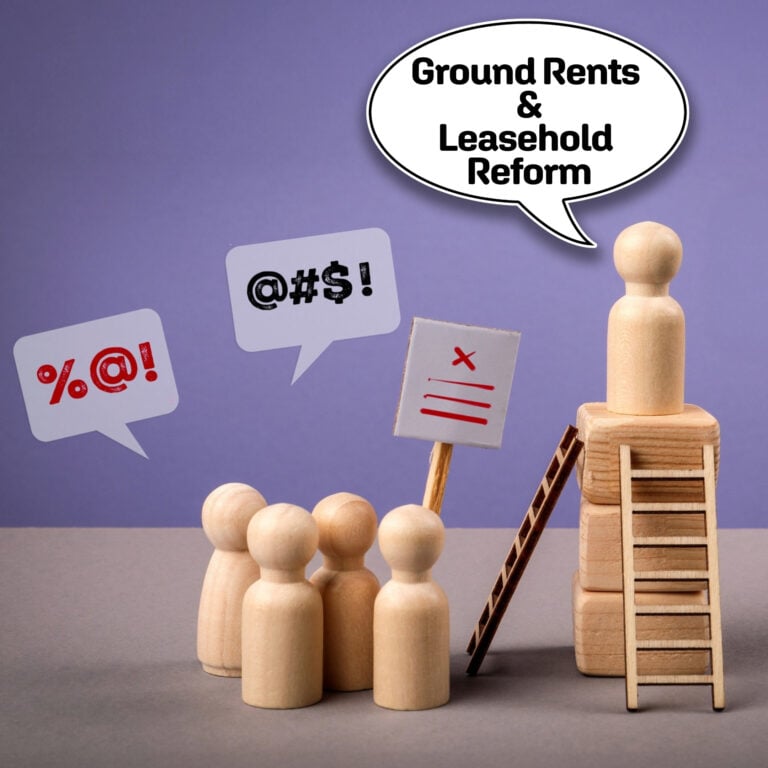
The Housing, Communities and Local Government (HCLG) committee has scrutinised the government’s draft Commonhold and Leasehold Reform Bill, saying it needs to go further.
In response to the bill, the committee welcomed protections for leaseholders but warned that key recommendations previously made by the Law Commission are missing from the draft legislation.
The findings come as government figures on leasehold dwellings show leaseholders are facing a “cliff edge”.
The report by the HCLG committee welcomed the government’s decision to cap ground rents at £250 per year but said the measure should come into force in 2027, rather than two years later.
It also raised concerns that several key recommendations previously made by the Law Commission are missing from the draft bill.
These measures, which were included in the government’s manifesto commitments, would make it easier and more affordable for existing leaseholders to convert to commonhold.
The committee warns that without them, commonhold risks becoming an “unattainable escape for homeowners trapped in the leasehold system.”
The report sets out a series of recommendations for technical changes to help commonhold work as intended in the interests of homeowners.
In particular, it suggests that conversion to commonhold should become the default outcome of collective enfranchisement.
Florence Eshalomi MP, chair of the Housing, Communities and Local Government (HCLG) Committee, said: “Millions of leaseholders have been waiting too long for successive governments to tackle the unfair leasehold system, cap ground rents, and put homeowners in control of the management of their buildings.
“The government’s draft bill takes a significant step towards delivering these objectives, but in our report, we set out a blueprint for how the final bill can meet leaseholders’ expectations and deliver on previous government pledges.”
Ms Eshalomi added the government must fast-track the bill by Autumn 2026.
She said: “Leaseholders across England and Wales have worked hard to get on the property ladder, yet for far too many the leasehold system has turned the homeownership dream into a living nightmare.
“A growing number are concerned that, without urgent reform, they will be trapped in homes with rising costs and ultimately unable to sell.
“It is vital the government now recognises this urgency by bringing forward revised legislation to deliver justice for leaseholders as soon as possible.
“I urge the government to introduce the final bill in autumn 2026 so this will be the Parliament which finally tackles the longstanding inequities of leasehold.”
The National Leasehold Campaign (NLC) also welcomed the report but said the government’s proposed 40-year transitional period to zero ground rent is too long and should be reduced.
The committee has challenged the government to justify the length of the transition period or bring it down to 20 years.
Co-founder of the NLC, Catherine Williams, said: “A 40-year wait is effectively a ‘till death do us part’ clause. It tells leaseholders they will be paying for nothing for most of their adult lives. That cannot possibly be justified.
“Even 20 years is a compromise, but it gives people some realistic hope of seeing change in their lifetime. Forty years does not.”
Dr Kion Ahadi, chief executive of LEASE, the government-funded, independent body providing free legal advice on leasehold in England and Wales said: “We welcome the publication of the Housing, Communities and Local Government (HCLG) Committee’s report on the draft Commonhold and Leasehold Reform Bill which recognises the scale of change now underway across leasehold and commonhold reform.
“Any legislative oversight or scrutiny that helps deliver substantial and much-needed change towards a fairer housing system is to be welcomed.
“The draft Bill addresses some of the most damaging features of leasehold, including high and escalating ground rents.
“More fundamentally, it signals a decisive shift away from leasehold as the default form of home ownership. Moving towards commonhold and making it easier to convert existing buildings where leaseholders choose to do so, has the potential to give homeowners genuine control, security and long-term certainty over their homes.
“We support the Committee’s recommendations aimed at accelerating the pace of change for leaseholders. However, careful and thoughtful implementation will be essential to ensure practical solutions are found for complex issues.”
Mark Chick, ALEP director and senior partner at Bishop & Sewell LLP said: ‘The Committee is right to welcome the draft Bill, but also right to call for greater realism. This is important legislation, but it is not a switch that will turn leasehold off the moment the Bill is passed.
“The changes certainly will not be quick. In practice, it may be several years before commonhold is mandated and, across parts of the market, it could be closer to a decade before commonhold is fully embedded and widely understood.
“Customer education and expectation management is vital to avoid consumers opting for commonhold on the basis that it is ‘easy’: leaseholders need to know what the Bill will do, what it will not do immediately and what further legislation or regulation may still be needed.
“Homeowners will need to understand not only the advantages of commonhold, but also the responsibilities that come with membership of a commonhold association, collective decision-making and long-term building management.”
Be the first to comment
Have you dealt with something similar? Share what you learned, raise a question or offer a perspective your peers may find useful.
4 months ago | 17 comments

4 months ago | 12 comments

4 months ago | 4 comments
Not a member yet? Join In Seconds
Login with