

Majority of landlords still own personally despite shift towards companies
6 months ago | 1 comments


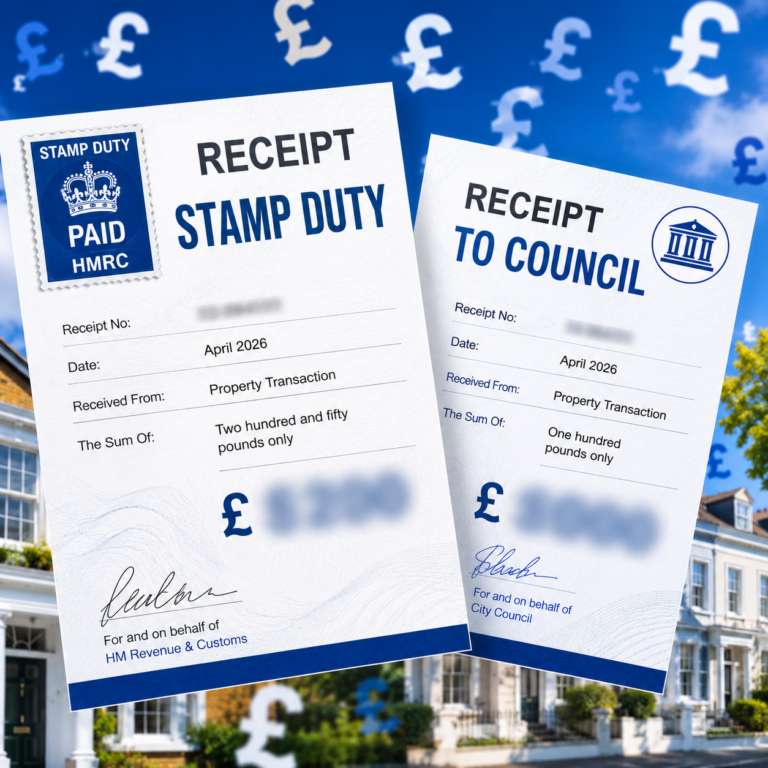
Higher-rate Stamp Duty receipts from landlords and second-home buyers now account for the majority of takings in more than half of English local authorities, research reveals.
According to Paragon Bank’s review of government data, it found that higher-rate additional dwelling (HRAD) transactions generated at least 50% of total stamp duty receipts in 164 local authorities in 2024/25.
That’s up from 62 councils in 2016/17, the year the 3% surcharge on additional homes was introduced.
As a share of English local authorities, the figure has risen from 22% to 56%.
Paragon’s director of mortgages, Louisa Sedgwick, said: “The Stamp Duty surcharge was designed to moderate buy to let and second‑home demand, but the longer‑term effect has been to entrench additional‑property purchases as a core source of Stamp Duty revenue.
“A decade on, the receipts data points to a more complicated outcome.
“The figures suggest that additional-property purchases have become an increasingly important component of the Stamp Duty tax base, but there is only so far that landlords can go.”
She added: “They have already been hit with an increase to the surcharge in 2024 and the impact of the policy has been to pivot transactions to northern regions, where property is typically cheaper.
“The danger moving forward is that we create a two-tier market, with uneven investment across the country, particularly in the south, which could lead to stock shortages and rental inflation.”
In 8% of local authorities, additional property purchases accounted for at least three-quarters of all stamp duty receipts.
Kingston upon Hull recorded the highest HRAD share, with 97% of stamp duty receipts coming from additional dwelling transactions in 2024/25, up from 68% in 2016/17.
Sandwell followed on 92%, compared with 63% in 2016/17, while Blackpool also recorded 92%, up from 79%.
Other high-ranking areas included Hyndburn on 89%, Barking and Dagenham on 89%, Stoke-on-Trent on 85%, Burnley and Leicester on 82%.
Wolverhampton, Lincoln, Middlesbrough, Nottingham, Salford, Luton and Manchester all on 79% or above.
Several of the areas with the highest HRAD shares are large urban authorities in the Midlands and North, rather than traditional second-home destinations.
Manchester, Salford and Wolverhampton now derive at least three-quarters of their stamp duty receipts from additional property purchases.
Yorkshire and the Humber had the highest regional concentration, with 14 local authorities, or 93% of the region’s councils, receiving at least half of stamp duty receipts from HRAD transactions.
In the North East, 11 local authorities, or 92%, passed the same threshold, while in the North West the figure was 31 local authorities, equal to 89%.
The East Midlands recorded 16 councils at 50% or above, representing 67% of local authorities, while London had 20, or 61%.
In the South East, 22 local authorities, or 34%, generated at least half of stamp duty receipts from HRAD purchases, while the East of England recorded 15, or 33%.
The stamp duty surcharge on additional homes was introduced at 3% in April 2016 and was increased to 5% in the 2024 Autumn Budget.
1 comment on this article
A different perspective could help you spot an issue, avoid a mistake or find a better way forward. Read the comments and add your own views if you wish.
6 months ago | 1 comments
7 months ago | 3 comments

7 months ago | 2 comments
Member Since February 2025 - Comments: 90
12:12 PM, 12th May 2026, About 5 months ago
I don’t understand this article. In England, SDLT is payable to HMRC. Do HMRC then pay it on to the local authority where the property is located?