

Open Letter to the SNP: why did Scotland’s PRS stop growing?
7 months ago | 8 comments


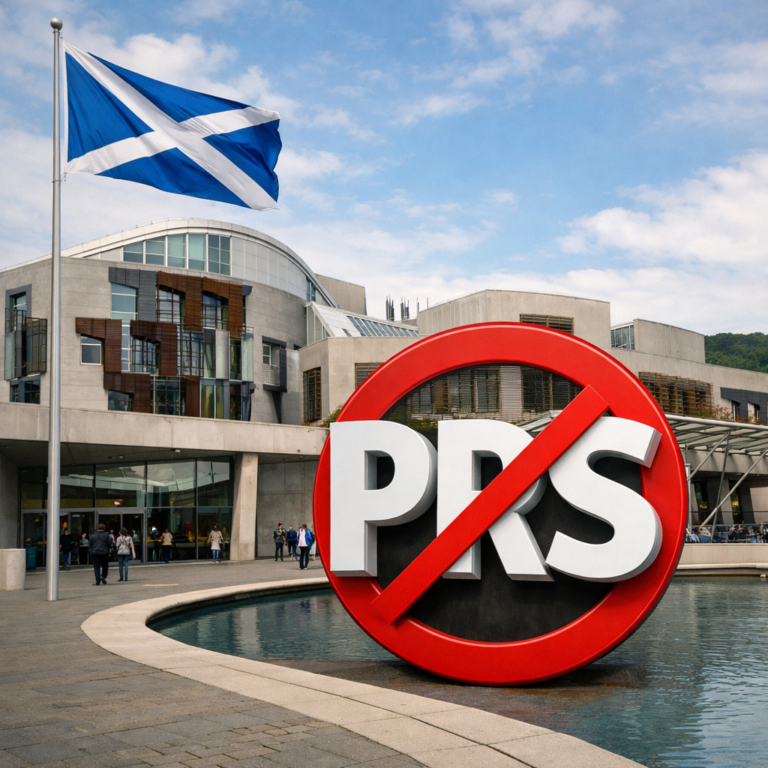
With the Scottish elections taking place next month, a tenant group is calling on the next government to reduce the size of the private rented sector.
Living Rent has launched its 2026 Holyrood manifesto with pledges such as a ban on landlords serving as elected representatives.
As previously reported by Property118, one landlord organisation has warned blunt legislation is not the best way to solve the Scottish housing crisis.
Living Rent says in its manifesto: “We demand universal public housing, available to all, owned by the people as a public asset, and built to a liveable standard with the needs of tenants in mind.
“Currently, both social and council housing fail to meet this standard. In the short term we support the expansion of council and social housing, but we organise towards abolishing the private rented sector and win universal public housing.”
The manifesto calls for government commitment in the next housing strategy to reduce the size of the private rented sector over the next parliamentary term.
Living Rent says this would involve increased use of Compulsory Purchase Orders (CPOs) to empower local authorities and housing associations to buy private properties from landlords.
The group is also demanding a ban on landlords serving as elected representatives, at local and national government.
Under the Scotland Housing Act, councils must first assess rent conditions in their areas and submit proposals for designated rent control zones to the Scottish government by 31 May 2027.
In designated rent control areas, annual rent increases will be limited to CPI + 1%, up to a maximum of 6%.
The Scottish government have exempted specific mid-market rent (MMR) and build-to-rent from rent controls.
However, Living Rent says rent controls should apply to all tenures and wants a “comprehensive system of rent controls which systematically reduces rents over time.”
As previously reported by Property118, rent controls do more harm than good and actually do far more damage than benefit tenants.
According to the Institute of Economic Affairs (IEA), while rent controls may initially lower rents for existing tenants, they typically lead to higher rents in uncontrolled sectors and reduce housing supply and quality.
Even in Scotland, the rent cap has been blamed for soaring rents, which have increased by 11.6%.
Data by Hamptons reveals Scottish landlords are increasing rents at a faster pace than anywhere else in Great Britain because of rent controls reshaping the market.
As previously reported by Property118, the Scottish Association of Landlords (SAL), admits landlords may not win votes for politicians, it is still important for policymakers to understand their role in the housing system.
He told Property118: “Landlords don’t win votes for politicians, and that’s an important message we need to get across. They’re not suddenly going to think they need to support landlords hand over fist.
“Politicians are obviously thinking about the wider community, they are concerned about tenants, about whether tenants can afford to pay their rent and whether they have good homes to live in.
“What I’m trying to say to politicians is that we both want the same thing. We want our tenants to be happy, we want them to stay in their properties, and we want them to be able to afford to live in them.”
1 comment on this article
A different perspective could help you spot an issue, avoid a mistake or find a better way forward. Read the comments and add your own views if you wish.
Previous Article
Landlord exodus slows but uncertainty remainsNext Article
Rental yields rise across England and Wales to 8.1%
7 months ago | 8 comments


7 months ago | 8 comments
Member Since June 2019 - Comments: 973
12:42 PM, 7th April 2026, About 6 months ago
Next week they will be complaining about the lack of homes to rent.