

The Pet Rock That Needed a Lease Clause
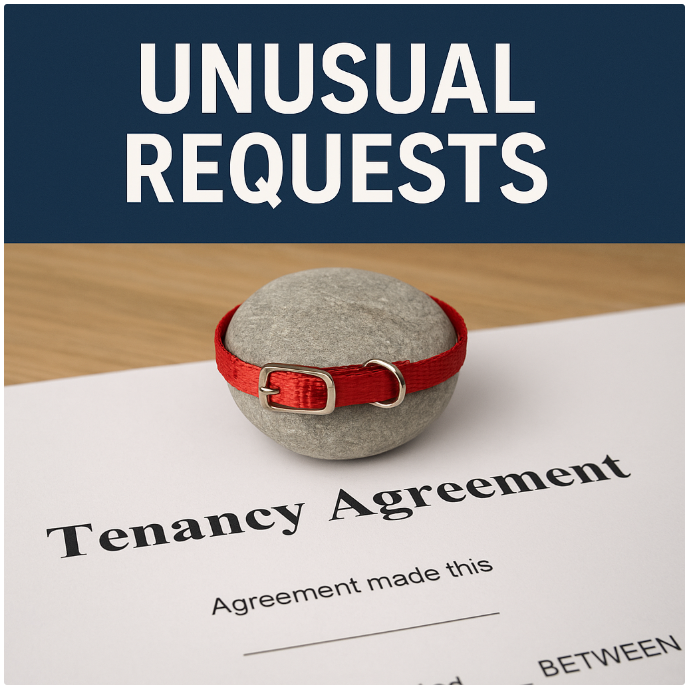

Some tenancy requests are simple. Others make you reach for the red pen. This one began with a straight-faced email asking whether a “pet rock” could be added to the tenancy as a permitted animal, complete with a name, feeding schedule (“sunlight daily”), and a promise that noise would be minimal.
The exchange
The letting manager replied politely, asking for basic details as you would for any pet: species, size, vaccinations, insurance. The tenant answered with a photograph of a smooth pebble in a felt-lined box. It was hard not to smile, however the request exposed a gap in the paperwork. The tenancy’s “no pets without consent” clause did not define what counted as a pet. It mentioned dogs and cats, but nothing about exotic species, invertebrates, or inanimate objects with names.
Why the wording matters
Ambiguity invites friction. If a clause only lists common animals, someone will eventually ask about the uncommon ones, or try to argue that a non-living “pet” is outside the rule. A tidy definition avoids the back-and-forth and keeps conversations sensible.
How the clause was fixed
- Clear definition. “Pet” was defined broadly to include any living creature kept for companionship or interest, and any contained habitat (e.g. vivariums, aquariums) brought onto the property.
- Consent process. Prior written consent required before any pet or habitat is introduced, with full details (species, number, enclosure, care, likely odour/noise).
- Prohibited categories. A short list for safety and nuisance (venomous or dangerous species, animals requiring licences, livestock).
- Condition and hygiene. Expectations for cleaning, odour control and pest prevention, plus a commitment to repair pet-related damage promptly.
- Inspections and end-of-tenancy. Reasonable mid-term checks by appointment; at move-out, professional cleaning or de-fleaing if required, with evidence.
The outcome
The tenant accepted that a rock could not be a “pet” for the purposes of the agreement, and the conversation reset on practical terms. The updated wording has since prevented several awkward debates about unusual animals and helped keep everyone focused on welfare, safety and property condition.
Your experience
What is the most unusual request you have received, and how did you handle it?
If you have tightened a clause as a result, share the phrasing below so other readers can benefit.
Background: letting-agent round-ups of quirky tenant requests inspired this story — for example, “Funny Tenant Requests (And What We Can Learn from Them)”, published 16 April 2025 by a FARLA-led agency.
Comments
Have Your Say
Every day, landlords who want to influence policy and share real-world experience add their voice here. Your perspective helps keep the debate balanced.
Not a member yet? Join In Seconds
Login with
Previous Article
Best overlooked towns for buy to let yields revealed
Member Since September 2024 - Comments: 115
11:25 AM, 28th August 2025, About 1 year ago
“It was hard not to smile”
I found it extremely easy not to smile. I would have simply rolled my eyes and dropped their application into the bin. Life as a landlord is hard enough without inviting smart alecs like this into it. The chances are they were trying to force in the thin end of a wedge.