

9) When a portfolio becomes larger than the plan that created it


Many landlords begin their journey with a fairly simple plan. The objective might be to supplement income, to provide a future pension, or to build a modest portfolio that offers a degree of financial independence later in life. In the early years the focus is usually straightforward: acquire carefully, manage the properties well, and allow time to do most of the heavy lifting.
For many experienced Property118 readers, that plan worked extremely well. Over the years the portfolio grew steadily, properties that were once heavily mortgaged became more lightly financed, rental income strengthened, values rose, and the overall scale of the business quietly expanded, but eventually something interesting begins to happen. The portfolio becomes larger than the plan that originally created it.
The modest beginnings of many portfolios
Very few landlords begin with a grand long-term blueprint. Most portfolios develop gradually as opportunities arise and confidence grows. The first property might have been purchased almost experimentally. The second confirmed that the approach worked. The third and fourth began to feel like a genuine investment strategy rather than a side activity.
Over time the landlord learns how the system works, finance becomes easier to arrange, the management routines become familiar, and the portfolio gradually gains momentum. What began as a modest plan slowly becomes a substantial business.
When success quietly changes the scale of things
As the years pass, the cumulative effect of rental income and property price growth can transform the scale of the portfolio in ways that were never originally anticipated. Properties purchased decades earlier may now represent significant assets. Borrowing may have reduced considerably. The overall value of the portfolio may be far greater than anything the landlord initially imagined when the first purchase was made. At that stage, the portfolio itself begins to occupy a larger role in the landlord’s financial life. The assets that were once simply investments gradually become something closer to the foundation of long-term financial security.
The questions that follow unexpected success
When a portfolio grows beyond its original plan, landlords often begin to encounter a new set of considerations.
Does the original plan still reflect the current scale of the portfolio?
Should the role of the portfolio in the landlord’s financial life evolve?
How easily could the portfolio adapt to future changes in priorities?
What should ultimately happen to assets that have grown far beyond their original purpose?
These questions rarely arise during the building phase of a portfolio. At that stage the focus is naturally on expansion, refinancing and operational management.
They tend to appear later, once the landlord realises that the portfolio has quietly become something more significant than originally intended.
When the business outgrows the original idea
It is surprisingly common for landlords to discover that the structure and direction of their portfolio still reflect decisions made many years earlier, when the scale of the assets was far smaller. This does not mean those earlier decisions were wrong. In many cases they were entirely appropriate at the time. The point is simply that success can change the context. A portfolio that has grown steadily for twenty or thirty years may now influence retirement planning, family considerations, liquidity needs and long-term financial security in ways that were never originally envisaged. That shift in scale can make it worthwhile to step back and reconsider how the portfolio should behave in the decades ahead.
The stage many landlords eventually recognise
We increasingly find that experienced Property118 readers reach a point where they begin to look at their portfolio from a slightly different perspective. The properties themselves are familiar, the management routines are well established, and the business continues operating successfully. The curiosity lies elsewhere. Landlords begin to wonder whether the structure and direction of the portfolio still reflect the role those assets now play in their lives. In other words, the portfolio has grown beyond the original plan, and the plan may now need to catch up.
In the next article in this series, I will explore another issue that often emerges once portfolios mature: why the most valuable asset in a property portfolio is sometimes not the property itself.
An invitation for established landlords
If you have built a substantial portfolio and are beginning to reflect on how its role in your financial life may evolve, we would be happy to take a look at your position.
BOOK A CONSULTATION
These conversations tend to be most useful for landlords with established portfolios and relatively modest borrowing who are beginning to reflect on how their assets could work differently in the years ahead.
|
★★★★★
|
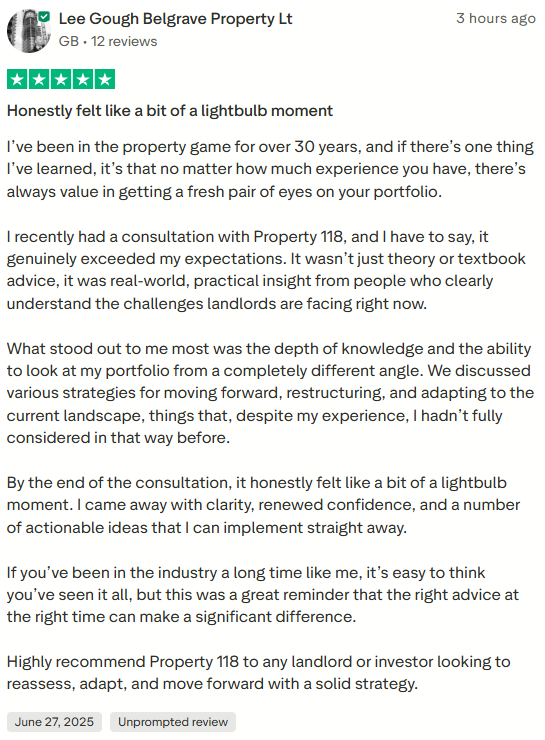
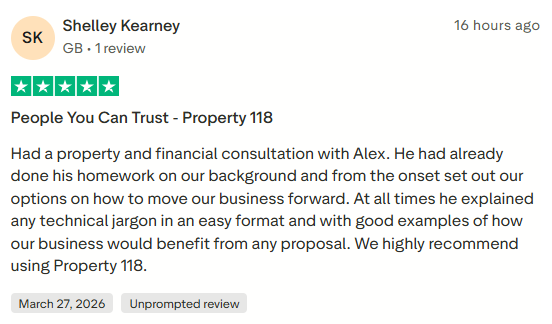
Help other landlords find Property118If you have found Property118 useful, a short Trustpilot review would make a meaningful difference. It helps other landlords decide whether our research is worth following. |
Be the first to comment
Your experience could help the next reader
Have you dealt with something similar? Share what you learned, raise a question or offer a perspective your peers may find useful.
Not a member yet? Join In Seconds
Login with