

10) Why the most valuable asset in a property portfolio is sometimes not the property


When landlords talk about the value of their portfolio, the conversation almost always begins with the properties themselves. The location of the buildings, the rental income they generate, and the equity they contain are the most visible measures of success. Over many years these elements combine to create the financial strength that experienced landlords recognise as the reward for patient investing. In many cases those assets have grown far beyond what the landlord originally expected when the first property was purchased, yet something interesting often becomes visible once a portfolio reaches maturity; the most valuable asset in the business may no longer be the property itself.
The hidden asset inside every portfolio
Every successful property business contains something less obvious than the buildings it owns.
It contains knowledge.
Years of experience dealing with lenders, agents, tenants, maintenance issues, refinancing decisions and regulatory changes gradually create a level of understanding that cannot easily be replicated. This accumulated knowledge often becomes the real engine behind the portfolio’s stability. The landlord understands how the assets work together. They know which lenders suit particular circumstances, how to navigate unexpected challenges, and how to keep the business operating smoothly over long periods of time. That understanding is rarely written down, but it represents a powerful asset nonetheless.
When experience becomes the central resource
In the early years of a property journey the focus is naturally on the physical assets. The landlord is learning how the system works and gradually building the portfolio that will form the foundation of the business. Later in the life of the portfolio, however, something shifts; the landlord’s experience often becomes just as valuable as the buildings themselves. It shapes how problems are solved, how risks are assessed and how decisions are made when circumstances change. In other words, the portfolio functions well not only because of the properties it contains, but because of the understanding that sits behind them.
The questions that follow this realisation
Once landlords recognise how much of the portfolio’s success relies on their own experience, a different set of considerations often appears.
How easily could someone else understand how the portfolio works?
If the owner eventually steps back, who carries the knowledge that keeps the business running smoothly?
Does the structure surrounding the assets reflect the long-term future of the portfolio?
How will decades of accumulated experience influence the next stage of the business?
These are rarely urgent questions while the landlord remains actively involved in the day-to-day operation of the portfolio, yet they often become increasingly important as the portfolio matures.
Why experience is rarely examined directly
One of the reasons this issue often goes unexamined is that experience feels intangible. Property values can be measured precisely, mortgage balances are recorded clearly, rental income appears on statements each month, but knowledge is different. It exists in conversations, instincts and decisions that have been shaped over many years, and because it is not written into the balance sheet, it is easy to overlook how central it has become to the functioning of the business, yet many experienced landlords eventually realise that the portfolio’s resilience depends as much on that accumulated understanding as it does on the bricks and mortar themselves.
The moment many landlords recognise
This is often the stage where landlords begin to think about the long-term future of their portfolio from a slightly different perspective. The properties are familiar, the income is predictable, the business has proven its strength over time. The question becomes how the knowledge that built the portfolio can continue supporting it in the future. For some investors that leads to reassurance that the existing structure already reflects their intentions. For others it opens a wider conversation about how the portfolio should evolve over the coming decades.
In the next article in this series, I will explore another issue that many experienced landlords eventually encounter: why time, rather than finance, often becomes the scarcest resource in a mature property business.
An invitation for established landlords
If you have built a substantial portfolio and are beginning to think about the longer-term future of the assets you have created, we would be happy to take a look at your position.
BOOK A CONSULTATION
These conversations tend to be most useful for landlords with established portfolios and relatively modest borrowing who are beginning to reflect on how their assets could work differently in the years ahead.
|
★★★★★
|
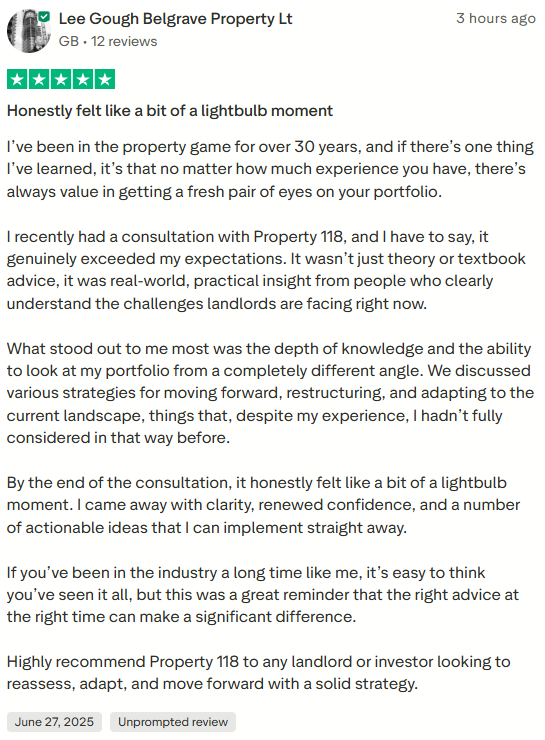
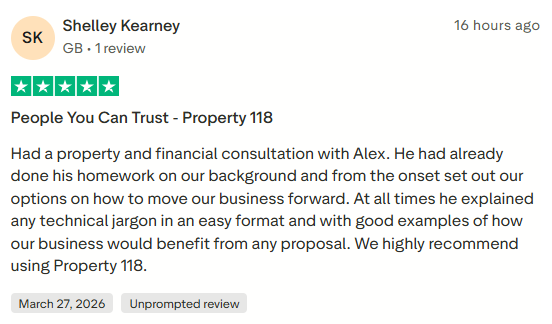
Help other landlords find Property118If you have found Property118 useful, a short Trustpilot review would make a meaningful difference. It helps other landlords decide whether our research is worth following. |
1 comment on this article
Learn from your peers’ experience
A different perspective could help you spot an issue, avoid a mistake or find a better way forward. Read the comments and add your own views if you wish.
Member Since June 2013 - Comments: 3380 - Articles: 83
9:51 AM, 20th August 2026, About 2 months ago
You telling me time is the most important thing.
What’s the point in having so much £’s if you in the office every Saturday Sunday and biggest thing u tell your Nephew is
I’ve got to go back in the office now.