

8) When the most important decisions come long after the last property was purchased


For many landlords, the defining moments of their property journey seem to occur during the acquisition years. The early purchases feel significant because each property represents a new level of commitment, another layer of responsibility, and another step towards building something substantial. Those decisions often stay vividly in the memory, particularly the first few acquisitions that set the entire journey in motion. Over time, however, the rhythm of acquisition usually slows. The portfolio reaches a point where additional purchases no longer feel necessary. Borrowing may have reduced, rental income has become stable, and the landlord begins to feel that the original objective of building a meaningful portfolio has already been achieved.
At that moment, it is tempting to assume that the most important decisions are behind you; in reality, they are often still ahead.
The illusion that the work is finished
Once the last property has been purchased, the portfolio may appear complete. The business runs smoothly, income is predictable, and the operational routines are familiar. Many landlords continue managing the portfolio successfully for years in this position, yet the absence of acquisition activity can create a subtle illusion. It can feel as though the strategic work of building the business has ended, when in fact the nature of that work has simply changed.
The focus begins to shift from expansion to stewardship.
When the horizon begins to lengthen
During the growth phase of a portfolio, landlords tend to think in relatively short cycles. Acquisition opportunities, refinancing schedules and interest rate changes all demand attention within defined timeframes, but once the portfolio matures, the horizon often lengthens dramatically. Instead of thinking about the next purchase, landlords begin to think about the next ten or twenty years. That shift in perspective naturally brings different questions into view.
How should the portfolio behave as the owner’s role gradually changes?
What will the portfolio look like when active management eventually becomes less appealing?
How easily could the business continue without the person who originally built it?
What part should the portfolio play in the landlord’s wider financial life?
These questions rarely appear during the acquisition years, they tend to arise later, once the portfolio itself is already established.
Why these decisions often arrive quietly
Unlike property purchases, which tend to involve clear deadlines and visible milestones, the strategic decisions that follow the growth phase often arrive gradually. There is no obvious moment when the landlord is required to make them. The portfolio continues functioning as it always has. Tenants remain in place, rent continues to arrive, and the properties maintain their value. Without a trigger, it is easy to assume that the existing structure will continue serving its purpose indefinitely, yet many landlords eventually discover that the decisions shaping the long-term future of their portfolio occur well after the final acquisition has been made.
The transition from builder to steward
Every successful portfolio begins with a builder. Someone identifies opportunities, arranges finance, takes calculated risks and gradually assembles the assets that form the foundation of the business. Later in the life of the portfolio, another role becomes increasingly important: the steward.
The steward is not focused primarily on expansion. Instead, the focus shifts toward how the assets will function over the long term, how they will adapt to changing circumstances, and how they will continue to serve the landlord’s objectives as time passes. This transition from builder to steward often represents the point where the most consequential strategic decisions begin to emerge.
A conversation many landlords eventually have
We increasingly find that experienced Property118 readers reach a stage where they want to step back from the day-to-day management of the portfolio and look at the wider picture. The properties themselves are usually performing well, borrowing is often modest and the business is stable, and the motivation for reflection does not usually come from a problem. Instead, it comes from the recognition that a mature portfolio can influence many aspects of a landlord’s financial future. Understanding how those assets might behave over the long term becomes a conversation worth having.
In the next article in this series, I will explore another issue that often emerges once portfolios mature: why many landlords discover that their portfolio is far more influential in their financial life than they originally expected.
An invitation for established landlords
If you have built a substantial portfolio and are beginning to think about how it should evolve over the coming decades, we would be happy to take a look at your position.
BOOK A CONSULTATION
These conversations tend to be most useful for landlords with established portfolios and relatively modest borrowing who are beginning to reflect on how their assets could work differently in the years ahead.
|
★★★★★
|
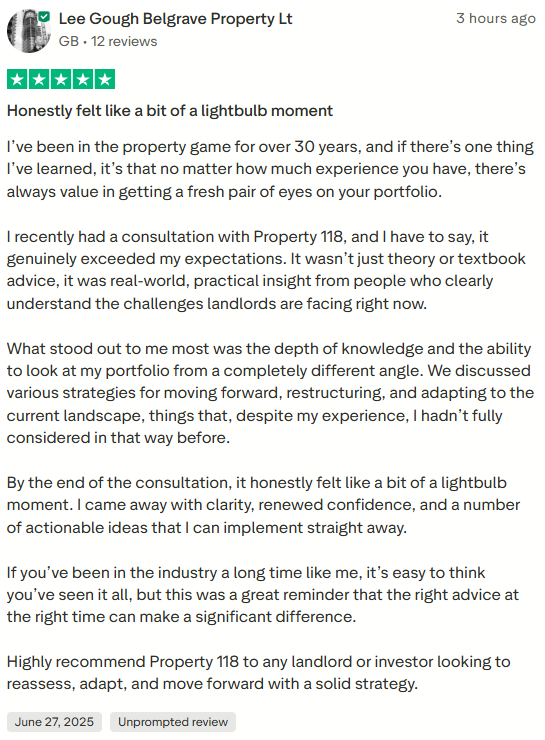
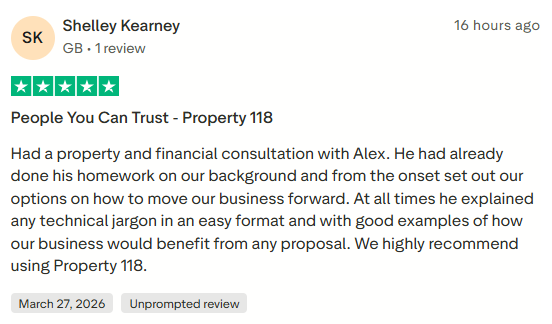
Help other landlords find Property118If you have found Property118 useful, a short Trustpilot review would make a meaningful difference. It helps other landlords decide whether our research is worth following. |
Be the first to comment
Your experience could help the next reader
Have you dealt with something similar? Share what you learned, raise a question or offer a perspective your peers may find useful.
Not a member yet? Join In Seconds
Login with