

6) When managing a portfolio and planning its future become two different things


Most landlords spend years becoming very good at managing their portfolio. They learn how to deal with tenants, agents, lenders, maintenance, refinancing and the countless operational details that come with owning multiple properties. Over time, those activities become familiar. Systems develop, relationships strengthen, and the business begins to run smoothly. For many experienced Property118 readers, this operational competence is one of the reasons their portfolios have been able to grow successfully over long periods.
The landlord knows how the business works, problems are handled quickly, and income remains reliable. In other words, the portfolio is well managed, yet something interesting often emerges once a portfolio reaches maturity. Managing the portfolio and planning its future are not always the same activity.
The discipline of day-to-day management
Operational management tends to focus on the immediate functioning of the business; rents are collected, repairs are arranged, mortgages are serviced, and compliance requirements are met. Most experienced landlords become extremely efficient at these tasks. After many years in the sector they can often identify potential problems quickly and resolve them with confidence. This operational discipline is an important reason why mature portfolios often become stable and resilient, and yet operational success does not automatically answer a different question.
Where should the portfolio actually be heading?
When direction becomes the bigger question
Once the portfolio is functioning well, attention naturally shifts away from operations. The business no longer requires the same level of constant intervention, and this can create space for a different type of thinking. Landlords begin to consider how the portfolio should evolve over the coming decades rather than simply how it should operate month by month.
Will the portfolio continue in its current form for the long term?
Will the level of involvement required from the owner change over time?
Will the assets eventually need to support a different stage of life?
How easily could the business adapt if priorities shifted?
These are not operational questions; they are strategic ones.
Why these two roles are often confused
For many years landlords perform both roles simultaneously; they manage the portfolio and shape its direction at the same time. During the growth phase the distinction between the two is rarely obvious because the objective is usually clear: build the portfolio and strengthen the business. However, once the portfolio becomes established the two roles begin to separate. The landlord may remain highly capable at managing the existing assets, yet still find themselves wondering what the long-term direction of the business should be. This is a natural transition rather than a problem. The business has simply moved from the stage of building assets to the stage of deciding what those assets should ultimately achieve.
The point where many landlords pause
It is quite common for experienced landlords to reach a point where the portfolio is running smoothly but the long-term direction has never been examined with the same care that was given to acquisition decisions years earlier. The properties were chosen thoughtfully, the finance was arranged carefully, and the growth strategy was executed patiently, yet the next phase of the portfolio’s life may never have been considered in the same structured way. This is often the moment when landlords begin to realise that running a portfolio and planning its future involve two slightly different perspectives.
When reflection becomes valuable
The purpose of stepping back is not to fix a problem, in many cases the portfolio is performing extremely well. Instead the aim is simply to understand how the assets already built might serve the landlord’s long-term priorities. For some investors that reflection leads to reassurance that the existing structure remains appropriate. For others it highlights questions that had never previously been explored. Either outcome can be valuable.
In the next article in this series, I will explore another issue that often emerges once portfolios mature: why the number of properties in a portfolio does not always reflect its true level of complexity.
An invitation for established landlords
If you have an established portfolio and are beginning to think about the longer-term direction of your property business, we would be happy to take a look at your position.
BOOK A CONSULTATION
These conversations tend to be most useful for landlords with established portfolios and relatively modest borrowing who are beginning to reflect on how their assets could work differently in the years ahead.
|
★★★★★
|
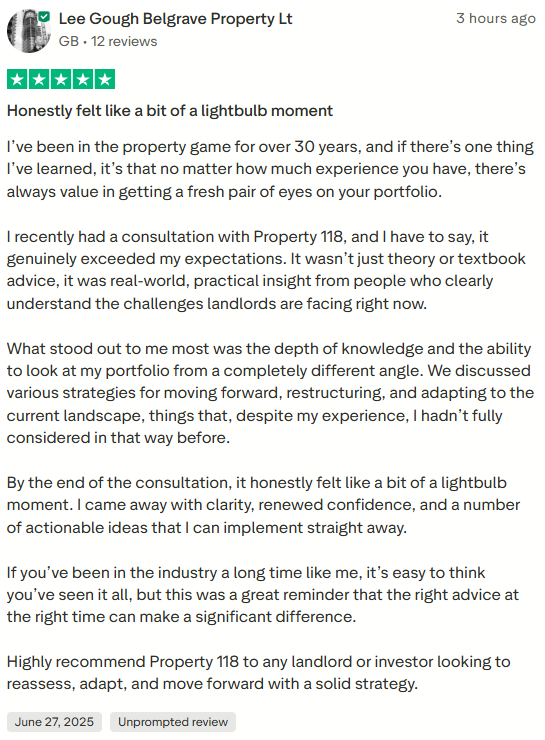
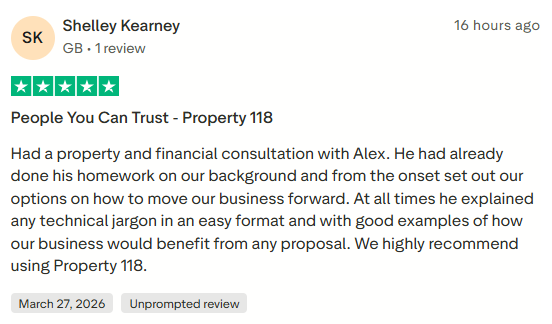
Help other landlords find Property118If you have found Property118 useful, a short Trustpilot review would make a meaningful difference. It helps other landlords decide whether our research is worth following. |
Be the first to comment
Your experience could help the next reader
Have you dealt with something similar? Share what you learned, raise a question or offer a perspective your peers may find useful.
Not a member yet? Join In Seconds
Login with