

5) When equity becomes the least examined asset in the portfolio


For most landlords, the early years of building a portfolio are dominated by one constant consideration: borrowing. Lenders assess it, investors manage it, and refinancing decisions often revolve around it. Loan-to-value ratios, interest cover calculations and mortgage availability shape many of the strategic decisions made during the growth phase of a property business. Over time, however, something begins to change.
As portfolios mature, borrowing often becomes less central to the conversation. Debt reduces gradually, equity grows steadily, and the balance between the two shifts in favour of ownership rather than finance. For many experienced Property118 readers this process has been unfolding quietly for years. Properties that were once heavily financed may now carry modest borrowing. In some cases loans have been repaid entirely. The result is a portfolio that contains significant equity alongside relatively little debt. At first glance that seems like the end of the story, yet it is often the beginning of a different one.
The silent growth of equity
Equity rarely attracts the same attention as borrowing. Debt tends to demand constant management; interest rates move, lenders impose conditions, and refinancing deadlines create clear moments when decisions must be made. Equity behaves very differently; it accumulates gradually as mortgages reduce and property values rise, and because it rarely creates urgency, it can remain largely unexamined for long periods of time. The portfolio continues performing successfully, so there appears to be little reason to look beneath the surface, yet substantial equity often introduces its own set of strategic questions.
When equity begins to raise new possibilities
Once borrowing levels fall and equity becomes the dominant component of a portfolio, the number of potential future paths can increase significantly.
Should the equity simply remain where it is?
Does a large equity position automatically mean the portfolio is optimised?
How easily could liquidity be created if circumstances changed?
What role should that equity play in the next stage of the landlord’s financial life?
These are not the kind of questions that arise while a landlord is still focused on building the portfolio. They tend to appear later, once the assets are already established and the immediate pressures of expansion have faded.
Why equity is often overlooked
There is a simple reason why equity sometimes receives less attention than it deserves; unlike borrowing, it does not demand immediate decisions.
A landlord with significant equity and modest debt may feel comfortably positioned. The properties perform well, the lenders are satisfied, and there is no obvious trigger forcing a review of the portfolio’s longer-term structure. In that environment, it is easy to assume that equity is simply a passive outcome of years of successful investing, yet in reality it can become one of the most strategically important components of the entire property business.
The shift from accumulation to stewardship
Many experienced landlords eventually reach a stage where the focus of their thinking begins to shift. During the earlier years the emphasis was on acquisition and expansion. Later, the emphasis often becomes stewardship. The portfolio already exists. The question becomes how it should behave in the future. At that point, equity starts to matter in different ways. It influences decisions about flexibility, liquidity, family involvement and long-term financial planning. The same equity that once represented progress during the growth phase can begin to play a much broader role in shaping the future of the business. Understanding that shift is often the moment when landlords start looking at their portfolios with a slightly different perspective.
A conversation that increasingly arises
Over the past year we have spoken with a growing number of Property118 readers who have reached this stage. Most of them have built strong portfolios over many years; borrowing is modest, income is stable and the properties themselves are performing well. The conversation rarely begins with a problem, instead it usually begins with curiosity about how the portfolio’s equity might influence the next phase of the landlord’s financial life. Those discussions are always grounded in the same starting point: understanding the details of the portfolio itself.
In the next article in this series, I will look at another question that often emerges once portfolios reach maturity: why managing a portfolio and planning its future can become two very different activities.
An invitation for established landlords
If you have built a substantial portfolio and are beginning to think about the longer-term role your equity might play in the future of your property business, we would be happy to take a look at your position.
BOOK A CONSULTATION
These conversations tend to be most useful for landlords with established portfolios and relatively modest borrowing who are beginning to reflect on how their assets could work differently in the years ahead.
|
★★★★★
|
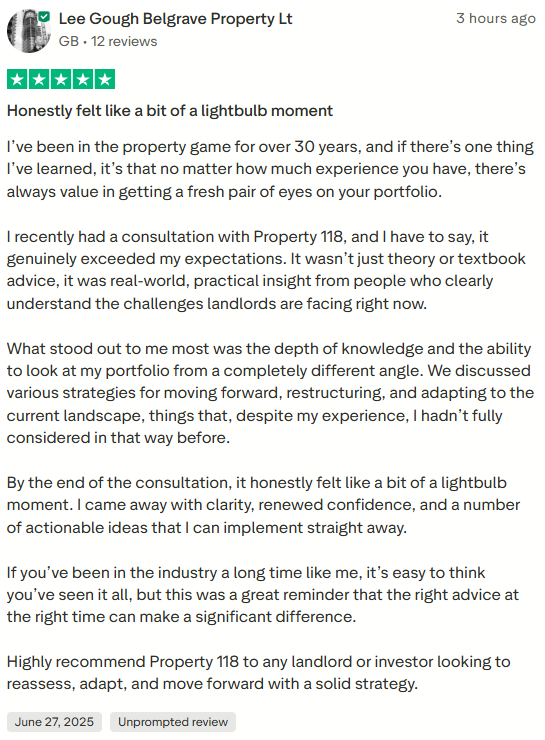
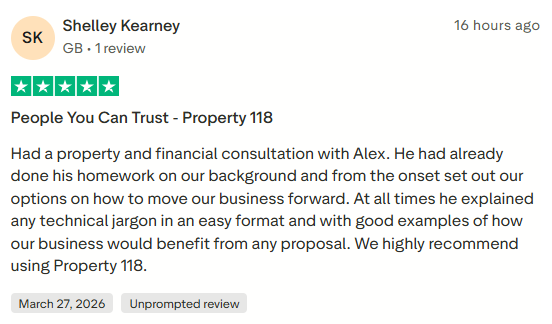
Help other landlords find Property118If you have found Property118 useful, a short Trustpilot review would make a meaningful difference. It helps other landlords decide whether our research is worth following. |
Be the first to comment
Your experience could help the next reader
Have you dealt with something similar? Share what you learned, raise a question or offer a perspective your peers may find useful.
Not a member yet? Join In Seconds
Login with