

Government pushes action on overheating fears in social housing
4 months ago | 3 comments


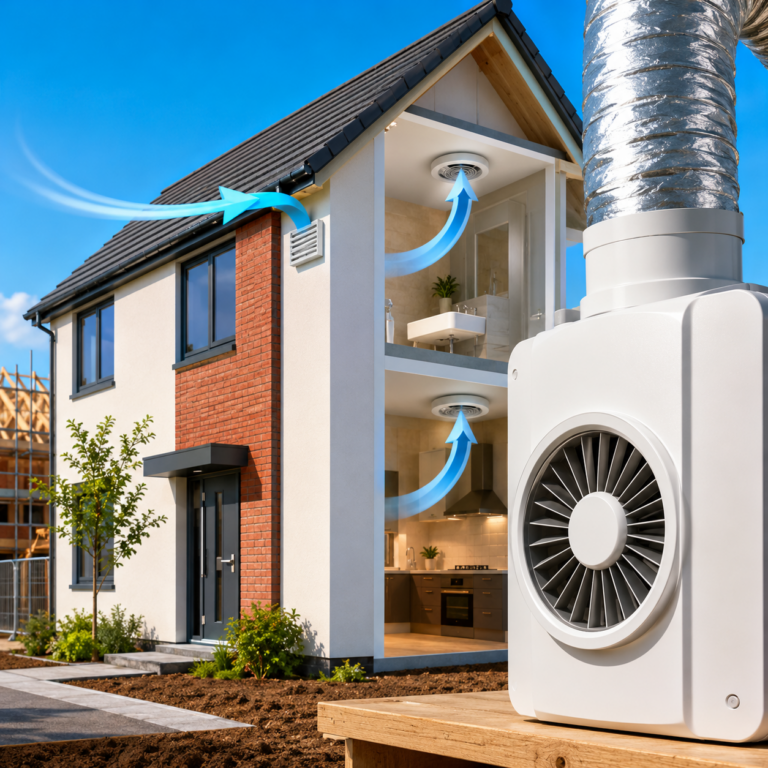
New building regulations due to come into force next year will require housing providers to prepare for tougher ventilation standards.
Ventilation manufacturer EnviroVent has warned that the Future Homes and Buildings Standards will introduce stricter low-carbon requirements for new homes.
The new regulations will apply in England from 24 March 2027 for most building work, with higher-risk building projects following from 24 September 2027.
Ruth MacEachern, product manager and policy advisor at envirovent, explains: “A lot of the focus around the Future Homes and Buildings Standards has understandably been on heat pumps, solar and the move away from gas boilers in new homes. But ventilation is also going through a major shift.
“As homes become more airtight and energy performance requirements tighten, ventilation must work harder in the background. If it is value engineered late in the process, installed by someone without the right competence, or commissioned without the right evidence, it creates risk for the contractor, the housing provider and ultimately the resident.
“These changes are especially important for anyone involved in new build, specification, social housing, distribution or major ventilation works. The organisations that start reviewing their designs, supply chains and competency routes now will be in a much better position when the regulations come into force.”
Under the new rules, ventilation work should be carried out by someone suitably competent, either through self-certification by a registered competent person or certification by a Building Control Body.
Ms MacEachern adds: “This moves competence from a nice-to-have to a key part of the compliance story. Ventilation is notifiable work, and housing providers need to know that whoever is designing, installing and certifying the system has the skills, knowledge and evidence to back it up.
“If a contractor is not part of a recognised route, or the work is not being overseen correctly, it can create issues with certification, Building Control and handover. Installer competence needs to be considered at procurement stage, not after the system has already been fitted.”
The updated regulations also introduce tighter testing and commissioning requirements.
For new homes, airflow testing and commissioning results are expected to be submitted to Building Control within five days of the final test. Testing requirements may also apply when certain ventilation systems are installed in existing properties, including new continuous mechanical extract ventilation (c-MEV) systems, major alterations to existing c-MEV systems, and some mechanical extract fans with longer or more complex ductwork.
Be the first to comment
Have you dealt with something similar? Share what you learned, raise a question or offer a perspective your peers may find useful.
Previous Article
PRS homes still excluded from Flood Re scheme despite reforms
4 months ago | 3 comments

3 months ago | 6 comments
2 years ago | 16 comments
Not a member yet? Join In Seconds
Login with