
Call for Scottish Budget to help landlords
9 months ago


Scotland’s finance and local government secretary, Shona Robison, has set out the Scottish Budget 2026-27, unveiling housing measures that have drawn criticism from across the property sector.
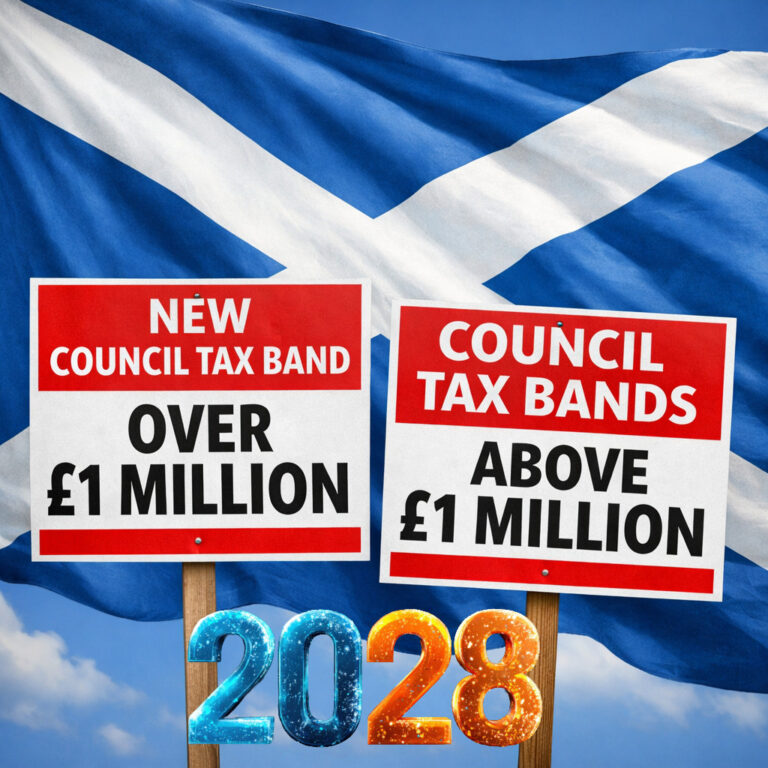
The plans include two new council tax bands for homes valued above £1m, scheduled to take effect from April 2028.
Ministers also confirmed the existing Land and Buildings Transaction Tax thresholds will remain unchanged.
The budget also confirmed no change to the property income tax rate in Scotland, with the Scottish Government choosing not to mirror Westminster’s proposed 2% rise pencilled in for April 2027.
Responding to the announcement, John Blackwood, chief executive of the Scottish Association of Landlords, said: “Scotland’s landlords will be disappointed by this budget, in particular by the Finance Secretary’s refusal to rule out the 2p increase on income tax gained from property that we’ve seen elsewhere in the UK.
“That this tax may come into effect in 2027-28, subject to a legislative consent motion, will cause further uncertainty within Scotland’s private rented sector.
“While we do welcome that there will be no rise in the LBTT additional dwelling supplement, this budget still feels to us like a missed opportunity.”
He added: “Rather than continuing on this path, Shona Robison should say unreservedly that increases in tax on property income will not happen and give the sector some much-needed confidence to invest.”
Timothy Douglas, the head of policy and campaigns at Propertymark, was also unimpressed and he said: “Despite a multi-year commitment to affordable housing supply and increased investment in acquisitions and homelessness prevention, it is surprising that the Scottish government are yet again failing to tackle the housing emergency, and the Budget misses an important opportunity to address the growing tax burden on housing.”
He went on: “Land and Buildings Transaction Tax continues to act as a barrier to people moving home and to investment in the private rented sector, which can help bring down the cost of renting.
“The Housing Investment Task Force was clear that property tax should be reviewed to support housing supply and economic growth, yet this has not been meaningfully addressed, and additional levels of council tax brings yet more disparity in pricing and costs across the property sector.”
Further criticism came from David Alexander, the chief executive of DJ Alexander Scotland, who said the budget statement failed to set a clear direction for housing delivery.
He said: “This was a missed chance for the SNP government to set out a coherent and effective housing strategy for the next five years.
“While the promise of record levels of investment for affordable housing of £4.9bn for 36,000 homes over the next four years is an improvement it does little to address the long-term stagnation in the building of homes for the social housing sector.”
He also raised concerns about the introduction of higher council tax bands, saying: “There is to be a version of the mansion tax in Scotland with two new rates of council tax bands for properties worth more than £1m starting in 2028.
“As with the Westminster proposal, the issue will be over who values the properties and, given the relatively low number of properties of this valuation in Scotland, whether this is really about revenue raising or political point scoring.”
Mr Alexander added: “Given that the housing emergency in Scotland will be two years old in May when the Scottish elections are held, this was an opportunity to offer a coherent, well-constructed strategy to deal with the shortage of homes.
“But with no additional help for housebuilders (where newbuild starts are also at a decade low level) or for the private rented sector which is an integral part of resolving the housing emergency, this is missed opportunity.”
Be the first to comment
Have you dealt with something similar? Share what you learned, raise a question or offer a perspective your peers may find useful.
Previous Article
Rents grew by 2.2% in 2025 but growth is cooling
9 months ago

10 months ago | 4 comments

Not a member yet? Join In Seconds
Login with