

Homeowners struggle to fund EPC upgrades despite growing buyer demand
4 weeks ago | 6 comments


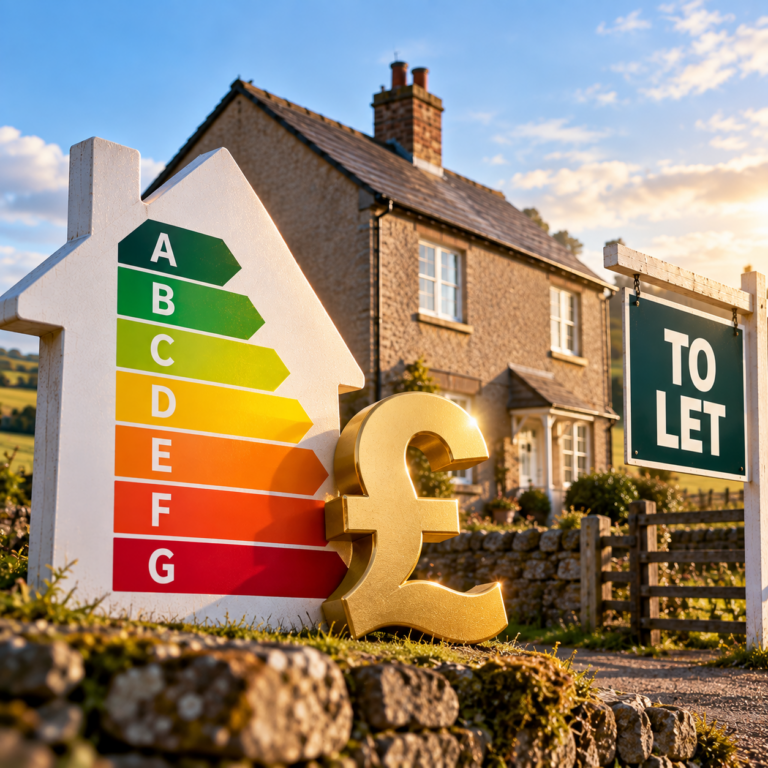
Rural landlords face an average bill of £24,200 to bring houses that are below EPC C up to that standard; that’s £8,900 more than urban owners, research reveals.
According to Savills, even where properties start with the same energy rating, countryside homes are more expensive to improve.
Meanwhile, 79% of estate managers surveyed by the firm expect the main effect of tighter minimum energy efficiency standards to be the selling of poorer-performing homes.
Just 12% anticipated more investment in existing properties.
Joe Lloyd, Savills’ associate director and consultancy lead for rural research, said: “Rural landlords should therefore act early to understand the scale of exposure across their portfolios, identify where improvement is technically and financially viable, and secure available funding where possible, including through schemes such as the Boiler Upgrade Scheme.”
Rural housing is often older and more dispersed, making improvements through standardised measures harder to achieve.
Savills found that 67% of the rural homes in its analysis had no mains gas.
Three-quarters were below EPC C under the current metrics, compared with 58% of urban houses.
For rural properties moving from EPC D to C, the average estimated cost was £13,000, against £10,600 in urban areas.
Starting from G pushed those figures to £33,600 and £16,300 respectively, making the rural bill more than twice as high.
Such improvements usually require several measures, including insulation, heating system upgrades and renewable technologies.
Savills attributes 61% of the rural cost premium to higher upgrade costs for homes starting from equivalent ratings, with the remainder reflecting the greater concentration of countryside properties in poorer EPC bands.
Across England and Wales, Savills estimates that bringing all known private rented houses below the standard up to compliance could cost £27.8 billion, rising to £37.3 billion in the worst case.
Those scenarios use the midpoint and upper end, respectively, of the estimated costs for improvement measures listed on EPCs.
Rural houses account for 15.8% of the properties concerned but 22.9% of the likely national bill, equivalent to £6.4 billion.
The research examined more than three million valid EPC certificates for private rented houses in England and Wales, using certificates dating from 2016 onwards.
1 comment on this article
A different perspective could help you spot an issue, avoid a mistake or find a better way forward. Read the comments and add your own views if you wish.
4 weeks ago | 6 comments

4 weeks ago | 6 comments

1 month ago | 14 comments
Member Since August 2016 - Comments: 1198
10:35 AM, 29th September 2026, About 3 weeks ago
They’re not going to buy the property from you they’re going to seize it. And then rent it out for up to seven years. Where they’re going to get the money from to renovate a derelict property is anybody’s guess. But some properties won’t need renovating of course. You’ve evicted your tenant because you want to sell but the market is a little slow and you haven’t sold after 6 months so then they’ll seize it. And put in the illegal migrants. You ain’t getting any money and you ain’t getting your property back. It’s the WEF agenda, “You will own nothing and be happy”.