Most landlords now debt-light, with majority below 50% LTV

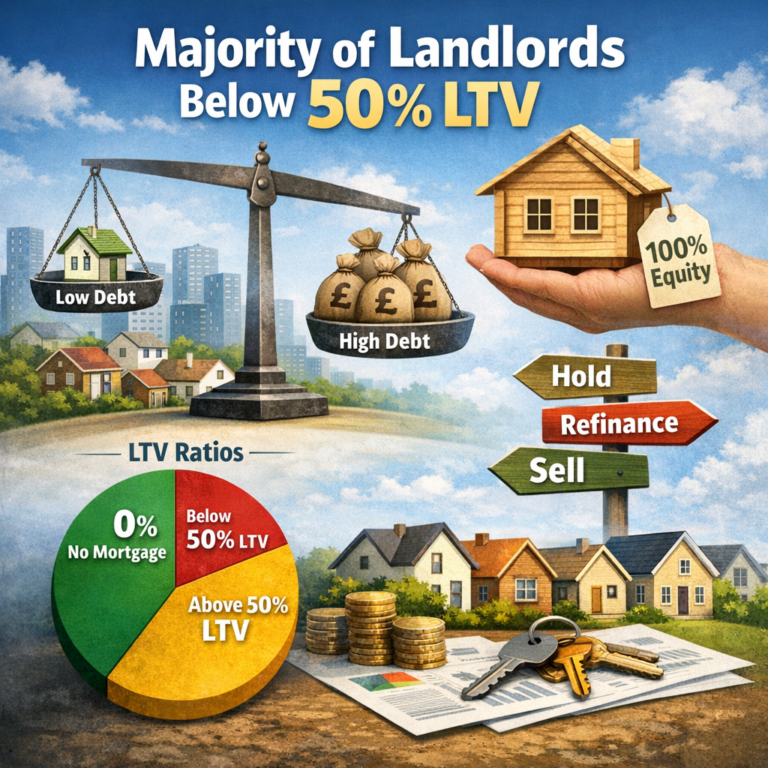
A widely held assumption about the private rented sector is that landlords are highly leveraged and therefore vulnerable to interest rate movements. The latest data suggests a different picture. According to the Property118 Landlord Sentiment Survey Q1 2026, most landlords are now operating with relatively low levels of borrowing.
Based on 2,380 completed responses, a majority of landlords report loan-to-value ratios at or below 50%, with a significant proportion owning properties outright with no mortgage debt at all. You can review the full dataset here.
The implication is clear: the sector is more resilient than it is often portrayed.
A different risk profile
At higher levels of borrowing, landlords are naturally more exposed to changes in interest rates and refinancing conditions. That exposure has shaped much of the public narrative over recent years. However, the survey findings point towards a different risk profile.
With many landlords holding significant equity and relatively modest debt, the immediate pressure from interest rate increases is less pronounced than often assumed. This does not remove risk entirely, but it changes its nature. The issue becomes less about survival and more about strategy.
Why this matters for market behaviour
The level of borrowing has a direct influence on how landlords respond to changing conditions. Highly leveraged landlords may be forced to act quickly when costs rise. By contrast, those with lower loan-to-value ratios have more flexibility. They can choose whether to refinance, hold, or sell, rather than being compelled into a decision.
This aligns with other findings from the Property118 dataset, which show that many landlords are planning to reduce portfolios despite not being under immediate financial pressure.
Equity creates options
Lower levels of borrowing mean higher levels of equity, and equity provides optionality.
Landlords with substantial equity can:
– sell selectively rather than under pressure
– refinance on more favourable terms
– release capital if required
– or simply hold assets without urgency
This flexibility changes the dynamics of the market. Rather than reacting to external pressures, many landlords are making proactive decisions about how their portfolios should evolve.
A shift in mindset
The combination of lower leverage and changing market conditions appears to be influencing how landlords think about their portfolios. For many, the focus is no longer on maximising growth through borrowing, but on consolidating gains, reducing complexity and improving long-term certainty. This is consistent with the broader trends highlighted in the survey results, including rising intentions to sell and a limited appetite for expansion.
A more stable, but more selective sector
A debt-light sector is, in many respects, a more stable one. Lower leverage reduces the risk of forced sales and financial distress. At the same time, it also means that landlords are under less pressure to remain active. When portfolios are secure and largely unencumbered, the decision to continue, expand or exit becomes a matter of choice rather than necessity.
For now, one conclusion stands out: landlords are not being pushed out by debt, they are choosing their next move from a position of strength.
A conversation worth having?
If you are weighing up your own strategy, whether that’s to sell, expand, or restructure to improve profitibility, it is worth having a discussion with a Property118 consultant to take a closer look at how your portfolio is structured as a whole now, and to forecast the outcomes based on multiple scenario’s.
These conversations are typically most useful for landlords with established portfolios and relatively modest borrowing who are beginning to reflect on how their assets could work more effectively in the years ahead.
Enquire about a free initial discussion with a Property118 consultant
|
★★★★★
|
Help other landlords find Property118If you have found Property118 useful, a short Trustpilot review would make a meaningful difference. It helps other landlords decide whether our research is worth following. |

Have Your Say
Every day, landlords who want to influence policy and share real-world experience add their voice here. Your perspective helps keep the debate balanced.
Not a member yet? Join In Seconds
Login with