

Majority of landlords still own personally despite shift towards companies


A growing disconnect is emerging within the structure of UK property ownership. According to the Property118 Landlord Sentiment Survey Q1 2026, most landlords continue to hold property in their personal names, even though many now indicate a preference for company ownership going forward.
Based on 2,380 completed responses, 61% of landlords currently own their properties personally. At the same time, a majority indicate that if they were acquiring today, they would do so through a limited company. You can explore the full findings here.
The implication is clear: a large proportion of the sector is effectively locked into structures that may no longer reflect current preferences.
A legacy structure in a changing environment
For many landlords, personal ownership reflects the conditions that existed when their portfolios were built. At that time, borrowing structures, tax treatment and regulatory expectations all supported individual ownership. Over time, those conditions have shifted. While new acquisitions are increasingly viewed through a company lens, existing portfolios remain where they started, in personal ownership, often without a clear pathway to restructure.
Why landlords do not simply switch
At first glance, the solution might appear straightforward. If company ownership is preferred, why not transfer existing properties?
In practice, the decision is more complex. Transferring property from personal ownership into a company can trigger a combination of costs, including capital gains tax and stamp duty. Financing arrangements may also need to be revisited, adding further friction. The result is a situation where landlords recognise a preferred structure, but remain in their current position due to the practical implications of change.
A structural constraint on decision making
This disconnect between current ownership and future preference has wider consequences. When landlords feel constrained by their structure, it can influence a range of decisions, including whether to expand, refinance or exit. In some cases, the lack of flexibility may contribute to the decision to reduce portfolios rather than attempt a complex restructure.
This aligns with other findings in the Property118 dataset, where a significant proportion of landlords are choosing to step back from the market rather than adapt their existing structures.
A gap between intention and action
The data highlights a clear gap between what landlords would choose to do today and what they have been able to implement in practice. This is not a question of awareness. Many landlords are fully aware of alternative structures and their potential benefits. The issue lies in execution. Bridging that gap requires careful consideration of tax, financing and long-term objectives, which means decisions are often delayed or avoided altogether.
A sector in transition
The coexistence of personal ownership and a growing preference for company structures suggests that the sector is in transition rather than at a fixed point.
Some landlords are moving towards corporate ownership for new acquisitions, while others remain anchored in legacy structures. Over time, this may lead to a gradual shift in how property is held, but the pace of that change is likely to be uneven.
For now, one conclusion stands out: many landlords are not operating in the structure they would choose today, and that constraint is shaping how they respond to the market.
Important context: Property118 is not currently recommending Section 162 incorporation for landlords with mortgages while legal uncertainty remains over the treatment of mortgage liabilities. Read our current position here: Why Property118 is not currently recommending s162 incorporation to landlords with mortgages
A conversation worth having?
If you are weighing up your own strategy, whether that’s to sell, expand, or restructure to improve profitibility, it is worth having a discussion with a Property118 consultant to take a closer look at how your portfolio is structured as a whole now, and to forecast the outcomes based on multiple scenario’s.
These conversations are typically most useful for landlords with established portfolios and relatively modest borrowing who are beginning to reflect on how their assets could work more effectively in the years ahead.
Enquire about a free initial discussion with a Property118 consultant
|
★★★★★
|
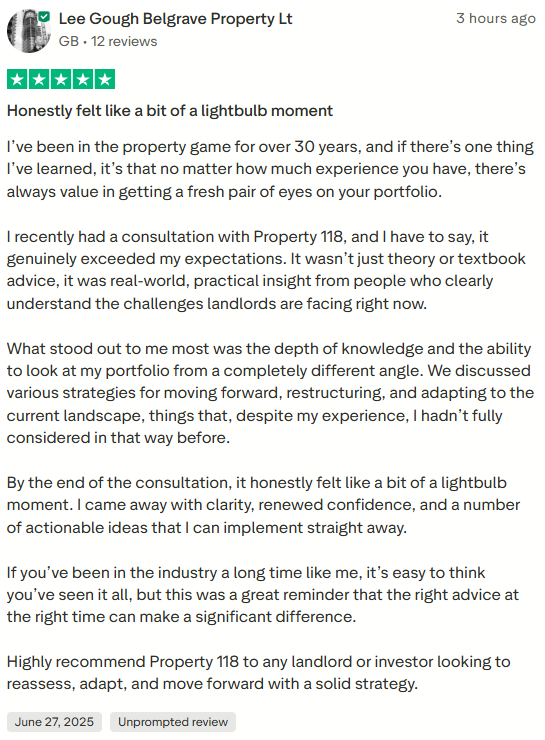
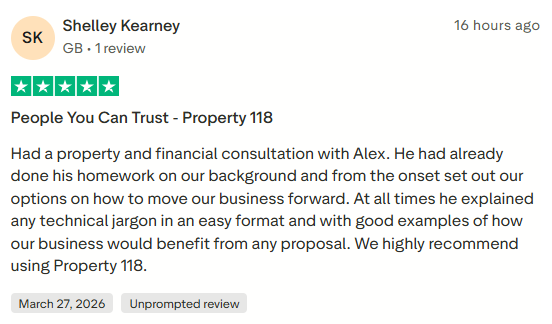
Help other landlords find Property118If you have found Property118 useful, a short Trustpilot review would make a meaningful difference. It helps other landlords decide whether our research is worth following. |
Have Your Say
Every day, landlords who want to influence policy and share real-world experience add their voice here. Your perspective helps keep the debate balanced.
Not a member yet? Join In Seconds
Login with

Previous Article
Renters’ Rights Act Masterclass – Are you ready for 1 May?