



Government unveils Social Housing Bill with new domestic abuse eviction powers
12:01 AM, 2nd June 2026, 5 months ago
Categories:
The government has announced that social housing landlords will gain new powers to evict domestic abusers alongside reforms to the Right to Buy scheme.
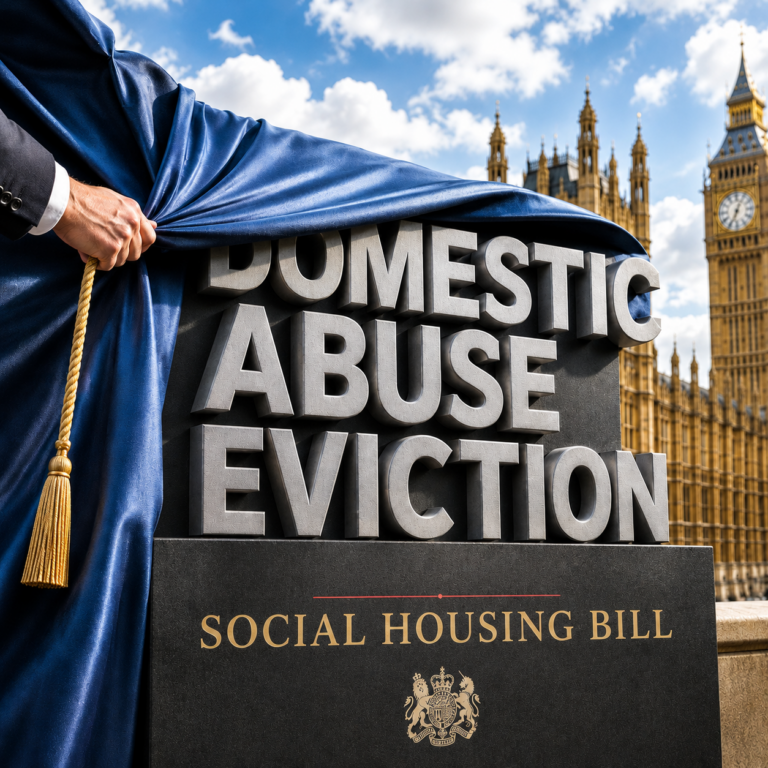
The government’s Social Housing Bill, which will receive its second reading in Parliament this week, aims to close a loophole that allows domestic abusers to make victims homeless.
The news comes as Shelter has welcomed the bill but warned the government must go further, calling for 90,000 social rent homes to be built each year for the next decade.
These changes are deeds not words
Under proposed legislation, social housing landlords and the courts will be given new powers to remove perpetrators of domestic abuse from social housing without requiring victims to leave their homes first.
Currently, social housing landlords can generally only evict an abuser after the victim has left the property. In cases involving joint tenancies, victims often have no option but to end the tenancy altogether.
The government says the bill will also close a loophole that allows perpetrators to make victims homeless by serving a Notice to Quit.
Under the proposed reforms, a Notice to Quit issued by an abuser will not automatically end a joint social housing tenancy while court proceedings are underway.
The bill would also allow courts to transfer a joint tenancy into the victim’s sole name. The government adds social housing landlords could be required to provide suitable alternative accommodation if the victim can not remain in the property.
Housing secretary, Steve Reed, said: “Victims of domestic abuse have faced an impossible choice, stay in danger or make themselves homeless.
“This is a moral failure this government is determined to end and these changes are deeds not words that put victims first, give landlords the powers they need, and make sure perpetrators can no longer use housing as a weapon of control.”
Failing to protect and invest in social housing
Prime Minister Keir Starmer says the Social Housing Bill will also tackle the problems of Right to Buy.
The flagship policy, introduced by Prime Minister Margaret Thatcher in the 1980s, was designed to give council tenants in England and Wales the right to purchase their homes from local authorities.
However, the scheme has long been controversial, with critics arguing it has contributed to a decline in the stock of social housing.
Mr Starmer said: “We’re also fixing the systemic issue of failing to protect and invest in social housing. I will never stand by as much-needed housing is sold off while families do not have a safe place to call home and children are growing up in temporary accommodation.
“This government will stop at nothing to get Britain building, invest in social housing, and restore pride in communities in every part of our country.”
Proposed reforms
Under the proposed reforms, Right to Buy discounts would start at 5% of a property’s value and increase by one percentage point each year to a maximum of 15%, subject to revised cash caps, whichever is lower. Newly built social and affordable homes would be exempt from the scheme for 35 years.
Tenants who have previously benefited from Right to Buy would no longer be able to use the scheme again, except in cases involving domestic abuse or irretrievable relationship breakdown.
Council homes let at market rent would also be exempt from the scheme. The reforms would also extend the period during which councils can require repayment of all or part of the Right to Buy discount if a property is resold, increasing it from five years to 10 years.
Tags:
eviction rules social housing, housing reform, right to buy, social housing, Social Housing Bill
Be the first to comment
Your experience could help the next reader
Have you dealt with something similar? Share what you learned, raise a question or offer a perspective your peers may find useful.


Not a member yet? Join In Seconds
Login with