Thousands of buildings still affected by unsafe cladding – government data
12:01 AM, 3rd July 2026, 2 months ago
Categories:
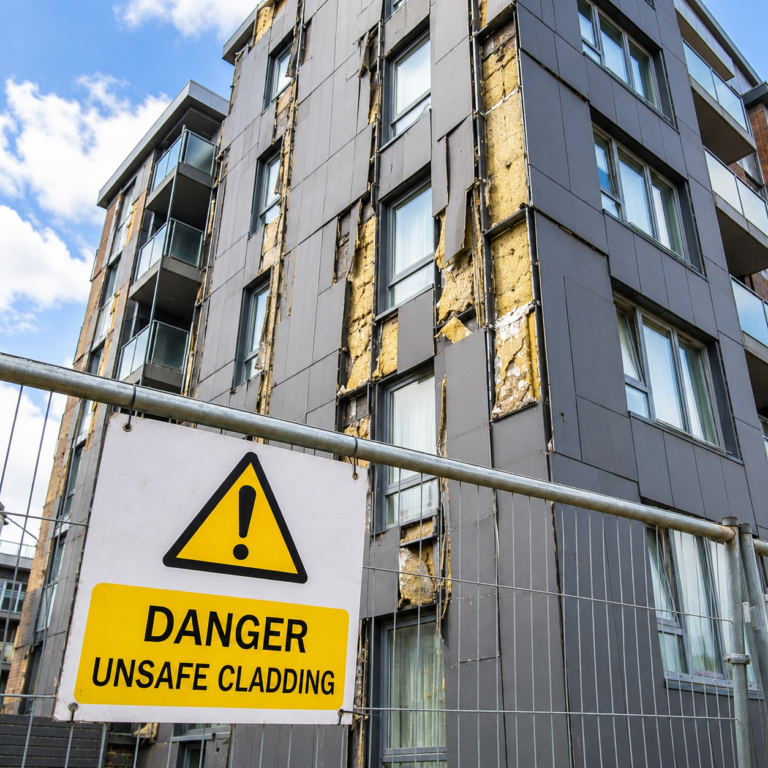
More than 5,000 residential buildings over 11 metres still have unsafe cladding, with remediation expected to cost billions, according to new government data.
Government statistics show that, despite targets to fix all unsafe cladding by 2029, progress remains slow.
The figures come as commercial buildings over 1,000 square metres will be required to meet EPC B standards by 2031. Under the plans, private rented non-domestic properties of this size in England and Wales will need to reach the higher energy efficiency standard “where cost-effective”.
Cost between £11.8bn and £22.7bn to remediate
Government data estimates that between 5,900 and 7,400 residential buildings in England over 11 metres still have or had unsafe cladding, affecting around 8–14% of the housing stock.
As of May 2026, 4,411 buildings are being tracked under remediation programmes, with 2,331 (53%) having started or completed works and 1,672 (38%) fully completed.
The government estimates that it will cost between £11.8bn and £22.7bn to remediate residential buildings.
The government says £9.2bn will be available to fund the remediation of external wall system defects, including a £5.2bn Exchequer contribution, an estimated £0.7bn in developer refunds, and a £3.4bn target from the Building Safety Levy.
Data is alarming
The news comes as Property Institute (TPI) research reveals a widening two-tier divide in cladding remediation progress.
According to the findings, in 2022, 53 housebuilders signed government-led pledges accepting responsibility for fixing life-critical defects in 2,604 buildings they developed.
Four years on, many of those schemes remain stuck in assessment or scoping stages, with little sign of acceleration.
Across 511 buildings with identified cladding remediation needs, collated by TPI from its members, including buildings covered by both government-funded schemes and pledged developers, just 24% are in active delivery, with 13.5% complete and 11% currently on site. Around half (48%) remain stalled in early stages.
Andrew Bulmer, chief executive officer at TPI, said: “This data is genuinely alarming. Thousands of people across the country are living in unsafe buildings, often unable to sell their homes, having faced nearly a decade of uncertainty since the Grenfell tragedy.
“The fact that the current remediation progress is so slow, with no end in sight, is a national scandal. The goal for the government and everyone involved in the housing sector should be to make these homes safe as soon as possible.
“The government’s Remediation Bill is an opportunity to give developers a legally binding backstop that reassures residents that every step legally possible is being taken to make their homes safe. Pledged developers need a hard deadline to ensure there are no more unnecessary delays.”
Tags:
cladding, cladding remediation, Cladding removal deadline 2029, fixing unsafe cladding, unsafe cladding
Have Your Say
Every day, landlords who want to influence policy and share real-world experience add their voice here. Your perspective helps keep the debate balanced.
Not a member yet? Join In Seconds
Login with
or